Register Now - Beyond Recruitment: The Future of Patient Site Engagement in Oncology Clinical Trials
|Articles|July 24, 2012

What Oracle Found Out About Data Overload

Oracle recently surveyed C-level execs in a variety of industries on the “unprecedented growth in data volume, variety and velocity” and put it in a report “From Overload to Impact: An Industry Scorecard on Big Data Business Challenges.” I had the opportunity to speak with Neil de Crescenzo, Senior Vice President and General Manager, Oracle Health Sciences, about the survey results for the Life Sciences industry.

In this industry segment, 93% of executives say their organization is collecting and managing more business information than two years ago; and 78% is the average increase in the business information that is collected or managed in the last two years from those executives. The need to use analytics to realize the ROI on the data collected is what Oracle was digging at, and de Crescenzo noted that there are three types of analytics: predictive, real-time and retrospective. “Currently, most people think of analytics as retrospective, or reporting what has already happened,” he said and described that what is needed is a way to incorporate all three into better business intelligence.

Looking at the glass half full, de Crescenzo sees a lot of positives that came out of the report. Even the fact that 29% of the Life Sciences execs gave their organization a “D” or “F” when asked about their company’s preparedness for a data deluge. “This just points out that there is continued opportunity in data analytics for Life Sciences,” said de Crescenzo. 

To the question, “what areas could your organization benefit most from better business intelligence or analytical capabilities?” the top four answers were supply chain management, regulatory submissions/compliance, clinical trial management, and research and development. In R&D, de Crescenzo notes that the focus is on using analytics for efficiencies. He sees companies wanting to plan and operate trials with less financial surprises, and using the tools Oracle recently gained through its acquisition of ClearTrial, does just that—forecasts and projects costs to help manage those tighter tolerances. Next is how to handle the data so that it is not duplicative, more easily-managed and can be accessed and shared more easily between pharma companies and their increasingly outsourced partners—either in the cloud or in on-premise housing. And lastly is the ability to access “new” types of data easily, such as electronic health records from academic centers, and the like.

Register to download the

report

.


Related to this article

Closing the Community Access Gap: Q&A with Kent Thoelke, Paradigm Health
In this Q&A, Kent Thoelke, CEO of Paradigm Health, discusses why participation gaps in community and rural settings come down to both patient cost barriers and site infrastructure, how legacy workflows weigh on community clinics, and what policy and technology changes it would take to make clinical research a real care option for more patients.
© Grispb - © Grispb - stock.adobe.com
Mistral and OpenAI produced identical overall eligibility labels across 200 synthetic patient-study assessments, with criterion-level disagreements concentrated in inclusion criteria where models switch between “Uncertain” and “Not included” when records lack sufficient evidence, so model choice should be driven by deployment architecture, control, and cost rather than assumed interchangeability.
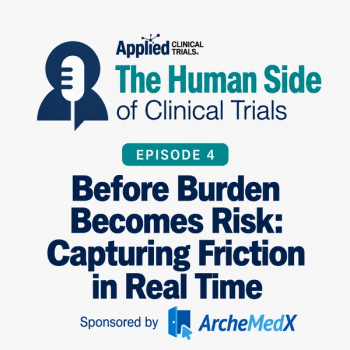
The Human Side of Clinical Trials: Before Burden Becomes Risk, Capturing Friction in Real Time
In Episode 4 of The Human Side of Clinical Trials, host Brian S. McGowan, PhD, FACEHP, chief learning officer and co-founder of ArcheMedX, Inc., speaks with Jason Riis, PhD, CEO and chief behavioral scientist at Behavioralize, about how capturing friction closer to the moment it happens can reveal unclear instructions, technology friction, and workarounds that retrospective surveys and debriefs tend to miss.