Over the last two decades, clinical trials have increased in complexity by approximately 61%. Additionally, data volume has grown to be too complex and resource consuming to be processed manually. As a result, patient data is dispersed over so many various systems, that it’s impossible to get a clear picture of the patient, making it difficult to understand how they’re responding to treatment – thereby impeding a patient’s time to recovery.
Sponsor oversight of outsourced CRO work is often robust in practice but fails inspection because oversight decisions are fragmented across systems and lack an audit trail, requiring sponsors to document oversight as a connected operating system with clear decision records, escalation pathways, and issue resolution from start to finish.
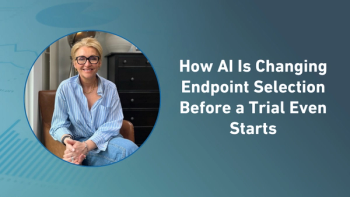
In this video interview, Claire Riches, VP of clinical solutions at Citeline, explains how AI is expanding endpoint selection beyond the bounded experience of a single sponsor team—and surfacing options that traditional design thinking might never have considered.
In today's ACT Brief, we examine what patient-site relationships need beyond easier technology, how to build defensible rare disease evidence from scratch, and how real-world data and AI improve enrollment screening accuracy.
In rare disease drug development where no registry or natural history dataset exists, real-world evidence quality depends on treating evidence engineering as a design-stage decision, defining intended regulatory use and standardizing endpoints, harmonization, and data provenance upfront rather than reconciling gaps after collection.
In this Q&A, Andrea Valente, CEO of uMotif, discusses what it takes to build genuine trust between patients and sites, why making technology easier to use isn't the same as making patient-site interaction more effective, and where the industry is still falling short in its push toward patient-centered trial design.
In today's ACT Brief, we examine why defensible trial data depends on traceability and platform ownership, what CGT site readiness requires as therapy moves to community care, and why data harmonization is AI's primary bottleneck.
Cell and gene therapy access expands into community care settings only when operational coordination, site readiness, and supply chain standardization become first-order priorities equivalent to manufacturing capacity, requiring standardized processes, digital integration, and distributed logistics networks.
In this episode of Beyond Compliance, Otis Johnson, PhD, MPA, founder and principal consultant at Vantix Operations, speaks with Cecilia Xi, PhD, VP of clinical and scientific affairs at Vivalink, about why defensible trial data depends on traceability, platform ownership, and device strategy long after a study ends.