|Articles|January 20, 2015

Orphan Drug Prices Facing Increased Scrutiny

With the US Food and Drug Administration (FDA) approving an all-time record number of orphan drugs during 2014, the pricing of these treatments is set to come under increased scrutiny.

Research and consulting firm GlobalData says the FDA approved an all-time record number of 17 orphan drugs during 2014. This out of the total of 41 new molecular entities approved by the FDA last year. The report from GlobalData further stated that while the rare disease sector may appear to be increasingly lucrative for pharmaceutical companies, some orphan drug prices have recently reached new unprecedented levels and their affordability has become a significant issue for payers.


Read the full text here.


Related to this article

© photon_photo - © photon_photo - stock.adobe.com
Standardized measurement across five oncology centers found that clinical research coordinators rated eSource-enabled workflows positively (Overall Mean Satisfaction 5.79 of 7), with reduced manual entry and electronic data transfer earning strong marks, while perceived reduction in sponsor and monitor queries lagged as the one domain below threshold.
Where the Industry Is Headed as Clinical, Operational, and Real-World Data Connect
In this video interview, Rajneesh Patil, global head of AI, digital, and innovation in clinical development at Syneos Health, describes the industry’s trajectory toward a unified intelligence orchestration environment—and explains why the future isn’t one model that knows everything, but a trusted system that brings the right evidence to the right human decision.
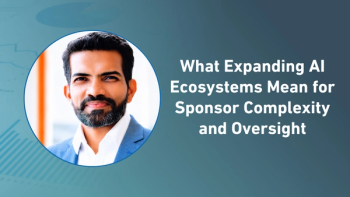
What Expanding AI Ecosystems Mean for Sponsor Complexity and Oversight
In this video interview, Rajneesh Patil, global head of AI, digital, and innovation in clinical development at Syneos Health, argues that CROs must act as orchestrators rather than aggregators—and that the real test of any AI ecosystem is whether it reduces sponsor coordination burden or just hands it back to them.