Three Reasons Why Decentralized Trial Models Using Mobile Research Nurses Yield Greater Financial Returns: New Studies Estimate DCTs Deliver More Than a Five-Fold ROI Due to Reductions in Clinical Phase Cycle Times, Decreases in Screen Failure Rates and Fewer Substantial Protocol Amendments
Decentralized trials (DCTs) have grown in acceptance since the COVID-19 pandemic when mobile research nurses were asked to step in to save hundreds of site-based clinical trials at risk of being postponed or cancelled because of mandated lockdowns. But despite their proven effectiveness, DCTs are still often an afterthought or an add-on option to site-based trials due to cost concerns
The perception has been that deploying mobile research nurses to visit patients at their own homes would be more expensive than site-based trials. However, a recent study by the Tufts Center for the Study of Drug Development (Tufts) shows that not only are DCTs more patient-centric, but they also provide comparatively high returns on investments for sponsors.
Clinical trial endpoints define what success looks like, but patients and caregivers are rarely the ones setting that definition, and the gap between what trials measure and what patients actually value is showing up in post-approval evidence, regulatory submissions, and the design rooms where protocols are written.
In Episode 3 of The Human Side of Clinical Trials, hosts Brian S. McGowan, PhD, FACEHP, chief learning officer and co-founder of ArcheMedX, Inc., and Kelly Ritch, chief operating officer of ArcheMedX, Inc., speak with Jason Riis, PhD, CEO and chief behavioral scientist at Behavioralize, about why a well-written protocol doesn’t always translate into consistent execution, and how designing for the way people actually think and learn can reduce site burden and the need for costly unlearning.
In today’s ACT Brief, we examine what it will take to scale EHR-to-EDC connections for real-time trials, how the FDA is reimagining rare disease drug development, and why oncology real-world evidence still faces persistent data barriers.
A new white paper and public engagement process outline the FDA’s commitment to building fit-for-purpose evidentiary standards, stronger patient voice integration, and greater regulatory predictability across rare disease drug development and review.
Real-time clinical trials require standardized digital data capture at the point of care through scaled eSource-EDC-EHR integration, but progress stalls because competing standards lack regulatory enforcement and one-off system integrations cannot scale beyond single studies without industry-wide alignment and legal clarity on data ownership.
In today's ACT Brief, we examine how representation gaps in trials are shaped by structural design decisions, how new partnerships automate data transfer from site systems to sponsor platforms, and how Roche is licensing a novel obesity target from a biotech pioneer.
The partnership gives RealTime's network of more than 3,000 research sites access to the Archer platform for direct, automated data transfer from eSource to any sponsor electronic data capture system or data destination.
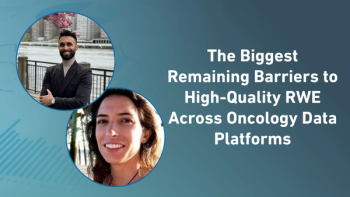
In this video interview, Saamir Pasha and Carole Berini, PhD, of Ontada, identify three persistent obstacles to consistent real-world evidence generation in oncology—inconsistent data capture, structural data limitations that modeling alone can't fix, and the need for earned generalizability through deliberate multi-site validation.