Register Now - Beyond Recruitment: The Future of Patient Site Engagement in Oncology Clinical Trials
|Articles|June 6, 2023

Applied Clinical Trials

  • Applied Clinical Trials-06-01-2023
  • Volume 32
  • Issue 6

ASCO, Clinical Trials for Life

A look at the clinical trials side of oncology.

As I write this, it is three days before the ASCO Annual Meeting, the first in a series of conferences that arrive in rapid succession, such as CMSC, ASMS, ACR, and the many more conferences that the healthcare brands under MJH Life Sciences® cover. For the Applied Clinical Trials’ audience, we also look forward to attending the Drug Information Association (DIA) Global Annual Meeting at the end of June in Boston.

However, it is ASCO that holds a special place at the heart of MJH. Our flagship iconic oncology brands include OncLive®, Targeted Oncology™, CancerNetwork®, and CURE®. We also offer academic and community oncologists, nurses, patients, and all involved with the cancer care journey with an unmatched selection of resources. These include our live educational events, along with digital and print solutions that deliver the peer-to-peer education needed for improving patient outcomes. From video editorials to conference coverage, we independently produce content that combines objective facts and expert insights for the cancer care community.

While Applied Clinical Trials’ mission isn’t to report the clinical trial results, it is the results from the actual conduct of these oncology clinical trials that are reported. Where would oncology trials be without a team of investigators, clinical research coordinators, data managers, lab providers, medical writers, and many more? That is where Applied Clinical Trials comes in, on the operations side of drug development.

Clinical trials represent the research side of the clinical care continuum in oncology. Of all the therapies in development, oncology is the largest in the pipeline. That is representative of the true need for cancer treatments. While many patients can participate in clinical trials, many more do not or are not given access due to lack of knowledge or overly strict exclusion criteria.

On both sides of our business—healthcare and industry sciences—we continuously hear about those who have entered the field of oncology in a variety of roles to make an impact on those suffering from cancer. Whether it is an investigator, a pharma CEO, CRO project manager, or clinical research nurse, many are on the front lines with their stories that touch a tremendous amount of people with their compassion. We would like to thank them all for bringing us one step closer to a world without cancer.

Thank you for reading.

Mike Hennessy Jr., president and CEO, MJH Life Sciences®

Related to this article

Closing the Community Access Gap: Q&A with Kent Thoelke, Paradigm Health
In this Q&A, Kent Thoelke, CEO of Paradigm Health, discusses why participation gaps in community and rural settings come down to both patient cost barriers and site infrastructure, how legacy workflows weigh on community clinics, and what policy and technology changes it would take to make clinical research a real care option for more patients.
© Grispb - © Grispb - stock.adobe.com
Mistral and OpenAI produced identical overall eligibility labels across 200 synthetic patient-study assessments, with criterion-level disagreements concentrated in inclusion criteria where models switch between “Uncertain” and “Not included” when records lack sufficient evidence, so model choice should be driven by deployment architecture, control, and cost rather than assumed interchangeability.
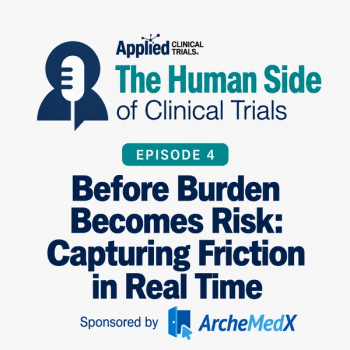
The Human Side of Clinical Trials: Before Burden Becomes Risk, Capturing Friction in Real Time
In Episode 4 of The Human Side of Clinical Trials, host Brian S. McGowan, PhD, FACEHP, chief learning officer and co-founder of ArcheMedX, Inc., speaks with Jason Riis, PhD, CEO and chief behavioral scientist at Behavioralize, about how capturing friction closer to the moment it happens can reveal unclear instructions, technology friction, and workarounds that retrospective surveys and debriefs tend to miss.