Register Now - Beyond Recruitment: The Future of Patient Site Engagement in Oncology Clinical Trials
|Articles|May 2, 2012

US Biosimilars Under Threat?

While the FDA continues to develop its guidance for US biosimilars, including a one-day public hearing on May 11, 2012, the basic legal underpinnings of biosimilars in the United States. may be under threat, as the Supreme Court debates the healthcare law, a large chunk of which includes provisions for biosimilars.

As background, biosimilars were discussed for many years in the United States., but unlike Europe, no regulations were developed. As part of the health care law’s cost controlling measures and to promote biosimilars innovation in the United States, the Biologics Price Competition and Innovation Act (PPACA) was included in the bill. However, the act was stated to be “non-severable” from the rest of this law, meaning that if the PPACA is struck down, so is the biosimilars part of the law. That means, even if the Supreme Court does not specifically object to the Biologics Price Competition and Innovation Act, its mere inclusion in the PPACA could lead to its downfall. As a side note, the Supreme Court does not seem to have much of an opinion on generic biologics one way or the other, with Supreme Court Justice Stephen Breyer referring to “the biosimilar thing” during oral arguments.


This uncertainty comes at precisely the wrong time. Innovation in biologics has taken off in the Unitd States. The FDA reported that at least 35 requests for biosimilar pre-IND meetings were made in reference to 11 biological drugs as of February 15, 2012; as of that date, 21 pre-IND sponsor meetings were held and 9 INDs had been received. The FDA is instituting measures which are likely to further increase the popularity of this program, including providing a path to regulatory approval in the United States for similar biological products licensed outside the United States.

Although the Biologics Price Competition and Innovation Act could be passed again as a separate law, the upcoming presidential election and campaign maneuvering are both likely prevent any real action on that particular motion. The bill will probably be swept to the side as “politicking” takes the place of “policy making.” This would be unfortunate, as the Act would clearly benefit consumers by reducing the price of biological drugs, which are typically among the most expensive on the market. The bill would also prevent originator biotech companies from enjoying a de facto “post patent” monopoly, due to the current expense and uncertainty of achieving regulatory approval for “generic” forms of these drugs.

Originally written by Dr. D’vorah Graeser for Pharmaceutical Executive. Dr. Graeser is the founder and CEO of Graeser Associates International (GAI), an international healthcare intellectual property firm.


Related to this article

Closing the Community Access Gap: Q&A with Kent Thoelke, Paradigm Health
In this Q&A, Kent Thoelke, CEO of Paradigm Health, discusses why participation gaps in community and rural settings come down to both patient cost barriers and site infrastructure, how legacy workflows weigh on community clinics, and what policy and technology changes it would take to make clinical research a real care option for more patients.
© Grispb - © Grispb - stock.adobe.com
Mistral and OpenAI produced identical overall eligibility labels across 200 synthetic patient-study assessments, with criterion-level disagreements concentrated in inclusion criteria where models switch between “Uncertain” and “Not included” when records lack sufficient evidence, so model choice should be driven by deployment architecture, control, and cost rather than assumed interchangeability.
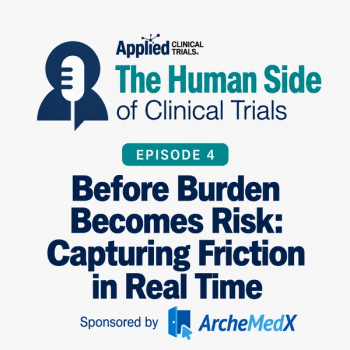
The Human Side of Clinical Trials: Before Burden Becomes Risk, Capturing Friction in Real Time
In Episode 4 of The Human Side of Clinical Trials, host Brian S. McGowan, PhD, FACEHP, chief learning officer and co-founder of ArcheMedX, Inc., speaks with Jason Riis, PhD, CEO and chief behavioral scientist at Behavioralize, about how capturing friction closer to the moment it happens can reveal unclear instructions, technology friction, and workarounds that retrospective surveys and debriefs tend to miss.