Register Now - Beyond Recruitment: The Future of Patient Site Engagement in Oncology Clinical Trials
|Articles|November 18, 2014

Tufts CSDD: Cost to Develop New Drug is $2.6B

Cost to Develop and Win Marketing Approval for a New Drug Is $2.6 Billion, According to the Tufts Center for the Study of Drug Development

The last time the Tufts Center for the Study of Drug Development studied costs of developing a new prescription medicine that gains marketing approval was in 2003. At the time, the costs was $802 million for drugs first tested in human subjects for the time period 1983 to 1994. In 2013, that cost would be $1,044 million. With the analysis released today of the time period between 1995 to 2007, in 2013 dollars, the cost was $2,558 million.

Joseph A. DiMasi, director of economic analysis at Tufts CSDD and principal investigator for the study, said that rising drug development costs have been driven mainly by increases in out-of-pocket costs for individual drugs and higher failure rates for drugs tested in human subjects. He noted in the release that factors that likely have boosted out-of-pocket clinical costs include increased clinical trial complexity, larger clinical trial sizes, higher cost of inputs from the medical sector used for development, greater focus on targeting chronic and degenerative diseases, changes in protocol design to include efforts to gather health technology assessment information, and testing on comparator drugs to accommodate payer demands for comparative effectiveness data.

Lengthening development and approval times were not responsible for driving up development costs, according to DiMasi.


Read the full release here.


Related to this article

Closing the Community Access Gap: Q&A with Kent Thoelke, Paradigm Health
In this Q&A, Kent Thoelke, CEO of Paradigm Health, discusses why participation gaps in community and rural settings come down to both patient cost barriers and site infrastructure, how legacy workflows weigh on community clinics, and what policy and technology changes it would take to make clinical research a real care option for more patients.
© Grispb - © Grispb - stock.adobe.com
Mistral and OpenAI produced identical overall eligibility labels across 200 synthetic patient-study assessments, with criterion-level disagreements concentrated in inclusion criteria where models switch between “Uncertain” and “Not included” when records lack sufficient evidence, so model choice should be driven by deployment architecture, control, and cost rather than assumed interchangeability.
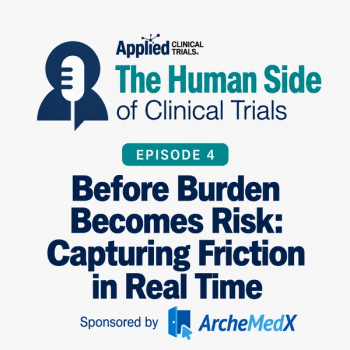
The Human Side of Clinical Trials: Before Burden Becomes Risk, Capturing Friction in Real Time
In Episode 4 of The Human Side of Clinical Trials, host Brian S. McGowan, PhD, FACEHP, chief learning officer and co-founder of ArcheMedX, Inc., speaks with Jason Riis, PhD, CEO and chief behavioral scientist at Behavioralize, about how capturing friction closer to the moment it happens can reveal unclear instructions, technology friction, and workarounds that retrospective surveys and debriefs tend to miss.