


Nonprofit merger aims to streamline financial assistance, case management, and trial participation resources for patients navigating complex care pathways.
Nonprofit merger aims to streamline financial assistance, case management, and trial participation resources for patients navigating complex care pathways.
In today’s ACT Brief, we examine how the Verana Health-COTA merger is evolving real-world data use, the FDA’s new framework for individualized ultra-rare disease therapies, and what a decade of cross-industry collaboration reveals about the future of clinical development.

Draft guidance outlines a “plausible mechanism” pathway to support approval of highly targeted therapies when traditional trials are not feasible.
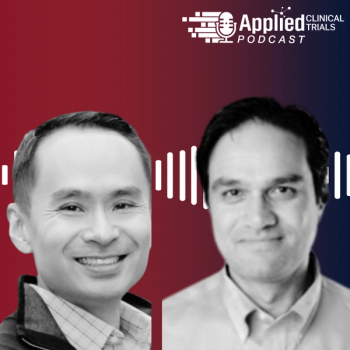
In this episode of the Applied Clinical Trials Podcast, C.K. Wang, MD, chief medical officer at COTA; and Sujay Jadhav, CEO of Verana Health, discuss how their organizations’ merger is advancing the use of real-world data to inform trial design, patient recruitment, and regulatory decision-making.
In today’s ACT Brief, we explore how Bayesian trial designs are gaining traction in rare disease research, what priorities clinical operations leaders should focus on in 2026, and how rare disease science is shaping broader drug development strategies.
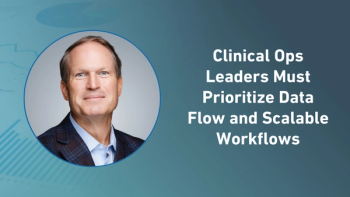
Jonathan Andrus, co-CEO of CRIO, discusses how governance across the data lifecycle, site-focused technology adoption, and scalable AI-enabled workflows will define operational readiness in 2026.
In today’s ACT Brief, we explore how sites are taking the lead on AI adoption to strengthen feasibility and enrollment, why earlier cross-functional alignment is critical in data-driven trials, and how Phase I strategy is shifting toward quantitative evidence generation.

Jonathan Andrus, co-CEO of CRIO, highlights the need for earlier cross-functional collaboration and greater site involvement to ensure data quality, workflow alignment, and operational success.
In today’s ACT Brief, we examine how fragmented data collection continues to challenge trial quality, how hybrid outsourcing and AI are reshaping execution strategies, and why calls are growing for a risk-based FDA pathway for early-stage studies.

As sponsors navigate rising complexity, AI adoption, and global scale, outsourcing strategies are shifting toward hybrid models, deeper CRO collaboration, and function-level flexibility to support execution in 2026.
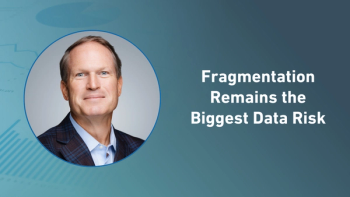
Jonathan Andrus, co-CEO of CRIO, outlines how disconnected systems and inconsistent data collection across sites create risk, while centralized eSource approaches present a major opportunity.
In today’s ACT Brief, we examine how protocol-driven eSource is reshaping data capture at sites, how digital protocols and data sharing are redefining trial execution, and how a Duchenne study termination highlights growing operational risks in rare disease development.

Jonathan Andrus, co-CEO of CRIO, explains how protocol-driven eSource templates and standardized data capture are improving consistency, oversight, and efficiency across clinical trial sites.
In today’s ACT Brief, we examine how site-level data capture is becoming central to trial execution, how Merck and Mayo Clinic are scaling AI-driven discovery, and how Gilead’s latest acquisition strengthens its position in cell therapy for multiple myeloma.

Jonathan Andrus, co-CEO of CRIO, discusses how increased reliance on site-based technologies and eSource is strengthening data quality, compliance, and trust at the point of patient encounter.
New collaboration integrates Mayo Clinic’s multimodal clinical data and platform capabilities with Merck’s AI research to support earlier decision-making and improve development success rates.
In today’s ACT Brief, we examine how Evinova is scaling AI-driven clinical development through industry collaboration, how the clinical trial project manager role is evolving amid growing complexity, and how FDA scrutiny of compounded GLP-1s could reshape market dynamics.

New partnerships with Astellas, AstraZeneca, and Bristol Myers Squibb position Evinova’s AI-native platform as a shared engine for optimizing clinical development, improving efficiency, and accelerating timelines.
In today’s ACT Brief, we examine how SCOPE 2026 reinforced the link between speed and strategy, how AI adoption is driving real-world efficiency gains, and how FDA’s evolving evidence standards could reshape approval pathways.

Across keynotes, panels, and expert interviews, this year’s SCOPE Summit underscored that accelerating clinical research depends on disciplined data strategies, earlier operational planning, and sustained focus on patients, sites, and community trust.

Angela Zubel, chief development officer, Debiopharm, emphasizes that organizations willing to standardize data and adopt practical AI tools are already gaining efficiency, cost savings, and stronger real-time oversight across development programs.
In today’s ACT Brief, we examine how predictive analytics are shaping portfolio decisions, how industry collaboration is scaling digital data standards, and how FDA review of an mRNA flu vaccine candidate is back on track.

Nonprofit biopharma consortium details progress in digital data flow, pragmatic trial design, safety modernization, and regulatory engagement in “The Power of Forward.”

Angela Zubel, chief development officer, Debiopharm, outlines how predictive models are improving compound selection from early clinical phases, while noting the ongoing challenges of forecasting success from preclinical development to patient outcomes.
In today’s ACT Brief, we examine how AI is enabling continuous trial monitoring and faster site decisions, how provider participation influences recruitment in pragmatic trials, and how leadership restructuring at HHS may shape health policy execution.

Angela Zubel, chief development officer, Debiopharm, explains how AI-enabled site selection, patient allocation, and real-time data monitoring can reduce costs, shorten timelines, and limit inefficiencies caused by non-performing sites.
In today’s ACT Brief, we examine how AI is shifting from pilot programs into daily development workflows, how a new adoption platform is helping sponsors integrate digital measurement tools, and how global competition and data-driven site selection are reshaping clinical trial activity.

New FDA-funded resource consolidates regulatory guidance, validation standards, and implementation best practices to help sponsors and developers accelerate adoption of sensor-based digital health technologies in medical product development.

Angela Zubel, chief development officer, Debiopharm, discusses why 2026 marks a shift from AI pilots to broader operational implementation across clinical trials and drug development programs.
In today’s ACT Brief, we explore how eSource adoption is advancing with AI-enabled validation and interoperability, examine how flexible outsourcing models are helping sponsors balance control and efficiency, and highlight why adaptive, simulation-driven trial design is becoming essential to improving study success.