

As trials expand into new geographies and decentralized models mature, sponsors are confronting a core operational challenge in 2026: how to scale global execution while reducing system complexity and day-to-day burden on research sites.
As trials expand into new geographies and decentralized models mature, sponsors are confronting a core operational challenge in 2026: how to scale global execution while reducing system complexity and day-to-day burden on research sites.

The FDA and EMA have aligned on ten guiding principles for the responsible use of artificial intelligence across the drug development lifecycle, establishing a shared framework to support innovation, regulatory consistency, and patient safety.
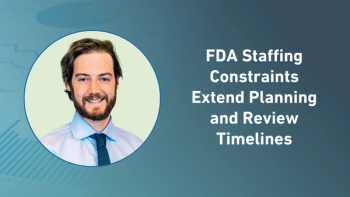
Charlie Paterson, partner at PA Consulting, explains how reduced FDA capacity and staff turnover have led to longer regulatory timelines, increased preparation for agency interactions, and delayed feedback during early trial planning.
In today’s ACT Brief, we look at how real-world evidence is reshaping trial design rather than replacing trials, what Worldwide Clinical Trials’ acquisition of Catalyst Clinical Research signals for oncology-focused CRO models, and new data showing feasibility and enrollment challenges remain stubborn across global trials.

Worldwide Clinical Trials’ acquisition of Catalyst Clinical Research strengthens oncology expertise and functional service provider capabilities, expanding global trial delivery and flexible resourcing models across early and late phase development.
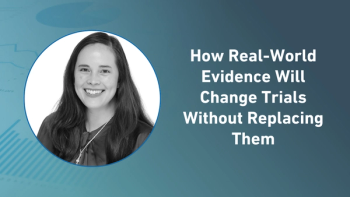
See how real-world evidence is enabling smaller, smarter, and more efficient trial designs through hybrid models, external comparators, and continuous patient monitoring—while preserving the role of traditional clinical trials.
In today’s ACT Brief, we examine why ESG efforts in clinical development are shifting into vendor oversight, what data and governance barriers still limit broader use of de-identified RWE in submissions, and new Phase II obesity data from Roche as its program moves toward Phase III.

Assess the data quality, linkage, transparency, and auditability challenges that sponsors must overcome to make de-identified real-world evidence fit for regulatory submissions.
In today’s ACT Brief, we explore why decentralized trial innovations struggle to scale without better change management, where real-world evidence most realistically complements traditional trials, and how efficiency, AI, and platformization are expected to reshape clinical operations in 2026.

A look at how efficiency, access, platformization, AI, non-traditional players, and regulatory recovery are expected to reshape clinical operations in 2026.

Understand where real-world evidence most effectively complements or substitutes traditional trial data, from post-market surveillance and label expansion to challenging areas such as rare disease research.
In today’s ACT Brief, we examine how large de-identified datasets are reshaping trial design and site strategy, why global pharmaceutical production is expected to cool after a tariff-driven surge, and what FDA’s new M4Q(R2) draft guidance means for quality submissions.
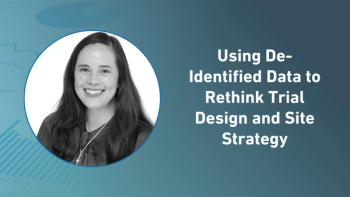
Explore how large-scale, de-identified real-world datasets enable more representative trial design, improve site selection, and support patient identification beyond the limits of traditional clinical study populations.
In today’s ACT Brief, we look at how FDA policy is accelerating the use of de-identified real-world evidence in clinical development, why a new bipartisan funding package could stabilize federal research agencies, and how the US withdrawal from the World Health Organization reshapes global health coordination.

A bipartisan spending package would modestly increase 2026 funding for HHS, including targeted gains for NIH and CDC programs, as lawmakers move to avert a government shutdown after a year of proposed cuts and operational disruption.
Examine how the FDA’s acceptance of de-identified real-world evidence shifts clinical operations workflows and why understanding the difference between pseudonymized and anonymized data is now critical for privacy, compliance, and evidence generation.
In today’s ACT Brief, we look at how global clinical development is evolving through decentralized models and emerging markets, why site-centric practices are becoming critical to faster study activation, and how a new Pfizer–Novavax agreement reflects shifting vaccine development strategies.

Consider how sponsor and CRO practices that prioritize site needs, clarity, and partnership can strengthen trust, sustain momentum, and speed activation without sacrificing the human experience.
In today’s ACT Brief, we examine why life sciences companies are maintaining DEI commitments amid political pressure, what’s driving longer site activation timelines and how sponsors can reverse the trend, and how FDA and EMA are aligning on principles for AI use in drug development.

Analyze the operational pressures driving longer activation timelines, from protocol complexity to site competition, and learn how earlier, more flexible site engagement can restore momentum.
In today’s ACT Brief, we look at why durable signal closure is emerging as a defining metric in risk-based quality management, how AI can reduce startup delays without burdening sites, and how patient-centric drug design is reshaping the CDMO landscape.

Examine how practical AI applications can streamline contracts and startup workflows while preserving the central role of investigators, site staff, and patient relationships in clinical research.
In today’s ACT Brief, we look at efforts to address sex-based evidence gaps in Parkinson’s disease research, why communication failures continue to delay study startup, and how a new White House healthcare plan aims to reduce drug and insurance costs.

Unpack why persistent communication breakdowns between sponsors, CROs, and sites undermine startup efficiency—and how bidirectional, site-informed engagement models can improve collaboration and momentum.
In today’s ACT Brief, we look at how AI is reshaping clinical trial registries into discovery tools, why contract and budget negotiations remain the biggest drag on site activation timelines, and how integrated data platforms are closing gaps across payer, provider, and patient care.

Explore how contract standardization, proactive budget alignment, and AI-enabled negotiation tools can reduce site activation delays and turn agreements into strategic accelerators rather than administrative bottlenecks.
In today’s ACT Brief, we examine what will separate sponsors that scale AI beyond pilots in 2026, break down the FDA’s new draft guidance on Bayesian statistical methods in clinical trials, and explore how poor planning and trial design continue to place operational strain on research sites.
The FDA’s new draft guidance on Bayesian methodology signals a shift toward more flexible, data-driven clinical trial designs, enabling sponsors to use prior data and adaptive approaches to improve efficiency, reduce timelines, and support regulatory decision-making.

See what will distinguish sponsors that scale AI into core operations from those stuck in experimentation, and why redesigning underlying processes—not just optimizing workflows—is critical to realizing long-term value.
In today’s ACT Brief, we look at how community research sites can stay competitive under efficiency pressure, why 2026 is shaping up as a turning point for platform-based clinical operations, and how AI is being positioned to better match patients to therapies.