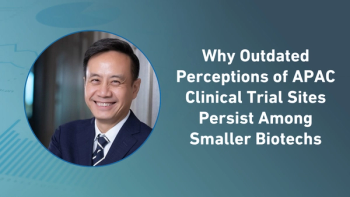
In this video interview, James Cheong, senior vice president of Asia Pacific at Precision for Medicine, outlines why faster recruitment, local data requirements for registration, and lower costs make APAC attractive for global Phase III programs.
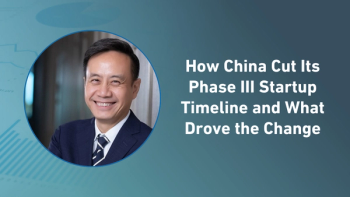
In this video interview, James Cheong, senior vice president of Asia Pacific at Precision for Medicine, details how NMPA reforms, parallel reviews, and expanded reviewer capacity brought China’s startup timelines in line with the US and Europe, and could shorten them further.
In this video interview, James Cheong, senior vice president of Asia Pacific at Precision for Medicine, explains how regulatory reform and inspection data contradict the view that APAC sites are slower or lower quality, and why sponsors need to update their assumptions.
AI can draft a CSR in minutes, but the report only reflects evidence that has already converged, so faster drafting shifts the bottleneck to upstream reconciliation, database-lock readiness, and human accountability rather than shortening the trial itself.
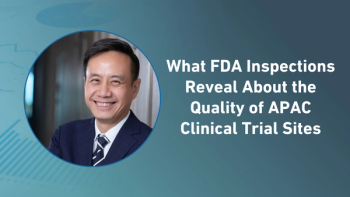
In this video interview, James Cheong, senior vice president of Asia Pacific at Precision for Medicine, explains how FDA inspection findings at APAC sites compare with those in the US and Europe, and why the common issues, such as informed consent versioning, are not unique to the region.
Community participation gaps look less like a question of patient willingness and more like a financing and infrastructure problem that no single bill has yet solved.
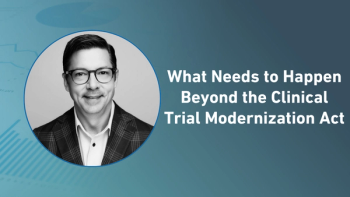
In this video interview, Kent Thoelke, CEO of Paradigm Health, calls for safe harbor protections, CMS reimbursement safeguards, and funding mechanisms modeled on EHR meaningful use to help community and rural institutions participate in research on par with academic centers.
In this Q&A, Kent Thoelke, CEO of Paradigm Health, discusses why participation gaps in community and rural settings come down to both patient cost barriers and site infrastructure, how legacy workflows weigh on community clinics, and what policy and technology changes it would take to make clinical research a real care option for more patients.