







Decentralized Clinical Trials
Latest News
Advertisement
Latest Videos







Shorts

Advertisement
More News
Advertisement

As the clinical research landscape evolves, decentralized clinical trials (DCTs) have emerged as a foundational competency, enabling broader patient participation, increasing trial efficiency, and driving more inclusive, real-world data collection. However, the successful execution of DCTs requires more than just innovative technology—it demands a comprehensive strategy that addresses the unique challenges of decentralization.

Download the case study and learn how Quest Diagnostics and PatientsLikeMe helped accelerate recruitment and enrollment for a struggling study.

As trials expand into new geographies and decentralized models mature, sponsors are confronting a core operational challenge in 2026: how to scale global execution while reducing system complexity and day-to-day burden on research sites.

Acknowledging the need to optimize decentralized adoption of innovation in clinical research.

Global clinical development has evolved into a technology-enabled, highly regulated, and geographically diversified enterprise, as sponsors adapt trial design, partnerships, and operations to meet rising demands for scale, speed, and patient-centricity.

What Patients Want From Remote Trials: New Survey Data Reveals Preferences Around Usability, Trust, and Participation
ByJiang Li
New survey data show a strong patient preference for fully remote clinical trials, underscoring how convenience, intuitive technology, and FDA-cleared digital tools are reshaping enrollment and retention strategies as decentralized models become a lasting fixture in clinical research.

A new global Tufts CSDD survey of 387 investigative site professionals reveals broad experience with digital and decentralized trial tools, growing site-driven technology investments, and strong support for remote data collection—while highlighting persistent burdens tied to fragmented systems, training demands, and financial strain.

As decentralized and hybrid trial models expand, eConsent is emerging as a critical tool for improving participant understanding, reducing site burden, and strengthening data integrity through digital automation, accessibility, and regulatory compliance.

Interviews with biopharma leaders and outsourcing partners reveal emerging trends in clinical trial resourcing models, highlighting a shift away from traditional full-service CRO arrangements toward hybrid strategies that balance in-house expertise, trusted consultants, and selective outsourcing.

A unified technology approach improves study efficiency and data collection.
Advertisement
As clinical research increasingly relies on RWD to enhance trial design and patient insights, tokenization has emerged as a critical solution for securely linking disparate datasets while protecting patient privacy.

In this Q&A, Megan Bailey, EVP and president of central laboratories and international, Labcorp, discusses how central labs are evolving beyond testing to become strategic partners in clinical trial success.

In this video interview, Thierry Escudier, portfolio lead, Pistoia Alliance, discusses the alliance’s latest step in evaluating the sustainability of digital versus traditional clinical trial approaches.

Andrew Mackinnon, Executive GM, Medable, discusses how AI-driven innovations are streamlining clinical trials through enabling scalable operations.

Andrew Mackinnon, Executive GM, Medable, explains how the company’s recent approval in France could support the expansion of digital and decentralized clinical trials across Europe, particularly through enhanced e-consent practices.

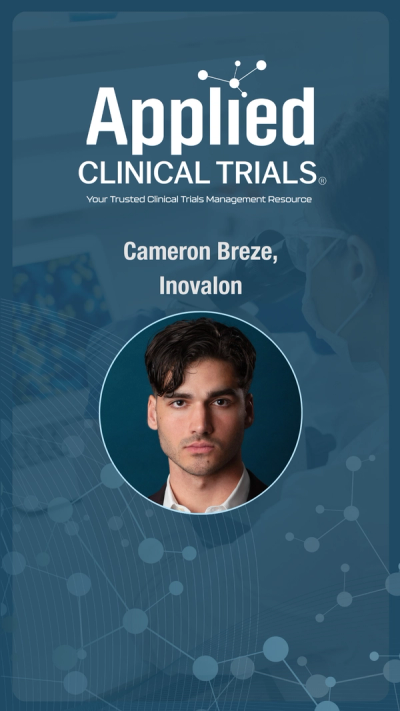
In this video interview, Cameron Breze, product manager, Inovalon, highlights current trends with decentralization and how a dual approach can ensure flexibility across different therapeutic areas.
Addressing data integrity and compliance concerns.

In an interview with ACT senior editor Andy Studna at SCOPE Summit, Pamela Tenaerts, chief scientific officer, Medable, discusses the need for more data around the implementation of clinical technology.
Progress made in measuring decentralized clinical trial use in patient recruitment and retention.
In an interview with ACT senior editor Andy Studna at SCOPE Summit, Tenaerts, chief scientific officer, Medable, highlights the recent findings and how decentralized elements can improve access to underrepresented populations.

Research from the Tufts Center for the Study of Drug Development’s PACT Consortium shows DCTs encourage higher participation across multiple demographic groups.

Use of decentralized approach in a Phase 1 pharmacokinetic trial shows the ability to enable remote data collection and monitoring, which could improve patient access and enhance the efficiency of clinical research.

Compliance with state telemedicine requirements is imperative, as not only will most clinical trial sponsors contractually require such compliance, but non-compliance may also subject the practitioner to licensure violations and liability.
Advertisement
Advertisement
Trending on Applied Clinical Trials Online
1
FDA Seeks Public Input on Early-Phase Clinical Trial Design for Ibogaine
2
HHS Launches SURPASS Program and Three Complementary Initiatives to Transform Clinical Trial Design and Infrastructure
3
Mixed Outsourcing Models Are Spreading. Is Sponsor Oversight Keeping Up?
4
Hierarchical Endpoints in Cardiology: How Much Treatment Benefit, and From Where
5