







Risk-Based Monitoring
Latest News
Advertisement
Latest Videos







Shorts
0:45
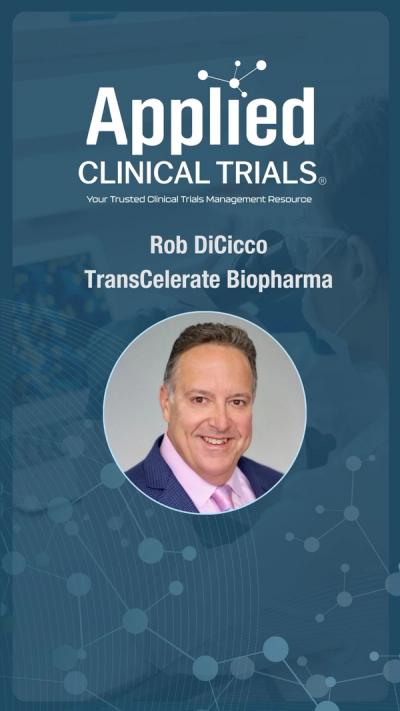
A Blueprint to De-risk Your Regulatory Program
15 days ago
by
Rob DiCicco(+1 more)
0:40
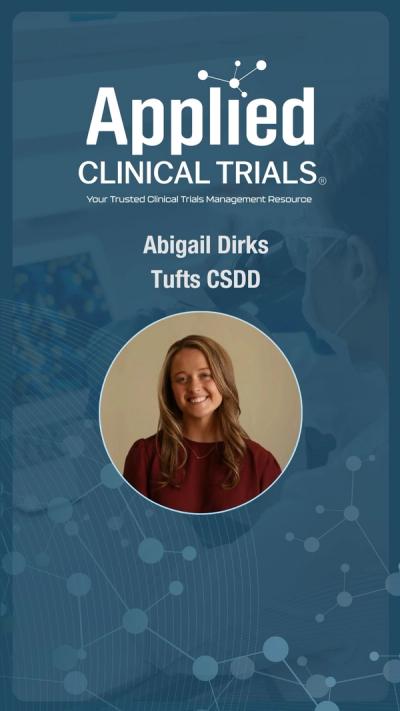
Time Savings as the Ultimate Driver in Drug Development
a month ago
by
Abigail Dirks, MS(+1 more)

0:42
Why RBQM Adoption is Essential for Drug Development
a month ago
by
Sylviane de Viron(+1 more)

0:39
Why Flexibility is the Essential Part of Protocol Design and Risk Assessment
a year ago
by
Vera Pomerantseva(+1 more)
Advertisement
More News
Advertisement

In this Q&A, Raj Indupuri, CEO and co-founder of eClinical Solutions, discusses what the FDA's push toward continuous data review actually demands of sponsors operationally, why fragmented systems are the core obstacle, and how AI and real-world evidence fit into a more data-driven regulatory environment.

A Tufts CSDD study quantifies risk-based quality management's net financial value at $13.8 million per Phase III oncology trial, with ROI multiples up to 22.7x driven primarily by cycle time reductions rather than monitoring cost savings.

Clinical Trials Day is an international celebration of everyone who makes medical discoveries possible. It is also an opportunity to shine a light on the innovations helping to keep research rising.

Safety monitoring generates substantial signal volume across risk-based quality management tools, but only 30% to 36% of signals correspond to confirmed issues, suggesting the need for better prioritization, signal consolidation, and alignment between detection and proportional action.

Integrating technology and collaboration to close the evidence gap.

The execution translation gap—the failure to convert identified problems into coordinated, timely action—costs millions per trial through delayed amendments, persistent deviations, and slow site activation, yet remains addressable through aligned accountability and proactive execution management.

Pharma modernization initiatives stall not from lack of ambition but from expanding governance layers that distance leadership from execution, slowing decision velocity and delaying the systems integration that drives competitive advantage.

Risk-based monitoring requires integrated data systems, validated analytics, and strong governance to work effectively across global trials, but sponsors face significant technical and operational challenges that demand strategic solutions and organizational alignment.

Most protocol deviations start as human problems, not operational ones, but risk-based monitoring typically relies on lagging indicators that arrive too late to prevent these problems instead of measuring readiness during training, when intervention still matters.
Quality tolerance limits work best as a small set of focused guardrails that prompt rapid investigation and documented action, not as documentation exercises, with early breaches expected when sample sizes are small.
Advertisement

Sylviane de Viron, data and knowledge manager at CluePoints, shares new data highlighting regional variations in clinical trial risks—and how proactive risk planning based on up-to-date data is needed to overcome them.

As ESG expectations rise across clinical development, sponsors are finding that sustainability efforts gain traction only when embedded into existing vendor oversight and quality management processes rather than treated as a standalone reporting exercise.
Analysis of more than 880 clinical trials shows that while statistical data monitoring and key risk indicator signals close on similar timelines, durability—not speed—is the defining differentiator in effective, risk-based quality management.

Comparator drug sourcing in the EU is shaped by a defined set of availability, regulatory, competitive, and logistical pressures, alongside practical strategies to reduce risk and protect trial timelines.

As clinical trials become more complex and decentralized, the role of the CRA is evolving from site monitor to strategic, digitally fluent partner, requiring expertise in hybrid oversight, risk-based monitoring, and multi-system data management.

How a unified approach to clinical data management, powered by artificial intelligence and advanced analytics, can elevate clinical trial monitoring and redefine how teams assess, act on and learn from data.
To maximize the impact of signal detection, KRI frameworks should follow a few guiding principles.

By adopting structured practices today, clinical trials can deliver diagnostics that are reliable, impactful, and ready for tomorrow’s healthcare needs.

As clinical trials become more complex, success depends on early collaboration, thoughtful protocol design, and practical strategies to manage risk, reduce delays, and support patients.

Clinical Trial Failure Isn’t an Inevitable Risk—It’s Insurable and Opening the Door to New Investors
Clinical trial failure insurance is turning biotech’s most costly risk into a manageable asset, opening new pathways for funding and innovation.
Exploring stat-based testing for variables that identify deliberate data manipulation in clinical trials.

While randomization is required by regulatory bodies, it is up to the sponsor on how to conduct it.

In this episode of the Applied Clinical Trials Podcast, David Nickerson, head of clinical quality management at EMD Serono; and Arlene Lee, director of product management, data quality & risk management solutions at Medidata, discuss the newest ICH E6(R3) GCP guidelines as well as how TransCelerate and ACRO have partnered to help stakeholders better acclimate to these guidelines.

In this video interview, Rob Jones, product manager, TMF practice area, Pharmalex, discusses how risk-based approaches must be prioritized amidst the increased demand for quality and compliance.

In this video interview, Rob Jones, product manager, TMF practice area, Pharmalex, highlights recent ICH guidelines and how risk should be an area of focus as trial designs continue to get more complex.
Advertisement
Advertisement
Trending on Applied Clinical Trials Online
1
The Control Plane for Agentic Clinical Operations: Governing Autonomous Digital Actors in Regulated Trials
2
HHS Launches SURPASS Program and Three Complementary Initiatives to Transform Clinical Trial Design and Infrastructure
3
Where AI Leads in Trial Design—and Where Humans Still Need To
4
Hierarchical Endpoints in Cardiology: How Much Treatment Benefit, and From Where
5