Register Now - Unlocking Longitudinal Patient-Reported Outcomes: The Untapped Value of Specialty Pharmacyocking
Commentary|Videos|February 21, 2025

Best Practices for Reducing Risk Upfront in a Clinical Trial

In this video interview, Dominique Demolle, CEO of Cognivia, discusses how understanding the patient journey from the very beginning of a study can help mitigate risk and improve patient centricity.

In a recent video interview with Applied Clinical Trials, Dominique Demolle, CEO of Cognivia, discussed challenges in improving patient adherence in clinical trials. She highlighted the reliability of adherence tracking methods, such as pill counts and ingestible sensors, and the need for tailored patient engagement strategies. Some potential solutions to these challenges include the use of artificial intelligence and designing more patient-centric studies.

ACT: What are some best practices sponsors can use to make their trials more patient-centric and mitigate risk even further upfront?

Demolle: I think that most of them are doing what I'm going to say, and hopefully I would say and repeat, proactive thinking in terms of patient engagement. There has been in the US and Europe a great initiative like the CTTI in the US, or PARADIGM in Europe about providing some guidance about patient engagement. Clearly, from the very beginning of the protocol development, but up to and including the survey at the end about the patient experience is something that is definitely going to help, and as I mentioned, even more now that we are going to embrace an even larger diversity of patients, so for sure, patient engagement is a must. The second thing is, yes, but. Not everything fits all, so the more we are going to be able to tailor the support that we are going to provide to a patient, the more successful we will be. We have mentioned AI and machine learning that could be a complementary strategy to tactics and solutions that are already put in place, but really to ensure a higher probability for those patients to remain engaged and understand why they take the drug and understand why it is important and why it could be beneficial for them. Proactive thinking, integrated strategy, and taking the best of each solution to really map and try to tackle the problem.

Related to this article

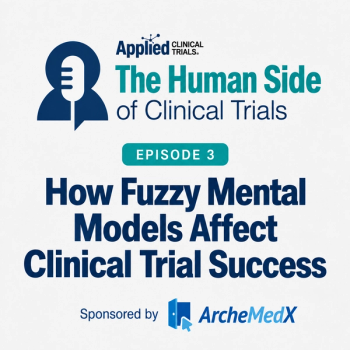
The Human Side of Clinical Trials: How Measuring Readiness at Training Predicts Trial Risk Before It Shows Up in the Data
This episode of The Human Side of Clinical Trials, hosted by Brian S. McGowan, PhD, FACEHP, chief learning officer and co-founder of ArcheMedX, Inc., and Kelly Ritch, chief operating officer of ArcheMedX, Inc., explores why training completion metrics like attendance and quiz scores fail to capture true study readiness, and how measuring both competence and confidence can reveal trial risks before enrollment even begins.
Why Seizure Counts Alone Can't Define Success in Epilepsy Trials
In this video interview, Amélie Lothe, global medical community head for rare epilepsies at UCB Pharma, explains why the full burden of developmental and epileptic encephalopathies extends far beyond clinical symptoms—and why endpoints must reflect what families are actually hoping for.
What It Actually Means to Embed the Patient Voice in Trial Design
In this video interview, Amélie Lothe, global medical community head for rare epilepsies at UCB Pharma, explains why genuine patient partnership begins before the protocol is written—and what it looks like when patients and caregivers tell you a trial was designed with them in mind.