Commentary|Articles|November 2, 2026
Embedding AI Across the Clinical Operating Model: Q&A with Rajneesh Patil, Syneos Health
Author(s)Rajneesh Patil, Andy Studna, Senior Editor
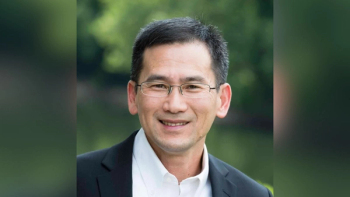
In this Q&A, Rajneesh Patil, global head of AI, digital, and innovation in clinical development at Syneos Health, discusses what changes when AI is embedded across protocol strategy, data infrastructure, and workflow tools at once, where governance frameworks tend to fall short, and why CROs must orchestrate AI ecosystems rather than simply aggregate them.
Advertisement
Advertisement
As artificial intelligence (AI) moves from isolated task automation into protocol design, feasibility, monitoring, and data review at the same time, the real question for ClinOps is no longer whether individual tools work, but whether the handoffs between them finally get faster.
Related to this article

The FDA’s RTCT initiative transmits predefined, clinically meaningful signals to regulators during active trials, so its value depends entirely on the maturity of sponsors’ upstream RBQM signal intelligence, KRIs, QTLs, and root-cause context, rather than on data speed.


Medical writing capacity pressure is fundamentally a talent development problem, not a technology problem, since hybrid resourcing and AI cannot substitute for the experienced judgment needed to review AI output and mentor the next generation of writers.

Patients don’t experience primary endpoints, so trials that stop at biomarkers and rigid rating scales risk declaring success while leaving daily burden untouched, and digital tools only deliver meaningful evidence when they are co-designed with patients and deployed with restraint.

Standardized measurement across five oncology centers found that clinical research coordinators rated eSource-enabled workflows positively (Overall Mean Satisfaction 5.79 of 7), with reduced manual entry and electronic data transfer earning strong marks, while perceived reduction in sponsor and monitor queries lagged as the one domain below threshold.

Pacing obesity trial enrollment, anchoring eligibility to stable real-world therapies, and building site and physician relationships improve retention and data quality more than aggressive recruitment or restrictive exclusion criteria do.

In this Q&A, E.K. Koh, chief product officer at Suvoda, discusses what separates a trustworthy AI assistant from one that adds risk, why curated clinical knowledge matters more than general-purpose flexibility, and what safeguards must be in place when assistants move from answering questions to taking actions in clinical trial systems.

In this video interview, Kent Thoelke, CEO of Paradigm Health, outlines why anti-kickback guidance and modern EHR-integrated trial matching technology must work in tandem to reach representative patient populations at the community level.

In this video interview, Rajneesh Patil, global head of AI, digital, and innovation in clinical development at Syneos Health, describes the industry’s trajectory toward a unified intelligence orchestration environment—and explains why the future isn’t one model that knows everything, but a trusted system that brings the right evidence to the right human decision.
Advertisement
Advertisement