






CRO/Sponsor
Latest News
Advertisement
Latest Videos


Shorts
0:32
Why Redundant Clinical Trial Training is a 'Waste of Time'
2 months ago
by
Lauren Briggs(+2 more)
1:23
ACT Ops Take: Moving Beyond Digitized Fragmentation
6 months ago
by
Andy Studna, Senior Editor

0:51
How New Clinical Trial Guidelines Impact Sponsors & CROs
8 months ago
by
Heidi Chen(+1 more)
0:31
Why We Need More Flexibility in Clinical Trial Contracts
8 months ago
by
Brian Mallon(+1 more)
0:38
Transforming Clinical Trial Operations: Functional vs. CRO Models
9 months ago
by
Kevin Williams(+1 more)
0:33
How a Unified Trial Platform Can Change Patient Care
a year ago
by
Adrianne Rivard(+1 more)
Advertisement
More News
Advertisement

Why clinical development’s next AI bottleneck is not the model, but the system around it.

As the life sciences industry continues to evolve, the ability to effectively manage and leverage preclinical CRO partnerships is set to become a defining characteristic of successful biopharma companies.

In this Q&A, John Worden, chief commercial officer at Javara, discusses why clinical trial recruitment has remained stubbornly one-size-fits-all, how AI can identify patients at scale without displacing the clinician relationships that drive trust, and what care-integrated research engagement needs to look like for health systems, sponsors, and sites.

In this Q&A, Patrick Mizer, chief technology officer at Ledger Run, discusses how payment reliability has become a competitive differentiator in site selection, why decades of disconnected workflows have made payment inconsistency a structural problem, and where AI is delivering real value in the high-friction parts of clinical trial payments.
As sponsors push for faster, more representative studies, AI-enabled matching and EHR integration are emerging as operational levers, but bias, explainability, and governance will determine whether the technology scales.

Static budgeting models and one-size-fits-all fair market value approaches create visibility gaps around inflation and true site costs, but regional frameworks, standardized costing toolkits, and accountability metrics can rebuild trust and replace defensive negotiations with transparency.

Agentic AI is arriving in clinical operations with genuine capability to absorb administrative work, but the organizations that will realize lasting value are those willing to redesign accountability structures, financial workflows, and operating models before deploying the tools on top of them.

Inspection readiness reflects how a program was actually run throughout its lifecycle, not what can be assembled at the end, making pre-submission remediation itself a signal of absent oversight rather than proof of it.

In this Q&A, Stella K. Vnook, PhD, CEO and executive chair of Kaida BioPharma and founder and CEO of Aviva Ventures, discusses how a trifecta of funding pressures is reshaping early-stage clinical development, why commercialization readiness can no longer wait until late-stage, and what a truly strategic lean development model looks like in practice.

Agentic AI will put the CRO operating model to the test—and force the efficiency and accountability questions the industry can no longer avoid.
Advertisement

How to generate reliable Phase I evidence in a capital-constrained environment.

Faster, more efficient clinical trials depend on structural alignment in how sponsors, CROs, and research sites plan and execute studies together.
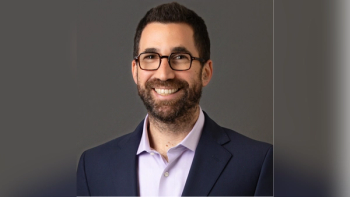
In this Q&A, Raviv Pryluk, PhD, CEO and co-founder of PhaseV, discusses the data standardization bottleneck that sits between raw trial data and real-time analysis, what the FDA's continuous monitoring pilot will require to scale beyond large pharma, and why an ecosystem approach is the only path to making real-time trial oversight a practical reality.
Clinical research coordinators face early burnout driven by gaps between job expectations and operational reality, inadequate mentorship structures, and fragmented technology environments that compound insufficient onboarding and deplete resources needed to sustain engagement.
In this Q&A, Elizabeth Walsh, PMP, ACRP-CP, founder of Walsh Clinical Advisory and co-author of The Clinical Execution Blueprint, discusses the persistent misconceptions about sponsor accountability, why execution gaps originate long before study startup, and what genuine inspection readiness looks like when it is built in from the outset.

As agentic AI, automated data harmonization, and real-time monitoring reshape clinical development, the organizations seeing meaningful results are those that have invested in unified data infrastructure and disciplined governance rather than cycling through pilots without the foundation to scale them.
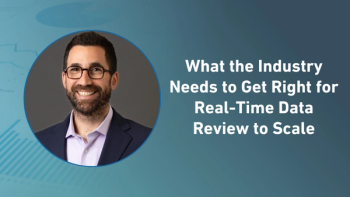
In this video interview, Raviv Pryluk, CEO and co-founder of PhaseV, makes the case that scaling real-time data review requires an ecosystem approach—bringing regulators, sponsors, CROs, and technology vendors together in a shared learning environment rather than letting progress remain siloed.

As clinical development grows increasingly complex and talent markets remain constrained, sponsors must evolve beyond binary outsourcing decisions to embrace a configurable functional service provider continuum that enhances operational optionality without requiring wholesale restructuring.
In this pilot episode of Beyond Compliance, Otis Johnson, PhD, MPA, founder and principal consultant at Vantix Operations, speaks with Paulo Limgenco, VP of business operations and ESG strategy lead at YPrime, about how sustainability is shifting from a compliance checkbox to a factor that shapes vendor selection, client trust, and long-term business value.
Clinical development operates as an integrated system where dependencies persist across phases and vendors, but treating contracts as execution handoffs creates invisible oversight gaps that surface later as vendor performance problems, timeline slips, or inspection findings.
AI agents operate only within workflows, but most organizations lack unified workflow management systems, making it difficult to identify where agents should be deployed or ensure they integrate effectively across connected business processes in clinical research.
In this video interview, Elizabeth Walsh, founder of Walsh Clinical Advisory and co-author of The Clinical Execution Blueprint, describes what it means to accumulate inspection readiness rather than assemble it—and why the story regulators reconstruct is determined long before an inspection is announced.
The European Health Data Space reshapes CRO operations by transitioning them from data custodians to regulated users accessing data within secure, auditable environments, enabling cross-border research but requiring substantial investment in compliance, standardization, and methodological rigor.
In this video interview, Elizabeth Walsh, founder of Walsh Clinical Advisory and co-author of The Clinical Execution Blueprint, identifies where the most consequential capability gaps accumulate—from protocol-to-execution bridging to how sponsor oversight roles are structured and staffed.
In this Q&A, Gaynor Anders, chief delivery officer at Trialbee, discusses how the FDA's single pivotal trial shift is raising the stakes on patient recruitment, why the study-by-study model has persisted for so long, and what program-level recruitment actually requires from sponsors in terms of infrastructure, data sharing, and organizational change.
Advertisement
Advertisement
Trending on Applied Clinical Trials Online
1
The Design Flaws Trial Simulations Surface That Traditional Planning Misses
2
Sponsor Oversight in an Outsourced Trial: What Good Looks Like and How to Evidence It
3
How AI Is Changing Endpoint Selection Before a Trial Even Starts
4
ACT Brief: AI Expands Endpoint Options, CRO Oversight Documentation, and Kidney Cancer Approval
5