





CRO/Sponsor
Latest News
Advertisement
Latest Videos
Advertisement
More News
Advertisement

The European Health Data Space reshapes CRO operations by transitioning them from data custodians to regulated users accessing data within secure, auditable environments, enabling cross-border research but requiring substantial investment in compliance, standardization, and methodological rigor.
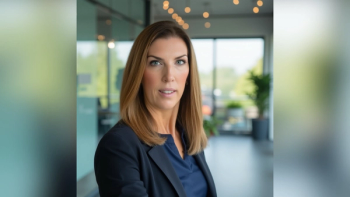
In this Q&A, Gaynor Anders, chief delivery officer at Trialbee, discusses how the FDA's single pivotal trial shift is raising the stakes on patient recruitment, why the study-by-study model has persisted for so long, and what program-level recruitment actually requires from sponsors in terms of infrastructure, data sharing, and organizational change.

Clinical R&D modernization stalls through incremental optimization of individual workflows, but meaningful systemic change requires leaders to visualize structural relationships, understand hidden incentives, and identify leverage points that benefit the whole system rather than parts.

As the FDA's single-trial standard raises the cost of recruitment failure and diversity expectations intensify, sponsors are under pressure to move beyond study-by-study outreach toward programmatic, relationship-based approaches that treat patient engagement as a long-term strategic capability rather than a per-study operational task.

The traditional global-to-local communication model creates fragmented content through sequential adaptation, but a local-first approach using structured data and AI-orchestrated generation can embed stakeholder terminology and preferences from the start, reducing rework while improving clarity and relevance.

Experience sampling captures real-time signals of site burden and operational friction at the moment they occur, providing earlier and more actionable insight than retrospective assessments and revealing workarounds before they compound into protocol deviations.

The evolving role of medical affairs in connecting patients, physicians, and evidence generation.

Eligibility criteria alone rarely predict enrollment, which depends more on trust, hope, and fear, requiring relationship-based community engagement paired with behavioral readiness assessments rather than transactional outreach.

AI-enabled systems medicine could influence which populations are selected for trials, how biomarkers are validated, how products are positioned, how evidence is generated after launch, and how value is demonstrated to payers.

In this Q&A, Liz Beatty, co-founder and chief strategy officer at Inato, discusses how real-time patient data is reducing non-enrolling sites, why sponsor-specific technology remains the biggest barrier to adoption, and what a shift toward cross-asset site partnerships could mean for enrollment efficiency.
Advertisement
Protocol assumptions about patients, visit schedules, timelines, and vendors are rarely tested against operational reality until startup, but early engagement of experienced execution strategists can identify and mitigate feasibility gaps before commitments harden into expensive course corrections.

The FDA's launch of real-time clinical trial proof-of-concept studies signals a fundamental shift in regulatory oversight, one that most sponsors are not yet equipped to meet and that demands urgent investment in unified data infrastructure, quality-by-design practices, and protocol digitization.

In this Q&A, Raj Indupuri, CEO and co-founder of eClinical Solutions, discusses what the FDA's push toward continuous data review actually demands of sponsors operationally, why fragmented systems are the core obstacle, and how AI and real-world evidence fit into a more data-driven regulatory environment.

Discover how Quest Diagnostics puts its vast database of lab results to work and leverages patient and physician credibility to efficiently and effectively connect the best-fit patients to the clinical trials that will benefit from their participation.

Discover how Quest Diagnostics’ comprehensive lab data can elevate your clinical trials. Our latest white paper, "6 Ways Lab Data Can Improve Clinical Trials," explores the power of real-world data at every stage of the trial process.

Download the case study and learn how Quest Diagnostics and PatientsLikeMe helped accelerate recruitment and enrollment for a struggling study.

Beyond Revenue Recognition: Rethinking CRO Contracting Through the CURED Shared Performance Contract
Traditional CRO contracting models create misalignment between effort, progress, and financial outcomes, driving revenue recognition risk and margin volatility, but shared performance contracts linking costs to deliverables can improve transparency and accountability.

In this video interview from the 2026 DIA Global Annual Meeting, Nick Scott of Biogen and Samantha Hadfield of Thermo Fisher Scientific, discuss where mixed outsourcing models deliver the greatest gains in efficiency and agility, and why a deliberate, partnership-first approach is what separates successful implementations from ones that struggle.

In this video interview from the 2026 DIA Global Annual Meeting, Nick Scott of Biogen and Samantha Hadfield of Thermo Fisher Scientific, explain why mixed FSP models are becoming a strategic tool for sponsors seeking greater agility and how geography and portfolio structure shape the decision.
In this video interview from the 2026 DIA Global Annual Meeting, Joan Chambers, independent senior consultant at Tufts CSDD, explains how the flexibility and accessibility of decentralized trial modalities are expanding patient reach—and why fit-for-purpose deployment is key to making them work.

A CFO’s perspective on capital allocation, balancing risk and opportunity, and structuring successful China-based clinical programs.
In this video interview from the 2026 DIA Global Annual Meeting, Kevin Bugin, head of global regulatory policy and intelligence at Amgen and executive sponsor of TransCelerate's Embedded Pragmatic Trials initiative, reframes the FDA's continuous review expectations around real-time evidence generation and explains why quality by design—not data cleanup—is what regulators are now demanding.
In this video interview, Raj Indupuri, CEO and co-founder of eClinical Solutions, describes how giving sponsors the ability to inject their own SOPs, protocols, and governance frameworks into AI systems is the key to building the trust needed for real-world adoption.
In this video interview, Raj Indupuri, CEO and co-founder of eClinical Solutions, explains why the FDA's push toward continuous data review exposes the fragmentation at the heart of current clinical trial infrastructure and what unified data pipelines need to look like to make it possible.

From rising costs and regulatory uncertainty to persistent vaccine hesitancy, sponsors face mounting pressure to standardize operations, build community trust, and develop the behavioral capabilities needed to run vaccine trials effectively in a rapidly shifting environment.
Advertisement
Advertisement
Trending on Applied Clinical Trials Online
1
The Design Flaws Trial Simulations Surface That Traditional Planning Misses
2
ACT Brief: AI Expands Endpoint Options, CRO Oversight Documentation, and Kidney Cancer Approval
3
Sponsor Oversight in an Outsourced Trial: What Good Looks Like and How to Evidence It
4
Quantifying the Financial Value of RBQM: Q&A with Sylviane de Viron, CluePoints, and Abigail Dirks, Tufts CSDD
5