Register Now: Beyond EDC: Designing a Connected Data Strategy for Predictive Clinical Development
Commentary|Videos|May 13, 2025

Current Areas of Focus for Clinical Operations Professionals in Vaccine Trials

In this video interview, Krinx Kong, chief commercial officer, Cognivia, discusses how clinical operations professionals should be focusing on flexibility, behavioral visibility, and communication in the current landscape of managing vaccine trials.

In a recent video interview with Applied Clinical Trials, Krinx Kong, chief commercial officer, Cognivia, discussed the potential impacts of policy shifts on vaccine trial design and patient perceptions. Stricter regulations could increase trial complexity, affecting recruitment and retention. Kong emphasized behavioral insights as crucial to understanding patient motivation and mitigating dropouts. Looking forward with the potential for policy changes in vaccine trials, clinical operations professionals must focus on flexibility, behavioral visibility, and effective communication to ensure success.

ACT: Looking forward with the potential for policy changes, what should clinical operations professionals involved in vaccine trials be keeping top of mind?

Kong: Clinical operations professionals are the backbone. They're the unsung heroes of successful trials, and they're also the first to feel the effects of regulatory change. If vaccine policy continues evolving, clinical ops leaders must focus on three key areas. First, flexibility. Build trial designs that can adapt to new data, new regs, or even public sentiment, that includes modular protocols and contingency plans for recruitment or site engagement. Second, behavioral visibility, it's not enough to track visits, check a box, or lab results. Ops teams must understand the psychological journey of participants, when they're likely to disengage, how they interpret study expectations, and what motivates them to stay. Third, communication. Clear, trust building messaging is essential, not just the participants, but also the site staff, to regulators, and the public. Clinical teams must be equipped with predictive tools to monitor adherence, risk, dropout likelihood, and placebo response all in real time. I know that's asking for a lot, but in summary, to my fellow ops family, be agile, be human centered, and be proactive. Vaccine trials are not just scientific, they're social, and the teams that understand both sides will be the ones who thrive in the next phase of clinical research.



Related to this article

© photon_photo - © photon_photo - stock.adobe.com
Standardized measurement across five oncology centers found that clinical research coordinators rated eSource-enabled workflows positively (Overall Mean Satisfaction 5.79 of 7), with reduced manual entry and electronic data transfer earning strong marks, while perceived reduction in sponsor and monitor queries lagged as the one domain below threshold.
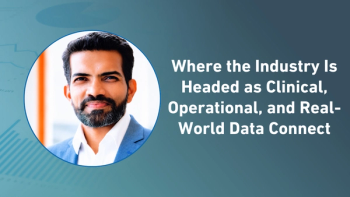
Where the Industry Is Headed as Clinical, Operational, and Real-World Data Connect
In this video interview, Rajneesh Patil, global head of AI, digital, and innovation in clinical development at Syneos Health, describes the industry’s trajectory toward a unified intelligence orchestration environment—and explains why the future isn’t one model that knows everything, but a trusted system that brings the right evidence to the right human decision.
What Expanding AI Ecosystems Mean for Sponsor Complexity and Oversight
In this video interview, Rajneesh Patil, global head of AI, digital, and innovation in clinical development at Syneos Health, argues that CROs must act as orchestrators rather than aggregators—and that the real test of any AI ecosystem is whether it reduces sponsor coordination burden or just hands it back to them.
The Human Side of Clinical Trials: Why Fuzzy Mental Models Undermine Clinical Trial Execution
In Episode 3 of The Human Side of Clinical Trials, hosts Brian S. McGowan, PhD, FACEHP, chief learning officer and co-founder of ArcheMedX, Inc., and Kelly Ritch, chief operating officer of ArcheMedX, Inc., speak with Jason Riis, PhD, CEO and chief behavioral scientist at Behavioralize, about why a well-written protocol doesn’t always translate into consistent execution, and how designing for the way people actually think and learn can reduce site burden and the need for costly unlearning.
© putilov_denis - © putilov_denis - stock.adobe.com
Real-time clinical trials require standardized digital data capture at the point of care through scaled eSource-EDC-EHR integration, but progress stalls because competing standards lack regulatory enforcement and one-off system integrations cannot scale beyond single studies without industry-wide alignment and legal clarity on data ownership.