Register Now - Beyond Recruitment: The Future of Patient Site Engagement in Oncology Clinical Trials
|Articles|November 19, 2015

Advanced Clinical Selects TRI RBM Platform

TRI will be providing the OPRA platform for all of Advanced’s studies whose sponsors have requested a risk-based approach to monitoring.

Advanced Clinical, a Chicago-based CRO, has selected Triumph Research Intelligence (TRI) OPRA RBM technology platform and accompanying RBM service offerings. TRI will be providing the OPRA platform for all of Advanced’s studies whose sponsors have requested a risk-based approach to monitoring. TRI will be supporting Advanced in optimizing their monitoring processes, implementing change management, and supporting study specific key risk indicator design.

Read the full release.


Related to this article

Closing the Community Access Gap: Q&A with Kent Thoelke, Paradigm Health
In this Q&A, Kent Thoelke, CEO of Paradigm Health, discusses why participation gaps in community and rural settings come down to both patient cost barriers and site infrastructure, how legacy workflows weigh on community clinics, and what policy and technology changes it would take to make clinical research a real care option for more patients.
© Grispb - © Grispb - stock.adobe.com
Mistral and OpenAI produced identical overall eligibility labels across 200 synthetic patient-study assessments, with criterion-level disagreements concentrated in inclusion criteria where models switch between “Uncertain” and “Not included” when records lack sufficient evidence, so model choice should be driven by deployment architecture, control, and cost rather than assumed interchangeability.
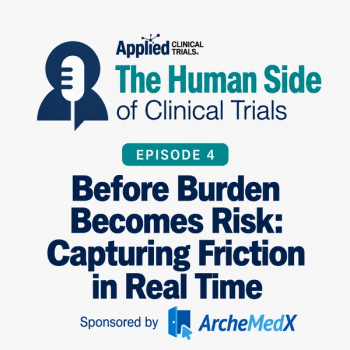
The Human Side of Clinical Trials: Before Burden Becomes Risk, Capturing Friction in Real Time
In Episode 4 of The Human Side of Clinical Trials, host Brian S. McGowan, PhD, FACEHP, chief learning officer and co-founder of ArcheMedX, Inc., speaks with Jason Riis, PhD, CEO and chief behavioral scientist at Behavioralize, about how capturing friction closer to the moment it happens can reveal unclear instructions, technology friction, and workarounds that retrospective surveys and debriefs tend to miss.