Register Now - Beyond Recruitment: The Future of Patient Site Engagement in Oncology Clinical Trials
|Articles|April 26, 2012

A Cautionary Note For Developers of Personalized Medicine

Personalized medicine is gaining traction as scientists gain greater understanding of disease processes. Such an approach depends on the correct and reliable identification of an underlying biomarker, whether the biomarker is a genetic marker, receptor expressed by a tumor cell, or metabolite indicating some underlying condition, that can predict whether a patient is likely to respond to a particular therapy. Genomics and proteomics are methodologies involving large datasets of genetic or protein markers that are analyzed to produce an individual profile. Such methodologies are potentially quite powerful, but quite complex.

A recent high-profile cancer study conducted at Duke University relied on genomic analysis of tumors to tailor treatment to individual patients. Questions about the validity of the tests were raised at the outset of the trials by outside researchers, but the trials went forward anyway. In July 2010, more than 30 outside scientists asked the National Cancer Institute (NCI) to intervene and suspend the trials until the gene-expression tests could be reviewed adequately.

Wishing to avoid this type of expensive and potentially harmful error in the future, NCI and FDA requested that a study be performed by the Institute of Medicine (IOM) to recommend responsibilities and best practices for the investigators, research institutions, funders, regulators, and journals involved in development and dissemination of clinical omics-based technologies. The report was released on Mar 23, 2012, and identifies best practices to enhance development, evaluation, and translation of omics-based tests. The report also offers guidance for ensuring that these tests are appropriately assessed for scientific validity before they are used to guide patient treatment in clinical trials.

In the accompanying press release, chairman of the IOM committee Gilbert Omenn, professor of internal medicine, human genetics, and public health, and director, Center for Computational Medicine and Bioinformatics, University of Michigan, Ann Arbor says, “We hope that this report will help all members of the investigative team understand the entire pathway of translating omics discoveries into clinical tests and recognize and avoid the potential pitfalls at each stage. We believe that past problems, such as the Duke case, could have been prevented had a clearly defined process been available and been utilized. Scientific and clinical progress in omics test development will be accelerated if these recommendations are broadly adopted.”

Anyone who has ever taken a computer programming class is probably familiar with the phrase, “Garbage in, garbage out.” This axiom is just as easily applied to the field of personalized medicine. For personalized medicine to work, drug developers and clinicians need to pay as much attention to the validity of the biomarker test as to the efficacy of the treatment.

Written by Amy Ritter for Pharmaceutical Technology.


Related to this article

Closing the Community Access Gap: Q&A with Kent Thoelke, Paradigm Health
In this Q&A, Kent Thoelke, CEO of Paradigm Health, discusses why participation gaps in community and rural settings come down to both patient cost barriers and site infrastructure, how legacy workflows weigh on community clinics, and what policy and technology changes it would take to make clinical research a real care option for more patients.
© Grispb - © Grispb - stock.adobe.com
Mistral and OpenAI produced identical overall eligibility labels across 200 synthetic patient-study assessments, with criterion-level disagreements concentrated in inclusion criteria where models switch between “Uncertain” and “Not included” when records lack sufficient evidence, so model choice should be driven by deployment architecture, control, and cost rather than assumed interchangeability.
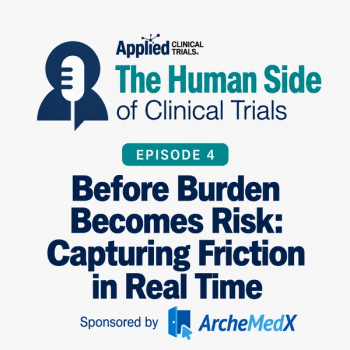
The Human Side of Clinical Trials: Before Burden Becomes Risk, Capturing Friction in Real Time
In Episode 4 of The Human Side of Clinical Trials, host Brian S. McGowan, PhD, FACEHP, chief learning officer and co-founder of ArcheMedX, Inc., speaks with Jason Riis, PhD, CEO and chief behavioral scientist at Behavioralize, about how capturing friction closer to the moment it happens can reveal unclear instructions, technology friction, and workarounds that retrospective surveys and debriefs tend to miss.