Dutch company Factory CRO chooses US-based AmeriStart
AmeriStart announced that it has signed a sales, marketing, and business development services contract with Factory CRO, a leading international clinical research organization that specializes in conducting medical device studies for FDA and EU approvals.
Advertisement
Dutch company Factory CRO chooses US-based AmeriStart to promote its medical device clinical services to the American market FOR IMMEDIATE RELEASE Charlotte, NC (August 21, 2008): AmeriStart announced today that it has signed a sales, marketing, and business development services contract with Factory CRO, a leading international clinical research organization that specializes in conducting medical device studies for FDA and EU approvals. AmeriStart will promote Factory CRO’s considerable clinical research capabilities in the growing North American medical device market.
“Factory provides pan-European capabilities and access to key surgeons and clinics – exactly what US device developers need for a faster study start and faster marketing approval,” stated Dirk Meijer, CEO of Factory CRO from their headquarters in The Netherlands.
“Our team of experienced physicians, clinicians, and medical device professionals has, over the past 20 years, conducted clinical studies for more than 50 American medical device manufacturers. Now, with a representative office and AmeriStart’s organizational support, we hope to expand and improve our standing in the USA marketplace.”
AmeriStart CFO David Worrell noted, “Factory CRO has world-class capabilities in the key therapeutic areas of diabetes, wound healing, and orthopedics. Because Factory understands the regulatory environments across Europe, they are often able to start a clinical trial in as little as eight weeks. And, Factory has the added benefit of an operational center in the Dutch Antilles, which has a large diabetic population and is conveniently located in the Eastern US time zone.”
Factory CRO is the latest addition to the AmeriStart portfolio of world-class Contract Research Organizations (CROs) and other service providers to the Life Science industry.
AmeriStart will apply and promote Factory’s expertise to companies seeking both CE Marks and FDA approvals, including 510(k) designations. Further information on Factory CRO’s clinical capabilities can be found online at www.factory-cro.com.
About AmeriStart
From headquarters in Charlotte, NC, AmeriStart helps foreign companies enter and succeed in the competitive US marketplace. AmeriStart provides sales, marketing, and strategic business development services that help companies overcome cultural, language and geographic barriers to ramp their sales quickly. Details are available at www.AmeriStart.com.
About Factory CRO
Factory-CRO, established in 1988, is a full service Contract Research Organization offering regulatory, pre-clinical, and clinical trial services for medical devices, medical device/drug combinations, biologicals and cell-based products. Based in Bilthoven, The Netherlands, Factory CRO maintains relationships with sites across Europe and North America.
Because their network includes surgeons from many specialties, Factory CRO ensures that sponsors work with the best investigators for their study – resulting in both wide market recognition and strong patient recruitment. Factory CRO also maintains an office in the island of Curacao (The Dutch Antilles), where they specialize in trials related to diabetic wound healing. www.factory-cro.com
Sponsor oversight of outsourced CRO work is often robust in practice but fails inspection because oversight decisions are fragmented across systems and lack an audit trail, requiring sponsors to document oversight as a connected operating system with clear decision records, escalation pathways, and issue resolution from start to finish.
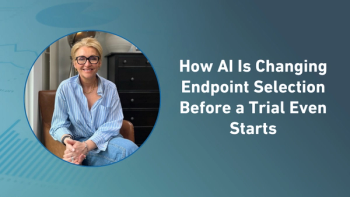
In this video interview, Claire Riches, VP of clinical solutions at Citeline, explains how AI is expanding endpoint selection beyond the bounded experience of a single sponsor team—and surfacing options that traditional design thinking might never have considered.
In today's ACT Brief, we examine what patient-site relationships need beyond easier technology, how to build defensible rare disease evidence from scratch, and how real-world data and AI improve enrollment screening accuracy.
In rare disease drug development where no registry or natural history dataset exists, real-world evidence quality depends on treating evidence engineering as a design-stage decision, defining intended regulatory use and standardizing endpoints, harmonization, and data provenance upfront rather than reconciling gaps after collection.
In this Q&A, Andrea Valente, CEO of uMotif, discusses what it takes to build genuine trust between patients and sites, why making technology easier to use isn't the same as making patient-site interaction more effective, and where the industry is still falling short in its push toward patient-centered trial design.
In today's ACT Brief, we examine why defensible trial data depends on traceability and platform ownership, what CGT site readiness requires as therapy moves to community care, and why data harmonization is AI's primary bottleneck.
Cell and gene therapy access expands into community care settings only when operational coordination, site readiness, and supply chain standardization become first-order priorities equivalent to manufacturing capacity, requiring standardized processes, digital integration, and distributed logistics networks.
In this episode of Beyond Compliance, Otis Johnson, PhD, MPA, founder and principal consultant at Vantix Operations, speaks with Cecilia Xi, PhD, VP of clinical and scientific affairs at Vivalink, about why defensible trial data depends on traceability, platform ownership, and device strategy long after a study ends.