|Articles|February 7, 2014

Early Bird Discount for DIA EuroMeeting Ends on February 11

Author(s)Philip Ward

The DIA has announced that its early registration fee reduction for next month's EuroMeeting will end on Tuesday February 11.

The DIA has announced that its early registration fee reduction for next month’s EuroMeeting will end on Tuesday February 11. The standard member’s registration for the meeting will rise from 1700 euros to 1850 euros after February 11, according to the organizers.

Also, a new co-chair has been appointed for the congress: Christa Wirthumer-Hoche, who recently became Head of the Austrian Medicines Agency.

The conference will take place in Vienna, Austria, from 25 to 27 March 2014. It is likely to attract over 3,000 delegates from more than 50 countries. It brings together professionals from the biopharmaceutical industry, contract research and service organizations, academic research centers, regulatory agencies and health ministries, as well as delegates from patient organizations.


Related to this article

© photon_photo - © photon_photo - stock.adobe.com
Standardized measurement across five oncology centers found that clinical research coordinators rated eSource-enabled workflows positively (Overall Mean Satisfaction 5.79 of 7), with reduced manual entry and electronic data transfer earning strong marks, while perceived reduction in sponsor and monitor queries lagged as the one domain below threshold.
Where the Industry Is Headed as Clinical, Operational, and Real-World Data Connect
In this video interview, Rajneesh Patil, global head of AI, digital, and innovation in clinical development at Syneos Health, describes the industry’s trajectory toward a unified intelligence orchestration environment—and explains why the future isn’t one model that knows everything, but a trusted system that brings the right evidence to the right human decision.
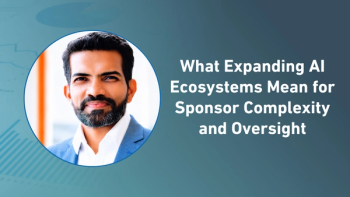
What Expanding AI Ecosystems Mean for Sponsor Complexity and Oversight
In this video interview, Rajneesh Patil, global head of AI, digital, and innovation in clinical development at Syneos Health, argues that CROs must act as orchestrators rather than aggregators—and that the real test of any AI ecosystem is whether it reduces sponsor coordination burden or just hands it back to them.