Register Now - Beyond Recruitment: The Future of Patient Site Engagement in Oncology Clinical Trials
|Articles|October 9, 2014

EMA Unveils New Data in Mid-year Report

Author(s)Philip Ward

During the first six months of 2014, the number of scientific advice and protocol assistance requests for human medicines received by the EMA increased by 16%

During the first six months of 2014, the number of scientific advice and protocol assistance requests for human medicines received by the European Medicines Agency (EMA) increased by 16% compared with the same period in 2013, according to the agency’s mid-year report presented to the Management Board on 2 October 2014.

Among the other highlights in the report are:

  • The number of orphan designation applications was 138, a 30% increase over results in the first six months 2013. There was an 8% increase in pediatric procedure applications.

  • EMA received 43 initial evaluation applications between January and June 2014, an increase of 19% compared with the same period of last year. This rise was mostly due to more generics applications received. The annual forecast for initial applications has been revised upwards from 88 to 118.

  • New orphan medicinal product applications saw an increase to 9 applications (from 5 in 2013) in the first six months of 2014, thus returning to the level of applications in 2011-2012. The number of new non-orphan medicinal product applications received by the end of June 2014 fell slightly, compared to the same period of 2013 (20 versus 24).

  • Biological medicinal product applications remained at the same low level as in 2013, as was also the case for hybrid and abridged applications.


For a full copy of the mid-year report, click here. (PDF)


Related to this article

Closing the Community Access Gap: Q&A with Kent Thoelke, Paradigm Health
In this Q&A, Kent Thoelke, CEO of Paradigm Health, discusses why participation gaps in community and rural settings come down to both patient cost barriers and site infrastructure, how legacy workflows weigh on community clinics, and what policy and technology changes it would take to make clinical research a real care option for more patients.
© Grispb - © Grispb - stock.adobe.com
Mistral and OpenAI produced identical overall eligibility labels across 200 synthetic patient-study assessments, with criterion-level disagreements concentrated in inclusion criteria where models switch between “Uncertain” and “Not included” when records lack sufficient evidence, so model choice should be driven by deployment architecture, control, and cost rather than assumed interchangeability.
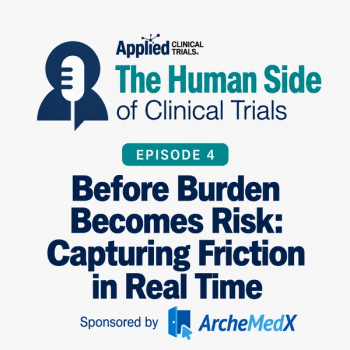
The Human Side of Clinical Trials: Before Burden Becomes Risk, Capturing Friction in Real Time
In Episode 4 of The Human Side of Clinical Trials, host Brian S. McGowan, PhD, FACEHP, chief learning officer and co-founder of ArcheMedX, Inc., speaks with Jason Riis, PhD, CEO and chief behavioral scientist at Behavioralize, about how capturing friction closer to the moment it happens can reveal unclear instructions, technology friction, and workarounds that retrospective surveys and debriefs tend to miss.