Register Now - Beyond Recruitment: The Future of Patient Site Engagement in Oncology Clinical Trials
News|Articles|September 27, 2023

Emmes Introduces Telehealth Capabilities into Advantage eClinical

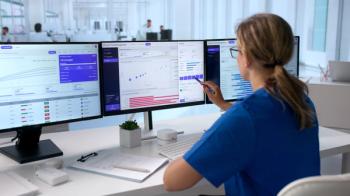
Emmes has announced the addition of telehealth capabilities within Advantage eClinical. The new application means any scheduled visit can become virtual with video calls augmented directly through the platform and patients signing in through their existing participant portal.

The addition of telehealth capabilities is part of a much wider development plan for Emmes' third generation clinical data platform. The platform accommodates all trial modalities—traditional, decentralized including hybrid and fully virtual—as well as the needs of patients, sponsors, and sites. It also includes all tasks from data capturing, cleaning, monitoring, to workflow management, sample tracking and even clinical assessment and engagement tools.

"What we are building with Advantage eClinical is more than an EDC or eCOA/ePRO. It's a platform to accelerate the delivery of all types of trial designs through one unified, modular system. 90% of respondents in the Center for Information and Study on Clinical Research Participation's (CISCRP) 2021 Perception and Insights Study stress the importance of having options for completing study visits, such as virtual and home visits. By eliminating the need for sponsors to procure and set up additional point decentralized trial (DCT) systems, we hope more studies will offer patient-centric options for patients to participate," commented Ching Tian, chief innovation officer at Emmes in a press release.

Ashley Davidson, Emmes associate vice president, product management and operations, explained that the telehealth application makes workflow far simpler for site staff because all information is on screen at the same time, including assessment forms and patient records. In a press release, she commented: "It gives that real world feel of an in-person visit and enables simultaneous note-taking and record-checking. On a more practical level, operating a decentralized or hybrid trial design means we can also open up trials to more diverse groups of participants, which has been a big driver from the regulators."

Reference

Emmes Introduces Telehealth Capabilities into Advantage eClinical. (27 September, 2023). Cision PR Newswire.



Related to this article

Closing the Community Access Gap: Q&A with Kent Thoelke, Paradigm Health
In this Q&A, Kent Thoelke, CEO of Paradigm Health, discusses why participation gaps in community and rural settings come down to both patient cost barriers and site infrastructure, how legacy workflows weigh on community clinics, and what policy and technology changes it would take to make clinical research a real care option for more patients.
© Grispb - © Grispb - stock.adobe.com
Mistral and OpenAI produced identical overall eligibility labels across 200 synthetic patient-study assessments, with criterion-level disagreements concentrated in inclusion criteria where models switch between “Uncertain” and “Not included” when records lack sufficient evidence, so model choice should be driven by deployment architecture, control, and cost rather than assumed interchangeability.
The Human Side of Clinical Trials: Before Burden Becomes Risk, Capturing Friction in Real Time
In Episode 4 of The Human Side of Clinical Trials, host Brian S. McGowan, PhD, FACEHP, chief learning officer and co-founder of ArcheMedX, Inc., speaks with Jason Riis, PhD, CEO and chief behavioral scientist at Behavioralize, about how capturing friction closer to the moment it happens can reveal unclear instructions, technology friction, and workarounds that retrospective surveys and debriefs tend to miss.