News|Articles|December 2, 2025

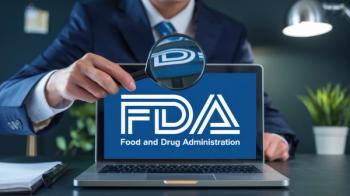
FDA Deploys Secure Agentic AI Platform to Modernize Regulatory Operations

Listen
0:00 / 0:00

Key Takeaways

  • Agentic AI enhances FDA operations by enabling complex workflows and assisting with multi-step tasks, ensuring data protection within a secure GovCloud environment.
  • The AI supports various functions, including meeting management, pre-market reviews, and compliance, aiming to accelerate cures and treatments.
SHOW MORE

The FDA has introduced a secure, agency-wide agentic AI system to support complex regulatory workflows—enhancing reviews, surveillance, and inspections—while maintaining strict data protections and human oversight.

Key points on FDA’s agentic AI rollout

  • Secure & compliant: Built in GovCloud; does not train on staff inputs or regulated industry data.
  • Multistep automation: Supports meeting management, reviews, inspections, surveillance, and compliance tasks.
  • Human-guided oversight: Designed for planning and reasoning with embedded guardrails.
  • Optional use: Available to all employees but not required.
  • Part of broader AI strategy: Follows Elsa’s launch and includes an upcoming Agentic AI Challenge to spur internal innovation.

The FDA has deployed agentic artificial intelligence (AI), available for all agency employees. Utilizing a number of models, agentic AI will enable the agency to create more complex workflows and assist with multi-step tasks.1

These models are built within a high-security GovCloud setting and do not train on input data or any other data submitted by regulated industry, protecticing sensitive research and data handled by agency staff.

According to the FDA, agentic AI refers to: “…advanced artificial intelligence systems designed to achieve specific goals by planning, reasoning, and executing multi-step actions. These systems incorporate built-in guidelines—including human oversight—to ensure reliable outcomes.”

This new tool is entirely optional for FDA staff and will be used on a voluntary basis.

FDA expands AI use across agency operations

In an FDA press release, Commissioner Marty Makary, MD, MPH, said: “We are diligently expanding our use of AI to put the best possible tools in the hands of our reviewers, scientists and investigators. There has never been a better moment in agency history to modernize with tools that can radically improve our ability to accelerate more cures and meaningful treatments.”

In enabling more complex workflows, agentic AI will assist the agency with:

  • meeting management,
  • pre-market reviews,
  • review validation,
  • post-market surveillance,
  • inspections,
  • and compliance and administrative functions.

As part of the FDA’s agentic AI deployment, the agency also announced it will be launching an Agentic AI Challenge spanning two months for staff to build solutions and showcase them at the FDA Scientific Computing Day in January 2026.

“FDA's talented reviewers have been creative and proactive in deploying AI capabilities—agentic AI will give them a powerful tool to streamline their work and help them ensure the safety and efficacy of regulated products,” added Chief AI Officer Jeremy Walsh in the press release.

FDA’s launch of Elsa

Earlier in June, the FDA officially launched Elsa, its generative AI solution. Also built within a high-security GovCloud environment, Elsa offers agency employees a space to access internal documents as well as assistance with:2

  • reading,
  • writing,
  • summarizing adverse events to support safety profile assessments,
  • performing faster label comparisons,
  • and generating code to help develop databases for nonclinical applications.

In a press release from the time, Walsh said: “Today marks the dawn of the AI era at the FDA with the release of Elsa, AI is no longer a distant promise but a dynamic force enhancing and optimizing the performance and potential of every employee. As we learn how employees are using the tool, our development team will be able to add capabilities and grow with the needs of employees and the agency.”

Agency experiences early challenges with AI

Shortly after Elsa was unveiled, a CNN report unveiled the FDA was experiencing problems with its new AI tool. Quoting six anonymous FDA officials—some with the agency at the time of the report and others that departed after—the article explained that while Elsa can generate meeting summaries, it had experienced hallucinations by citing studies that did not exist.3

“Anything that you don’t have time to double-check is unreliable,” one of the anonymous FDA officials told CNN. “It hallucinates confidently.”

In a July 9 interview with Applied Clinical Trials' sister publication, Pharmaceutical Executive, Marcel Botha, CEO of 10XBeta, mentioned the initial challenges Elsa experienced when it came to accuracy.

“One of the challenges that came out from the initial release of the Elsa model for FDA is that it was prone to hallucination,” Botha said. “By that, I mean it was making stuff up. […] We can't have our AI do that when it comes to critical analysis of core ingredients and component structures that are required. These are elements where a slight deviation makes something safe or not.”

References

1. FDA Expands Artificial Intelligence Capabilities with Agentic AI Deployment. News release. FDA. December 1, 2025. Accessed December 2, 2025. https://www.fda.gov/news-events/press-announcements/fda-expands-artificial-intelligence-capabilities-agentic-ai-deployment

2. FDA Launches Agency-Wide AI Tool to Optimize Performance for the American People. News release. FDA. June 2, 2025. Accessed December 2, 2025. https://www.fda.gov/news-events/press-announcements/fda-launches-agency-wide-ai-tool-optimize-performance-american-people

3. Owermohle, Sarah. FDA’s artificial intelligence is supposed to revolutionize drug approvals. It’s making up studies. CNN. July 23, 2025. https://www.cnn.com/2025/07/23/politics/fda-ai-elsa-drug-regulation-makary


Newsletter

Stay current in clinical research with Applied Clinical Trials, providing expert insights, regulatory updates, and practical strategies for successful clinical trial design and execution.