More expert insights
For more conversations with industry leaders, visit Applied Clinical Trials on YouTube.
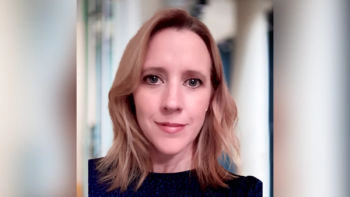
In this Q&A, Jenna DiRito, PhD, COO and co-founder of Revalia Bio, discusses how earlier, human-relevant data is reshaping go/no-go decision-making in drug development and what a truly front-loaded workflow looks like in practice.
For more conversations with industry leaders, visit Applied Clinical Trials on YouTube.
Late-stage clinical failures remain one of the most persistent and costly problems in drug development, and a growing body of evidence suggests the answer lies in asking better questions earlier.
To explore this further, Applied Clinical Trials caught up with Jenna DiRito, PhD, COO and co-founder of Revalia Bio, about why traditional go/no-go models are breaking down, what human-relevant data actually means at the bench level, and how development teams can build organizational confidence in earlier, less mature signals.
DiRito: The traditional model relies heavily on animal data or ultra-simplified human adjacent systems. But those systems often don't translate directly to human biology. As a result, we're still seeing high rates of late-stage failure after significant time and capital investments have already been made.
From multiple regulatory bodies there has been a growing recognition that we need more predictive signals, earlier. Rising development costs and increased regulatory expectations are pushing development teams to make more informed decisions sooner. Developers need to do more efficient learning in the best systems when the risk of failure isn't catastrophic.
DiRito: Human-relevant data means studying how drugs and devices behave in real human biological systems, not in modeled or incomplete proxies. Human relevant data includes whole human organ-level function, tissue-specific responses, molecular and biomarker data, and how those signals connect to actual disease biology.
Teams are no longer waiting until clinical trials to answer fundamental questions about mechanism, safety, or biodistribution. They're generating that insight earlier, in human systems, and using it to make more informed decisions about which programs to advance and how to design trials.
DiRito: The biggest impact can be seen across safety, biodistribution, and translational efficacy—all areas where late-stage uncertainty can lead to major failures.
If you can understand how a drug distributes in human tissue, whether it engages the intended target, and whether there are early safety signals before entering the clinic, you can avoid costly surprises downstream. That also extends back to discovery and target validation. It's critical to validate that you are pursuing biology that's actually relevant to human disease.
DiRito: It's all about improving the quality and confidence of early data. Confidence comes from integrating multiple layers of evidence and ultimately understanding how they connect.
Early human-relevant data is used to reduce key uncertainties, not eliminate them entirely. When that data is generated with rigor and tied to clear development questions, it becomes decision-grade, even if it's earlier in the lifecycle or less mature.
DiRito: When a true front-loaded development workflow exists, alignment will exist across discovery, translational, and clinical teams from the very beginning of the process. Everyone will have the same measure of success.
Each of these teams will be designing human relevant studies from day one to directly test mechanism, exposure, and safety in a more clinically relevant context. Those insights then ultimately feed directly into trial design, patient selection, and overall development strategy.
The result is a more iterative, data-driven workflow where you're resolving the highest-risk questions earlier and entering clinical development with a much stronger understanding of how the drug or device is likely to behave in humans.