Register Now - Beyond Recruitment: The Future of Patient Site Engagement in Oncology Clinical Trials
News|Articles|January 30, 2025

New Era of Clinical Trials with oomnia®: Built for Complexity, Designed for Simplicity

The promise of modern clinical trials is often hindered by a hidden burden: technology that fails to address the realities of clinical research. While science advances with breakthrough therapies and adaptive trial designs, many healthcare stakeholders are constrained by fragmented systems — some outdated, others overly focused on technology without considering the clinical settings or solving the full scope of challenges faced in today’s trials. Wemedoo, a Swiss-based clinical data specialist, is addressing these challenges with oomnia®, redefining the way clinical trials operate.

“oomnia has been purposefully designed as a unified solution. Key clinical trial management tools, including EDC, RTMS, eTMF, CTMS, eConsent, ePRO and eSource, are integrative parts of the same solution, eliminating the need for additional integration”, says Dr. Nikola Cihoric, founder of Wemedoo and architect of oomnia.

oomnia: Solving Challenges in Clinical Trials

Sites consistently emphasize the need for user-friendly technology, while sponsors identify study startup delays as a major obstacle to innovation. Fragmented systems worsen these issues by adding complexity and increasing costs, which become even more significant in global studies with dozens of sites and thousands of participants.

oomnia provides an all-in-one solution for clinical trials, removing the need for third-party integrations. When external systems like laboratory information systems or EHRs are necessary, the oomnia eSource module seamlessly connects them, enabling real-time data flow into the research pipeline.

“Sponsors report a 40% faster site activation and up to 50% fewer protocol deviations and data errors in decentralized trials.”

Built on advanced cloud architecture, oomnia ensures consistent performance across studies of any scale, eliminating friction points and enabling real-time management. “In a complex ophthalmology trial with a novel medical device and drug combination, manual queries could be reduced by 66% and a full setup and training completed in only nine weeks’’, emphasizes Dr. Cihoric.

oomnia robust foundation of standardized clinical data forms the cornerstone of its AI capabilities. This strong clinical core ensures AI-driven insights are accurate, clinically relevant, and seamlessly integrated into workflows. By leveraging this solid data framework, oomnia not only delivers impactful AI solutions today but also lays the groundwork to support and advance future AI models in healthcare.

Global Recognition and Proven Excellence

oomnia credibility is reinforced by external validation, including top-tier certifications and inspections, solidifying its status as a trusted leader in clinical trial management. Chosen as the central infrastructure for the Across Global Alliance, encompassing 16 CROs across 60+ countries, oomnia is redefining clinical trial management on a global scale. Dr. Nikola Cihoric, whose clinical experience shaped oomnia development, shares his vision: 'New technologies alone are not enough; we must align them with clinical workflows to truly transform research.”

Driving the Future of Clinical Trials with oomnia

oomnia is built to empower healthcare professionals and streamline clinical trial operations. Standardizing clinical data and seamlessly integrating workflows provide an unmatched foundation for innovation.

oomnia intuitive dashboards tailored to specific roles enable teams across clinical operations, data management, monitoring, risk management, and finance to collaborate effortlessly in real-time.

More than just a tool, oomnia redefines what is possible in clinical trials. The question is not whether you can keep up with the future of healthcare, but whether you are ready to lead it. Let oomnia take you there.


Related to this article

Closing the Community Access Gap: Q&A with Kent Thoelke, Paradigm Health
In this Q&A, Kent Thoelke, CEO of Paradigm Health, discusses why participation gaps in community and rural settings come down to both patient cost barriers and site infrastructure, how legacy workflows weigh on community clinics, and what policy and technology changes it would take to make clinical research a real care option for more patients.
© Grispb - © Grispb - stock.adobe.com
Mistral and OpenAI produced identical overall eligibility labels across 200 synthetic patient-study assessments, with criterion-level disagreements concentrated in inclusion criteria where models switch between “Uncertain” and “Not included” when records lack sufficient evidence, so model choice should be driven by deployment architecture, control, and cost rather than assumed interchangeability.
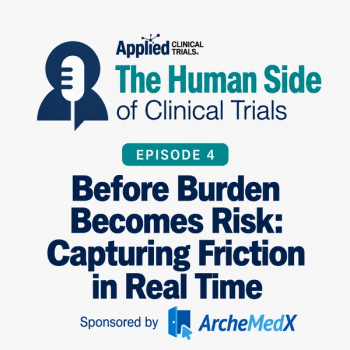
The Human Side of Clinical Trials: Before Burden Becomes Risk, Capturing Friction in Real Time
In Episode 4 of The Human Side of Clinical Trials, host Brian S. McGowan, PhD, FACEHP, chief learning officer and co-founder of ArcheMedX, Inc., speaks with Jason Riis, PhD, CEO and chief behavioral scientist at Behavioralize, about how capturing friction closer to the moment it happens can reveal unclear instructions, technology friction, and workarounds that retrospective surveys and debriefs tend to miss.