

“By uniting under one shared mission, we are not simply expanding our reach—we are setting a new standard for patient impact, expanding access to affordable, equitable healthcare, and supporting participation in clinical research at a time when the safety net is under tremendous strain.”
News|Articles|March 3, 2026
Patient Advocate Foundation, PAN Foundation Merge to Expand Patient Support and Clinical Trial Access
Author(s)Andy Studna, Senior Editor
Nonprofit merger aims to streamline financial assistance, case management, and trial participation resources for patients navigating complex care pathways.
Advertisement
The Patient Advocate Foundation and the PAN Foundation have announced a strategic merger to create the nation’s most comprehensive nonprofit dedicated to helping patients navigate, access, and afford care—including participation in clinical trials.1
Operating under the Patient Advocate Foundation name, the combined organization will consolidate more than 130 disease-specific financial assistance programs, personalized case management, educational resources, and patient engagement initiatives into a single platform. These programs are designed to help patients overcome financial and logistical barriers to treatment, including clinical trial enrollment and ongoing study participation.
“Today the strategic vision I had in 1996 to establish Patient Advocate Foundation to improve patient access to, and payment of healthcare services is being expanded through our merger with the PAN Foundation,” said Nancy Davenport-Ennis, founder of Patient Advocate Foundation and chair emerita of its board. “This merger allows us to amplify our case management and financial aid services, while uniting our mutual engagement in reforming state and federal healthcare programs and services through our research initiatives. Each of these steps builds on our initial mission to assure that no patient faces their illness alone trying to navigate today's complex healthcare delivery system.”
Expanding access to clinical trials
The merger is expected to improve access to clinical research by integrating financial assistance with trial navigation support. Patients often face significant barriers when seeking to participate in studies for chronic or rare conditions, including travel, treatment costs, and insurance challenges. The unified organization will provide one-on-one guidance to help patients identify relevant trials, understand eligibility, and cover associated costs.
“This moment marks an important new chapter for our organizations and for millions of patients navigating our nation's healthcare system,” said Alan J. Balch, PhD, executive chairman of the board. “By uniting under one shared mission, we are not simply expanding our reach—we are setting a new standard for patient impact, expanding access to affordable, equitable healthcare, and supporting participation in clinical research at a time when the safety net is under tremendous strain.”
Kevin L. Hagan, CEO of the combined organization and former head of PAN Foundation, highlighted the patient-centric benefits of consolidation.
“By joining forces, we are creating something greater than the sum of our parts—a single, trusted destination for patients who need financial help, guidance, and a clear path through a complex healthcare system,” he said. “This merger allows us to reach more people, offer more services, and increase our capacity to help patients navigate clinical trials and other treatment options efficiently.”
Unified programs and services
The integration will preserve the organizations’ core offerings, including personalized case management to support trial enrollment, insurance advocacy, disability applications, and access to social services. The combined foundation will continue research and health equity initiatives, generate real-time insights into patient experiences, and advocate for systemic improvements in healthcare access and affordability.
A key milestone will be the launch of TotalAssist, a unified patient assistance program expected to begin enrolling patients in July 2026. Integration planning is underway to ensure seamless continuity for patients, providers, and partners.
As demand for clinical trial participation and access to care continues to rise—driven by rising premiums, restricted coverage, and increasing chronic disease prevalence—the combined Patient Advocate Foundation is positioning itself as a central resource to connect patients with financial support, navigation services, and research opportunities.
Industry perspective on the importance of patient access
Earlier this year, Applied Clinical Trials caught up with Liz Beatty, co-founder and chief strategy officer at Inato, over an exclusive video
As competition in this area increases, stakeholders should be utilizing technology to demonstrate verified patient access and readiness.2
“In 2026, I expect sponsors to intentionally recalibrate, not by abandoning efficiency, but by redefining it,” Beatty said in the interview. “We will see sponsors prioritize partnering with community sites, especially in underrepresented populations, embed research more directly at the point of care, and show up differently in communities to meet patients where they are, like we are already seeing today with mobile clinics. This does not have to be a tradeoff. When sponsors are intentional about access, they can actually improve enrollment speed, reduce bottlenecks, and shorten overall timelines.
References
1. Patient Advocate Foundation and PAN Foundation Announce Merger to Create Nation's Most Comprehensive Nonprofit Dedicated to Helping Patients Navigate, Access, and Afford Care. News release. Patient Advocate Foundation. March 3, 2026. Accessed March 3, 2026.
2. Reframing Efficiency to Protect Patient Access in 2026. Applied Clinical Trials. January 8, 2026. Accessed March 3, 2026.
Advertisement
Related to this article

Hierarchical composite endpoints analyzed through pairwise comparisons more accurately reflect multifaceted treatment benefit than time-to-first-event composites, but transparent outcome prioritization, patient involvement in ranking, and reporting of Net Treatment Benefit remain underutilized despite their importance to interpretation.
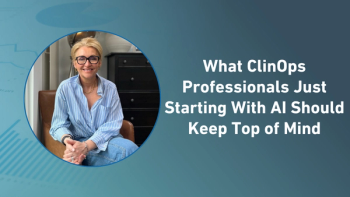
In this video interview, Claire Riches, VP of clinical solutions at Citeline, offers practical guidance for clinical operations teams beginning their AI journey—making the case that the tools are more accessible than many assume and that waiting to start is a competitive risk in itself.
In today's ACT Brief, we examine how AI enables sponsors to pressure-test protocols before enrollment, HHS's multi-initiative effort to accelerate trial design and execution, and FDA approval expanding heart disease therapy to adolescents.

The new effort combines adaptive platform trial design, AI-enabled site activation, nationwide data infrastructure, and patient data contribution tools to reduce timelines, costs, and patient burden across clinical development.

In this video interview, Claire Riches, VP of clinical solutions at Citeline, explains how AI is shifting trial risk management from reactive to proactive—enabling sponsors to pressure-test protocols and anticipate pivots before a single patient is enrolled.
In today's ACT Brief, we examine AI's role as trial design advisor with human leadership, how to govern autonomous agents in regulated operations, and real-world outcomes from switching to oral weight-loss therapy.

AI agents in clinical operations acquire broader autonomous capability through expanded permissions, tools, memory, and delegated authority, requiring governance focused on whether effective capability has shifted outside approved boundaries rather than whether software has changed.
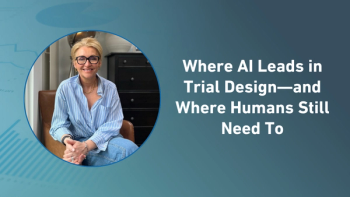
In this video interview, Claire Riches, VP of clinical solutions at Citeline, makes the case for AI as a sophisticated strategic advisor in trial design while arguing that humans must remain in the lead—especially when factors the model can't fully account for are at stake.
Advertisement
Advertisement
Trending on Applied Clinical Trials Online
1
The Control Plane for Agentic Clinical Operations: Governing Autonomous Digital Actors in Regulated Trials
2
Hierarchical Endpoints in Cardiology: How Much Treatment Benefit, and From Where
3
HHS Launches SURPASS Program and Three Complementary Initiatives to Transform Clinical Trial Design and Infrastructure
4
What ClinOps Professionals Just Starting With AI Should Keep Top of Mind
5