
“We’ve seen sites turning more towards industry sponsored trials to drive more revenue and ultimately cover some of the research they’re doing that was NIH and other government funded research.”
News|Articles|November 18, 2026
Q3 Healthcare Report Cites Federal Research Cuts and FDA Staff Losses as Pressures on Biotech
Author(s)Andy Studna, Senior Editor
Listen
0:00 / 0:00
Key Takeaways
- NIH research and training dollars function as a core upstream asset-creation and workforce “farm club,” and constraints on grants, renewals, and visas threaten future staffing and capacity.
- Major FDA headcount reductions at CDER and CBER, plus senior departures, are associated with disruptions to development timelines, approval processes, and potential downstream safety risks.
Cassel Salpeter & Co.’s Q3 healthcare update points to disrupted NIH grant processing, FDA attrition, and tariffs as pressures on drug development and early-stage financing.
Advertisement
Investment bank Cassel Salpeter & Co. cites federal funding cuts, staffing losses at the FDA, and tariffs as pressures on the US biotech industry in its Q3 2026 healthcare update. In a section titled “Is the Government Strangling Biotech?”, the report looks at how government policy affects drug development and the companies behind it.1
The National Institutes of Health (NIH) is central to the report’s discussion of government’s role. It describes the NIH as the government’s most important contribution to the biotech ecosystem and says the agency has funded “almost $200 billion in laboratory and clinical research” since 2021. That research has produced technologies and molecules that became the basis for new companies or were licensed or sold to biotech firms.
Pressure on grants and training
The report states that the administration continues to push for control of and cuts to research spending. Congress has resisted some of those demands, it says, but some cuts have been made. Grant processing has also been disrupted, including new applications and renewals of grants and contracts, which adds pressure on research and training programs.
Clinical research infrastructure is part of that picture. The report notes that National Cancer Institute (NCI)-designated cancer centers train oncologists and clinical scientists and host clinical trials, and that NIH money supports graduate and postdoctoral training programs, which it describes as “farm clubs” for the industry. Cuts to training grants and fewer visas for foreign workers may make it harder to staff new US facilities.
FDA losses and a tougher financing climate
At the FDA, the report says the agency has lost more than 3,500 employees since January 20, 2025, including 800 from the Center for Drug Evaluation and Research (CDER) and almost 400 from the Center for Biologics Evaluation and Research (CBER). Almost 1,000 additional staffers resigned or took early retirement, including senior scientists and administrators. The report states that the cuts have caused major disruptions to drug development and approval and may affect the safety of the nation’s drug supply.
Tariffs add cost and uncertainty. The report says they will disproportionately affect small and mid-sized biotechs, and that even early-stage labs will face higher costs for imported materials. Uncertainty over tariffs is keeping investors “on the sidelines when it comes to early-stage companies,” and IPOs from more mature companies are fewer than last year and not performing well. Combined with slower federal grants and higher operating costs, the report describes fundraising as extremely difficult.
How sites were already adapting
Research sites were feeling the funding squeeze well before this report. In a
Sites were also leaning more on industry-sponsored trials. “We’ve seen sites turning more towards industry sponsored trials to drive more revenue and ultimately cover some of the research they’re doing that was NIH and other government funded research, essentially using pharma money to keep the lights on and keep things moving forward,” McAllister said.
He saw a trade-off. A shift toward more industry-sponsored research, he said, means institutional priorities moving away from public interest-focused research. Some sites were also cutting staff and closing departments and research programs, and the research capacity lost with them would take time to grow back. “Sites are doing heroic work out there, but I worry that heroism isn’t a sustainable staffing model,” McAllister said.
References
- Q3 2026 Healthcare Report: Is the Government Strangling Biotech? Cassel Salpeter & Co.
https://www.casselsalpeter.com/general/q3-2026-healthcare-report/ - How Sites and Sponsors Are Adapting to Clinical Trial Budget Cuts. Applied Clinical Trials. July 1, 2025.
https://www.appliedclinicaltrialsonline.com/view/sites-sponsors-adapting-clinical-trial-budget-cuts
Advertisement
Related to this article
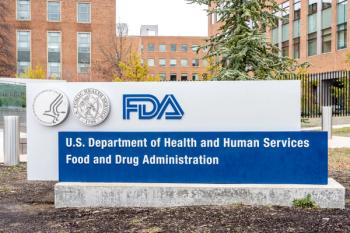
The agency is still accepting applications but is not reviewing or granting new ones, according to Reuters, while HHS says work under the program is ongoing.

In this Q&A, James Cheong, senior vice president of Asia Pacific at Precision for Medicine, discusses why outdated perceptions of APAC sites persist among smaller biotechs, how China’s regulatory reforms have reshaped Phase III startup timelines, and what first-time sponsors need to get right in the region.
In this video interview, James Cheong, senior vice president of Asia Pacific at Precision for Medicine, explains how FDA inspection findings at APAC sites compare with those in the US and Europe, and why the common issues, such as informed consent versioning, are not unique to the region.
A pivotal trial that missed its primary endpoint became the basis for a successful redesign after the team used the data to define the high-risk patients most likely to benefit, showing that setbacks can strengthen development when organizations interrogate the evidence rather than abandon it.
In this video interview, James Cheong, senior vice president of Asia Pacific at Precision for Medicine, outlines why faster recruitment, local data requirements for registration, and lower costs make APAC attractive for global Phase III programs.

AI can draft a CSR in minutes, but the report only reflects evidence that has already converged, so faster drafting shifts the bottleneck to upstream reconciliation, database-lock readiness, and human accountability rather than shortening the trial itself.
In this video interview, James Cheong, senior vice president of Asia Pacific at Precision for Medicine, details how NMPA reforms, parallel reviews, and expanded reviewer capacity brought China’s startup timelines in line with the US and Europe, and could shorten them further.
In this video interview, James Cheong, senior vice president of Asia Pacific at Precision for Medicine, explains how regulatory reform and inspection data contradict the view that APAC sites are slower or lower quality, and why sponsors need to update their assumptions.
Advertisement
Advertisement
Trending on Applied Clinical Trials Online
1
Where AI Helps in Patient Conversations About Trials and Where Humans Must Lead
2
Participant Experience with AI-Assisted and Web-Based Clinical Trial Pre-Screening
3
What Care Teams Should Do Differently So Every Eligible Patient Hears About a Trial
4
Measuring Burden Before It Becomes Risk: Coordinator Friction, Tool Fatigue, and Trial Quality
5