Commentary|Podcasts|June 15, 2026

ACT Brief: Real-Time Data Harmonization Infrastructure, Modern Trial Payments, and SCLC Drug Confirmatory Failure

Listen
0:00 / 0:00

In today's ACT Brief, we examine building infrastructure for real-time clinical and real-world data integration, modernizing participant payments to reduce dropout, and a Phase III confirmatory trial failure for a lung cancer drug.

This is the Applied Clinical Trials Brief—your fast track to the latest insights shaping clinical operations and drug development.

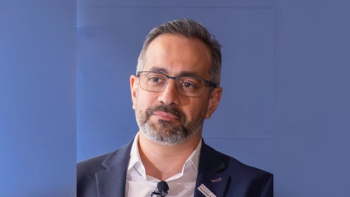
  • In part five of his interview, Raj Indupuri of eClinical Solutions explained why organizations that build infrastructure capable of harmonizing clinical and real-world data in real time will be best positioned for the continuous, data-driven regulatory environment now emerging. Real-time data integration enables sponsors to move from retrospective evidence assembly to concurrent validation during development.
  • In a new contributed article, experts from PayQuicker discussed how clinical trials can modernize participant payments by borrowing from gig economy approaches—offering flexible payout options and faster fund access instead of prepaid cards and checks. Modern payment platforms reduce administrative burden on sites, improve participant retention by removing friction, and enable global reach without adding compliance complexity through centralized fraud and privacy controls.
  • Jazz Pharmaceuticals announced that Zepzelca failed to meet the primary endpoint of overall survival in the Phase III Lagoon confirmatory trial for second-line relapsed small cell lung cancer. The accelerated approval in that indication is now at risk, though the drug's full approval for first-line maintenance treatment with immunotherapy remains unaffected based on separate Phase III data showing 46% reduction in disease progression or death.

That's all for today's ACT Brief. Be sure to stay tuned to our website and LinkedIn this week for exclusive coverage of the DIA Global Annual Meeting in Philadelphia.



Related to this article

How Oncology Teams Decide to Continue, Change Course, or Stop a Program: Q&A with Professor David Adler, PATHORA
In this Q&A, Professor David Adler, chief scientific and medical officer of the PATHORA Institute of Pathology & Tissue Medicine, discusses how oncology development teams make go, change-course, or stop decisions with incomplete evidence, how preclinical, biomarker, and clinical data should be weighed together, and why pathology and tissue evidence can reshape a program before major commitments are made.
The Next Evolution of Patient-Centered Trials Starts with Design
Decentralized trial success depends less on how far activities move away from sites than on matching each activity’s delivery model to participant burden, site readiness, and data integrity, using patient intelligence to decide where flexibility helps and where site-based care remains essential.
© putilov_denis - © putilov_denis - stock.adobe.com
Sponsors rigorously vet CROs for oncology expertise but rarely apply the same scrutiny to the IRB reviewing their trials, even though increasingly complex protocols require reviewers with substantive therapeutic knowledge, not just a rostered oncologist.