

“A lot of these providers would love to have their patients enroll in a clinical trial, but it’s very hard for an independent provider to stand up a research organization. So if we can make it painless for the provider to provide access to clinical trials to their patients, I think everybody wins.”
Commentary|Articles|February 26, 2026
From the Frontlines of SCOPE 2026: Sites Jump on AI Opportunity
Author(s)Liz Beatty
At SCOPE Summit 2026, site leaders shared how AI is transforming feasibility, patient identification, and enrollment strategies, enabling research sites to boost performance, strengthen sponsor relationships, and deliver more precise, patient-centered clinical trials.
Advertisement
At
And the sites I’m talking to aren’t sitting back and waiting; they’re taking the reins on AI adoption and thinking strategically about how it can give their site a competitive edge. I had the opportunity to sit down with three of these sites in the SCOPE panel I moderated, “How Data-Driven Sites Are Proving Patient Access to Win Trials and Accelerate Enrollment.”
Featuring Mari Livermore, site director & CEO of Pantheon Clinical Research; Aneesh Vaze, managing director of Clinical Research Philadelphia; and Lily Palladino, business development manager of Discovery Clinical Trials, the panel examined how some of the most forward-thinking sites in the country are harnessing AI to demonstrate their capabilities, bolster enrollment performance, and build trust with sponsors.
Read on for the lessons I learned from this expert group of site leaders, and what we can all take away from the session.
Heightened feasibility expectations put sites in the hot seat
Feasibility has been a longstanding pain point for sites, filled with burdensome, repetitive questionnaires and back-and-forths. Panelists say that feasibility has actually become more demanding in some cases as sponsors request more information and more precise information, often on tighter timelines. These sites shared how they’re adapting to stay competitive.
Across the panel, sites described using AI to scan tens (or hundreds) of thousands of patient records within minutes. Instead of spending hours manually reviewing charts, these sites can now quickly identify potential patients, validate inclusion and exclusion criteria at a granular level, and submit feasibility responses with data-driven enrollment expectations instead of rough estimates.
Palladino shared, “We're getting feasibility questionnaires done in record time due to using AI, where before, it would take us hours. Now we noticed at least an 80% decrease in enrollment time.”
Livermore told another story that illustrates AI’s impact: “We recently completed a very short enrollment for an obesity trial, and we had only 30 days. Using Inato’s AI-powered patient pre-screening tool, we were able to screen 40 patients—and 38 of them were enrolled.”
A 95% conversion rate builds real sponsor confidence and trust, and can strengthen the relationship for future opportunities. In fact, the sponsor conducted an oversight visit to see how Pantheon Clinical Research achieved these numbers and actually awarded them four additional studies after seeing the AI-driven process in action.
Precision, partnership, and personal connection drive enrollment
According to Vaze, roughly 70% of his site’s participants come in through provider partnerships. His team has access to hundreds of thousands of patients across partner EMR systems and uses AI to help identify the best patients for a study-based on protocol criteria, but also for things like how recently they’ve been to the doctor.
What sticks out to me about this is the careful balance between AI and human relationships. Deciding to participate in a trial is a high-stakes personal health decision that I’m still convinced is best made between patients and trusted doctors. AI makes it possible to find a more relevant, engaged cohort than the site could have found via advertising or manual chart review, but still leaves plenty of space for those relationships.
“I think that all sites should treat their community-based providers as partners,” Vaze said. “A lot of these providers would love to have their patients enroll in a clinical trial, but it’s very hard for an independent provider to stand up a research organization. So if we can make it painless for the provider to provide access to clinical trials to their patients, I think everybody wins.”
Better patient experiences are baked into the new operating model
The sites spoke a lot about how AI is helping them be more efficient, focus on the right things, and reduce workload for their teams. But perhaps the most important shift we discussed is how it’s helping sites tangibly improve the patient experience.
When pre-screening is precise and tech-enabled, patients are much less likely to drive hours only to be told they don’t qualify. Expectations are clearer, disappointment decreases, and enrollment improves. And sites experience fewer costly screen failures, which can reduce coordinator burden and margin erosion.
“AI workflows are better for us financially, because screen failures are expensive and not very many sponsors pay for screen failures anymore,” Livermore said. “But it's also more rewarding, because not only do we get to keep that patient for 72 weeks, but we also give them a better experience.”
Taken together, all these examples from Livermore, Vaze, and Palladino reveal something larger. Site AI adoption may be flying a bit more under the radar, but sites certainly aren’t hanging back and waiting; they’re becoming data-driven, patient-centered, high-performers. And sponsors are listening.
Liz Beatty, co-founder and chief strategy officer at Inato
Advertisement
Related to this article
In this Q&A, Andrea Valente, CEO of uMotif, discusses what it takes to build genuine trust between patients and sites, why making technology easier to use isn't the same as making patient-site interaction more effective, and where the industry is still falling short in its push toward patient-centered trial design.
In a video interview prior to the 2026 DPHARM conference, Andrea Valente, CEO of uMotif, shares what she expects to be at the center of the conversation—from building trust between patients and sites to where AI may and may not have a role in that relationship.

Decentralized trial models have demonstrated real gains in enrollment performance and patient access, but operational switching costs, fragmented technology stacks, and unresolved gaps in the patient-site relationship raise a question the industry has been slow to confront directly.
In a video interview prior to the 2026 DPHARM conference, Andrea Valente, CEO of uMotif, explains why the real technology challenge isn't usability alone—it's making it easier for patients and sites to interact more effectively with each other.

Radiopharmaceutical therapy is exposing a broader challenge for clinical development: scientific innovation can advance only as fast as the infrastructure, data, and cross-functional decisions required to deliver it.
In this video interview, Claire Riches, VP of clinical solutions at Citeline, offers practical guidance for clinical operations teams beginning their AI journey—making the case that the tools are more accessible than many assume and that waiting to start is a competitive risk in itself.
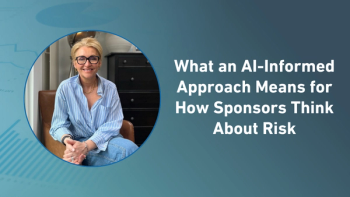
In this video interview, Claire Riches, VP of clinical solutions at Citeline, explains how AI is shifting trial risk management from reactive to proactive—enabling sponsors to pressure-test protocols and anticipate pivots before a single patient is enrolled.
AI agents in clinical operations acquire broader autonomous capability through expanded permissions, tools, memory, and delegated authority, requiring governance focused on whether effective capability has shifted outside approved boundaries rather than whether software has changed.
Advertisement
Advertisement
Trending on Applied Clinical Trials Online
1
FDA Seeks Public Input on Early-Phase Clinical Trial Design for Ibogaine
2
FDA Releases Transparency Roadmap Outlining Disclosure Priorities Across Drug Development and Regulatory Review
3
Mixed Outsourcing Models Are Spreading. Is Sponsor Oversight Keeping Up?
4
Beyond the Molecule: Why Radiopharmaceutical Trials Require a New Operating Model
5