Register Now: Beyond EDC: Designing a Connected Data Strategy for Predictive Clinical Development
News|Articles|November 22, 2024

The Rise of Predictive Engagement Tools in Clinical Trials

Author(s)AICure

Patient attrition can be a significant barrier to the success of a randomized controlled trial (RCT). Today, with the help of AI-powered predictive engagement tools, clinical study managers are finding ways to proactively reduce attrition rates in RCTs, and increase the effectiveness of their trial. In this guide, we look at the role AI-powered patient engagement tools play in clinical research, from the problems they’re being used to solve to the areas and indications in which they’re being deployed.


Related to this article

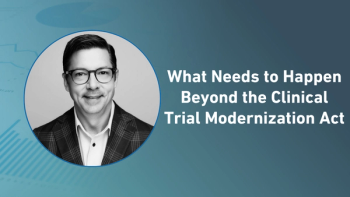
What Needs to Happen Beyond the Clinical Trial Modernization Act
In this video interview, Kent Thoelke, CEO of Paradigm Health, calls for safe harbor protections, CMS reimbursement safeguards, and funding mechanisms modeled on EHR meaningful use to help community and rural institutions participate in research on par with academic centers.
Building AI Assistants Clinical Trial Teams Can Trust: Q&A with E.K. Koh, Suvoda
In this Q&A, E.K. Koh, chief product officer at Suvoda, discusses what separates a trustworthy AI assistant from one that adds risk, why curated clinical knowledge matters more than general-purpose flexibility, and what safeguards must be in place when assistants move from answering questions to taking actions in clinical trial systems.