Register Now - Beyond Recruitment: The Future of Patient Site Engagement in Oncology Clinical Trials
|Articles|August 19, 2013

Theorem Adds RadMD to its Roster of Strategic Alliances

Theorem Clinical Research has announced the addition of RadMD, a cutting-edge medical imaging expertise company, to its roster of strategic alliances.

Theorem Clinical Research

has announced the addition of

RadMD

, a cutting-edge medical imaging expertise company, to its roster of

strategic alliances

.

“These kinds of alliances allow us to extend our capabilities to offer a greater depth and spectrum of services to our clients,” said D. Lee Spurgin Jr., Ph.D., Theorem senior vice president and general manager of medical device and diagnostic development. “When we work with partners that we already know and trust, we feel our clients get a better end result.”

With the increasing utilization of imaging in clinical research, there has been a greater demand for expertise on the use of medical imaging in clinical trials. RadMD offers unique services centered solely on the use of imaging in trials. They provide a consultative approach to implementing medical imaging endpoints based on extensive experience in the pharmaceutical development of both diagnostic and therapeutic drugs.

RadMD’s services include expertise in constructing customized medical imaging solutions, a unique worldwide network of more than 600 physicians and medical imaging experts available for independent image evaluations or “blinded reads”, regulatory strategy, imaging endpoint justification and extensive imaging training capabilities.

“We are excited to be able to bring our imaging expertise in clinical development to Theorem’s clientele, and look forward to working together to develop innovative products for our mutual customers and patients,” said Doug Stefanelli RadMD COO and executive vice president.


Related to this article

Closing the Community Access Gap: Q&A with Kent Thoelke, Paradigm Health
In this Q&A, Kent Thoelke, CEO of Paradigm Health, discusses why participation gaps in community and rural settings come down to both patient cost barriers and site infrastructure, how legacy workflows weigh on community clinics, and what policy and technology changes it would take to make clinical research a real care option for more patients.
© Grispb - © Grispb - stock.adobe.com
Mistral and OpenAI produced identical overall eligibility labels across 200 synthetic patient-study assessments, with criterion-level disagreements concentrated in inclusion criteria where models switch between “Uncertain” and “Not included” when records lack sufficient evidence, so model choice should be driven by deployment architecture, control, and cost rather than assumed interchangeability.
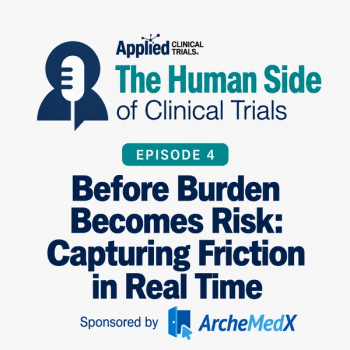
The Human Side of Clinical Trials: Before Burden Becomes Risk, Capturing Friction in Real Time
In Episode 4 of The Human Side of Clinical Trials, host Brian S. McGowan, PhD, FACEHP, chief learning officer and co-founder of ArcheMedX, Inc., speaks with Jason Riis, PhD, CEO and chief behavioral scientist at Behavioralize, about how capturing friction closer to the moment it happens can reveal unclear instructions, technology friction, and workarounds that retrospective surveys and debriefs tend to miss.