We are amidst a data revolution in healthcare and the life sciences. With advances in DNA sequencing, multiomics, wearables, imaging, and clinical data capture, there is more data — and there are more data modalities — to draw from for biomedical research than ever before. However, the quantity, variance and speed of data generation outpaces researchers’ ability to effectively utilize it to reveal medical breakthroughs for those in need. The ability to analyze health data is critical in developing a precision health approach. By leveraging diverse data sources, researchers can determine the most effective actions for individuals and communities. However, current barriers to data access and collaboration hinder progress. To accelerate the pace of discovery, a solution is needed to close the gap between research and health care. This paper describes how Verily Workbench provides solutions for healthcare professionals and researchers to easily access and collaborate on data within an integrated analysis and governance framework. Workbench provides a community of researchers with the platform, data, and tools to solve the most pressing scientific challenge
The second of a two-part perspective examining why clinical trial enrollment and representation outcomes are shaped long before the first patient is screened.
In this video interview, Saamir Pasha and Carole Berini, PhD, of Ontada, describe what operationalizing regulatory-grade quality frameworks requires—and why fit-for-purpose evidence generation is a transparency and documentation discipline, not just a data cleanliness exercise.
AI can turn complex protocols into first-pass budget inputs, letting sponsors start budgeting sooner while budget builders shift from data entry to review.
Trialbee CEO Matt Walz explores the current impact of AI in delivering practical gains in clinical development and reflects on its future potential, where enrollment predictability may be the biggest prize of all.
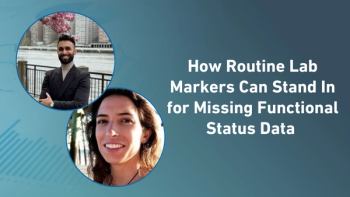
In this video interview, Carole Berini, PhD, of Ontada, explains how validated proxies for variables like ECOG performance status can recover not just sample size but the representativeness of hard-to-reach patient populations in real-world oncology studies.
In today's ACT Brief, we examine proportionate analysis frequency in RBQM, how to build trust into real-world evidence foundations for cancer trials, and how rare disease developers monetize regulatory success.
Real-time RBQM requires proportionate analysis frequency matched to data arrival and issue criticality, not continuous reanalysis, because signal churn from over-frequent runs creates alert fatigue and operational noise that obscures meaningful deterioration.