
Applied Clinical Trials
Government funding slated to boost studies comparing medications to other treatments.
Applied Clinical Trials
Government funding slated to boost studies comparing medications to other treatments.

Applied Clinical Trials
Biomedical research community finds privacy policies add cost and complexity to clinical studies.

Applied Clinical Trials
Reformers seek disclosure of investigator payments and conflicts of interest.

Applied Clinical Trials
Proposals to reduce outlays for drugs could limit biomedical research and product development.

Applied Clinical Trials
More resources and new leadership could help FDA regain its stature and bolster support for innovation.
Applied Clinical Trials
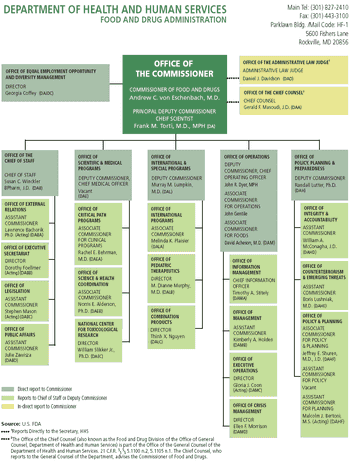
A comprehensive listing of U.S. departments and offices that includes the telephone numbers of directors, commissioners, and advisors.

Applied Clinical Trials
FDA is conducting more inspections to ensure that foreign clinical research meets GCP standards.

Applied Clinical Trials
Global harmonization, regulatory flexibility promise to expand treatments for rare and neglected diseases.

Applied Clinical Trials
Comparative drug analysis aims to address costs and value as candidates eye curbs on drug spending.

Applied Clinical Trials
Ketek probe raises questions about research oversight by FDA, sponsors, and investigators.

Applied Clinical Trials
FDA, NIH, and sponsors all struggle to implement complex registration and data access requirements.

Applied Clinical Trials
The agency's 2008 budget fails to keep up with expanding programs, added safety concerns.

Applied Clinical Trials
FDA and sponsors implement FDAAA as pressure builds to curb drug prices and tweak the R&D process.

Applied Clinical Trials
Information systems and lax enforcement criticized as Congress expands trial disclosure requirements.

Applied Clinical Trials
Expanded access to drugs for seniors has increased demand, focusing more attention on medical costs.

Applied Clinical Trials
Journal editors and legislators expand the scope of clinical trial registration and results disclosure.

Applied Clinical Trials
High-quality programs needed to protect subjects, improve data, harmonize global trials, and manage costs.

Applied Clinical Trials
Added information to inform treatment decisions may drive up research costs for sponsors.

Applied Clinical Trials
Policy makers discuss incentives for trials on children and for generic versions of biotech therapies.

Applied Clinical Trials
Drug safety concerns, unproductive methods, and high costs encourage innovative study designs and collaborative efforts.

Applied Clinical Trials
Regulators and sponsors encourage alternative review models to fit a growing research enterprise.

Applied Clinical Trials
Shift in Congressional control opens door to probes into research practices & expansion of PDUFA legislation.

Applied Clinical Trials
A changing research enterprise requires clearer policies and more effective regulatory tactics.

Applied Clinical Trials
Under IOM's plan, a "lifecycle approach" to drug evaluation would change FDA's pre- and postapproval policies.

Applied Clinical Trials
Confusion over policies governing prisoners points to the need for clear, uniform safeguards for all research.

Applied Clinical Trials
Rise in foreign studies requires attention to ethical issues, investigator training.

Applied Clinical Trials
Agency seeks to calm critics by improving subject protection, while also streamlining research oversight.

Applied Clinical Trials
Payers seek more comparative drug data from sponsors and independent researchers.

Applied Clinical Trials
The much anticipated list features initiatives in biomarkers and research productivity.

Applied Clinical Trials
More consultations with sponsors promise to drive drug development, but also impose a growing burden on FDA.