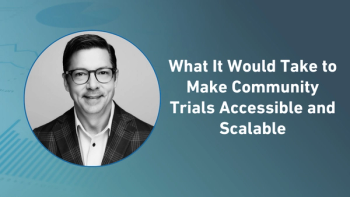
In this video interview, Kent Thoelke, CEO of Paradigm Health, outlines why anti-kickback guidance and modern EHR-integrated trial matching technology must work in tandem to reach representative patient populations at the community level.
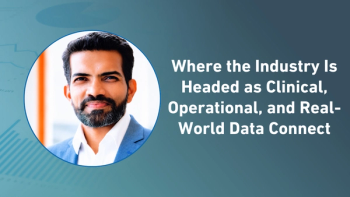
In this video interview, Rajneesh Patil, global head of AI, digital, and innovation in clinical development at Syneos Health, describes the industry’s trajectory toward a unified intelligence orchestration environment—and explains why the future isn’t one model that knows everything, but a trusted system that brings the right evidence to the right human decision.
Neuroscience trials struggle to show benefit because symptoms are subjective and variable, and eCOA strengthens dossiers by standardizing ClinRO administration, capturing outcomes in real time to reduce recall bias, and adding patient and caregiver perspectives that clinician scales miss.
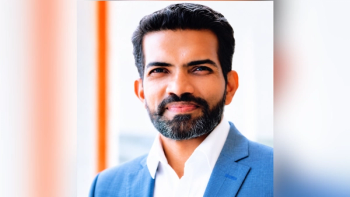
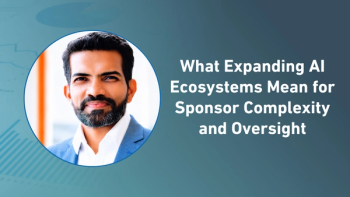
In this Q&A, Rajneesh Patil, global head of AI, digital, and innovation in clinical development at Syneos Health, discusses what changes when AI is embedded across protocol strategy, data infrastructure, and workflow tools at once, where governance frameworks tend to fall short, and why CROs must orchestrate AI ecosystems rather than simply aggregate them.
The FDA’s RTCT initiative transmits predefined, clinically meaningful signals to regulators during active trials, so its value depends entirely on the maturity of sponsors’ upstream RBQM signal intelligence, KRIs, QTLs, and root-cause context, rather than on data speed.
Standardized measurement across five oncology centers found that clinical research coordinators rated eSource-enabled workflows positively (Overall Mean Satisfaction 5.79 of 7), with reduced manual entry and electronic data transfer earning strong marks, while perceived reduction in sponsor and monitor queries lagged as the one domain below threshold.
In this video interview, Rajneesh Patil, global head of AI, digital, and innovation in clinical development at Syneos Health, argues that CROs must act as orchestrators rather than aggregators—and that the real test of any AI ecosystem is whether it reduces sponsor coordination burden or just hands it back to them.
In this video interview, James Cheong, senior vice president of Asia Pacific at Precision for Medicine, explains how FDA inspection findings at APAC sites compare with those in the US and Europe, and why the common issues, such as informed consent versioning, are not unique to the region.