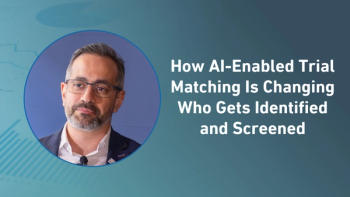
In this video interview, Shaalan Beg, MD, MBA, FASCO, chief medical officer at ConcertAI, explains how AI can unlock unstructured chart data and cut coordinator screening time from hours to minutes, easing a clinical research workforce under strain.
AI can draft a CSR in minutes, but the report only reflects evidence that has already converged, so faster drafting shifts the bottleneck to upstream reconciliation, database-lock readiness, and human accountability rather than shortening the trial itself.
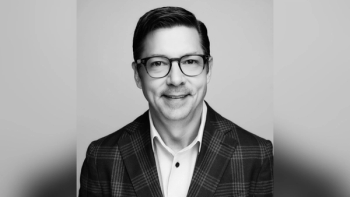
In this Q&A, Kent Thoelke, CEO of Paradigm Health, discusses why participation gaps in community and rural settings come down to both patient cost barriers and site infrastructure, how legacy workflows weigh on community clinics, and what policy and technology changes it would take to make clinical research a real care option for more patients.
Mistral and OpenAI produced identical overall eligibility labels across 200 synthetic patient-study assessments, with criterion-level disagreements concentrated in inclusion criteria where models switch between “Uncertain” and “Not included” when records lack sufficient evidence, so model choice should be driven by deployment architecture, control, and cost rather than assumed interchangeability.
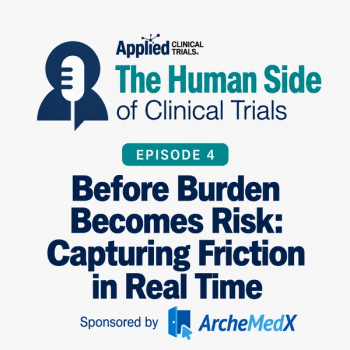
In Episode 4 of The Human Side of Clinical Trials, host Brian S. McGowan, PhD, FACEHP, chief learning officer and co-founder of ArcheMedX, Inc., speaks with Jason Riis, PhD, CEO and chief behavioral scientist at Behavioralize, about how capturing friction closer to the moment it happens can reveal unclear instructions, technology friction, and workarounds that retrospective surveys and debriefs tend to miss.
Neuroscience trials struggle to show benefit because symptoms are subjective and variable, and eCOA strengthens dossiers by standardizing ClinRO administration, capturing outcomes in real time to reduce recall bias, and adding patient and caregiver perspectives that clinician scales miss.
Community participation gaps look less like a question of patient willingness and more like a financing and infrastructure problem that no single bill has yet solved.
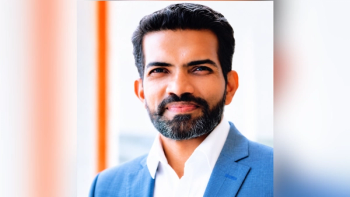
In this Q&A, Rajneesh Patil, global head of AI, digital, and innovation in clinical development at Syneos Health, discusses what changes when AI is embedded across protocol strategy, data infrastructure, and workflow tools at once, where governance frameworks tend to fall short, and why CROs must orchestrate AI ecosystems rather than simply aggregate them.