More from Adrelia Allen
The full video interview of this conversation can be found at:
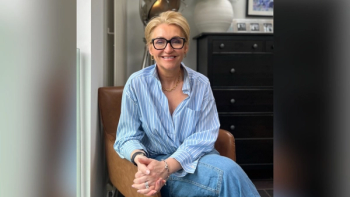
In this Q&A, Adrelia Allen, executive director of clinical trial patient diversity at Merck, discusses how the company is embedding diversity into clinical trial execution—from protocol design and site selection to long-term community engagement that extends well beyond individual trial timelines.
The full video interview of this conversation can be found at:
Despite years of industry conversation around clinical trial diversity, meaningful progress has remained elusive. It has been driven back by structural barriers, eroded trust, and approaches that treat representation as an initiative rather than a standard practice.
To explore this further, Applied Clinical Trials Editorial Advisory Board member Rebecca Johnson, PhD, spoke with Adrelia Allen, executive director of clinical trial patient diversity at Merck, about the Let's Talk Trials
Allen: Representation in clinical trials at Merck is not new. We were actually focused on this prior to the FDA guidances and the FDORA Act, where sponsors were by law requested by the FDA to complete diversity action plans. So this is embedded in how we execute our clinical trials. We've been maintaining what we've been doing, but really putting a lot of focus on ensuring that our clinical trial execution process includes practices where representation from all communities will be a part of how we execute our trials. We're looking at site selection in communities where we have traditionally not had clinical research sites, and from a geographical standpoint, looking at rural participants, as well as how do we ensure that by race and ethnicity—women continue to be underrepresented in clinical trials, and that is still a focus of ours—and also for the elderly. We're embedding these practices with the hope that the outcomes in our clinical trials will be representative of all.
Allen: The accountability for us is really not just talking about representation in clinical trials, but how are we doing this? That accountability is looking at our tracking for our diversity action plans and with the goals that we're setting for those plans. What are the tactics and strategies that are working? Are we coming back and evaluating on a periodic basis how we're executing those plans? We do have strategy meetings focused on how we're performing, and are there communities and patient advocacy organizations that we need to remain connected with in order to bring clinical trials to patients right where they are.
We're looking over spans of time at how we're performing. We know this is not an easy task. It's pretty much like trying to turn a ship, and it's going to require us not just to talk about it but to take actions. The accountability is also inclusive of those communities—how are we reaching out, hearing the voice of the community, and partnering alongside them? Not just showing up when there's a clinical trial, but are we present in those communities before there's a need to enroll participants? The community engagement aspect of this work is showing to be very important, and not only for us showing up but also being accountable to communities for the long term, not just for those transactional moments of recruiting for a clinical trial.
Allen: As much as we've been talking about clinical trials, it still remains a mystery for many communities to have access to the information—and even to know where a clinical trial exists in their community. Let's Talk Trials has been an opportunity for us to address the gap of both interest and access. When we look at the 2020 new cancer drugs that were approved—18 new cancer drugs—only 11% of those participants were Black or Hispanic. It shows us that we still have much work to do in making sure that every patient who wants to participate in a clinical trial has access to the information.
Let's Talk Trials has provided us with the opportunity to make information about clinical trials available, address the myths of participating, and ensure that anyone can access that information and use it to make an informed decision for themselves. We're also working with patient advocacy organizations so that these materials are readily available—they don't have to reproduce them, they can use them to connect with their communities. Our goal is to meet participants, patients, and communities right where they are and provide them access to this information.
Allen: The differentiating factor is that it's designed for the real world. Meeting patients where they are and working with advocacy organizations that have already built trust, and helping us address the trust issue with the right information. We've also participated in community events like the Essence Festival and the Congressional Black Caucus—increasing awareness, leveraging those materials, and talking to communities right where they are about the myths and providing the right information, and directing them to ClinicalTrials.gov to find a trial in their community.
The differentiator is really having those tangible materials—brochures, information that's readily available with just a click—to be able to meet patients where they are.
Allen: The numbers—that's where the truth of everything is in how we're tracking the metrics. We've really looked at the metrics not only with Let's Talk Trials, but also in working with one of our vendor partners,
I think the biggest goal with those metrics is how we're able to educate communities about clinical trials before a family member needs one. That's my goal—how do we make clinical trial information so normal that everyone already knows what a clinical trial is and where they can access one in their community before anyone in their family needs it?
Allen: When we talk about trust, we really have to put on our listening ears and be willing not just to do the talking, but also to listen to community and let them share with us what it is about clinical trials that has been a challenge or that they don't understand. A lot of that is—how do we right the wrongs of past historical events from a clinical trial perspective? Recognizing that it happened, and now what has been done to ensure those behaviors do not continue?
With Let's Talk Trials, sharing the information and highlighting the rights and protections for clinical trial participants—informed consent and what that means—is at the core of what we're doing to increase trust and make sure that potential participants have the information they need to make an informed decision for themselves.
My own father delayed his care because of his lack of trust with his healthcare practitioners. He didn't want to be treated as a guinea pig. That's a reality, and we have to be willing to listen with compassion and provide the right information so that participants know their rights are being protected. On Let's Talk Trials, we do pose those questions for anyone that visits the site and provide them with answers so they can go do additional research. It's at the root of uncovering all of the challenges and myths and helping participants have a better understanding about clinical trials.
Allen: Number one, being able to share with those participants our gratitude for participating in a clinical trial. That shows through with the results—making sure they have access to the results of that clinical trial and what the impact was. And definitely making sure we say thank you for giving up their time and their most valuable resource, their bodies, to participate in a clinical trial.
Even after the trial is done, not leaving the community—understanding that community, staying in touch, and identifying other ways to remain connected, so that it's not transactional and that we are meeting participants in that community for the long term.
Allen: With Let's Talk Trials, we've received some very positive feedback on the website—how participants are accessing clinical trial information and how they've been able to reach out to others with that information. I think we have to do a better job making sure the information is available. Several surveys have shown that Black participants are interested in participating in clinical trials—it's just that many of them have never been asked to participate. The more we can get the information out for participants to advocate on behalf of themselves, and educate our healthcare practitioners on what clinical trials are available in communities, it would definitely increase the awareness. Most people are interested if they are asked to participate.
Allen: We've been working with several different advocacy organizations, and even in collaboration with other sponsors. One in particular is Beacon of Hope, a Novartis-led initiative to increase clinical trial activities and participants at historically Black college and university medical schools. In working with Beacon of Hope, we have been successful in having clinical trials placed at two of the HBCU medical schools.
It's just been an evolution to see what we've been able to accomplish over the past four years—how do you help bring clinical trials to institutions that don't have the infrastructure and all of the resources? Over the past four years, we've seen the increase that has resulted and where clinical trials have been placed. These institutions are in the heart of the communities of the patients we're trying to enroll.
I would also like to highlight that the increase in representation is not going to come from one pharmaceutical company. It's really going to require all of us to work together—bringing our resources, our tools, and one voice—coming into community representing the patient and all having the same goal: making clinical trials available for every participant who chooses to participate.
Allen: Internally, number one is site selection—where are we looking for our clinical trials to be placed, and being intentional about looking at communities that represent the demographic groups we know are not represented in our clinical trials. That requires a lot of intention, relationship building, and even boots on the ground to find new sites we haven't worked with before.
And even before we begin talking about site selection—before the protocol is designed—is being intentional about understanding the epidemiology, the prevalence, and the incidence of the patient impacted by the disease. From there, how do we develop strategies to ensure that representation is built in all the way from the beginning, before we even enroll, before the protocol is designed, all the way through initiation and recruitment and the last patient in?
We have to look at it from the full spectrum—understanding the social determinants of health that are going to impact certain demographic groups, especially if they are impacted by the disease. What are their barriers? How do we work together to remove those barriers? That's what we've done in house, looking at the very beginning of our pre-planning stage at who those patients are, what the barriers are, how we can help remove them, and then looking at protocol design—how are the procedures going to impact those participants, especially when it comes to the social determinants of health and how they're going to access their care?
Allen: The hardest part is really addressing those barriers. There are some barriers where we have tactics and tools in place—to address transportation, to work with sites on alternate hours—but how do we handle the social needs? If there's hunger, if there's child care, how do we work through the policy piece on what areas we are not allowed to reimburse or support participants for? How do we get around and really support patients in addressing the barriers that come with it?
Balancing that has been the challenge—knowing what we can do from a policy standpoint, even when we know that particular participant population has needs in a different area. We've been working with our legal and policy teams on coming up with solutions that are helping, but we want to be able to help at a larger scale. It takes baby steps.
Allen: I think Merck and sponsors hold the primary responsibility. We do need our partners from a policy perspective to help shape the boundaries of what we can and can't do, and to help us move those barriers out of the way. But I do feel heavily that it is on sponsors to understand the patients and to design protocols so that the barriers do not just exclude participants who really need to be involved in that clinical trial because of the prevalence and incidence of that disease.
Looking at inclusion and exclusion criteria—are we excluding certain participants because our criteria are so stringent that we know some underserved communities have comorbidities that would exclude them? There's a lot we can do on our own to increase representation in clinical trials, but we still need to do that in partnership with our policymakers to create some additional space for removing barriers for patients.
Allen: We're going to have to continue keeping our foot on the pedal. As I've shared, we're not going to be able to turn this ship overnight—it's the slow and steady strokes that we make, continuing to remain focused and intentional and building representation into how we execute our trials. Not looking at this as a program or an initiative that has a start and an end, but as something we're building in as the way we execute clinical trials.
As we continue to do this work, early studies have shown that when focusing on representation, the trial milestone dates are not delayed—if anything, many have shown that recruitment has gone much quicker. We just have to remain focused, stick with what's been working, and bring together sponsors and community advocates collectively to solve for this. Because the answer is in all of us working together, making clinical trial information available for all participants so that they have what they need to make an informed decision as to whether or not they choose to participate. We've done our job when we know they had the information and access to the clinical trial was presented to them.
Editor's note: This Q&A is a lightly edited rendering of the original audio/video content. It may contain errors, informal language, or omissions as spoken in the original recording.
4 months ago
Getting Ahead in Trial Design