Feature|Articles|November 4, 2026

Comparing OpenAI and Mistral on Clinical Trial Matching

Mistral and OpenAI produced identical overall eligibility labels across 200 synthetic patient-study assessments, with criterion-level disagreements concentrated in inclusion criteria where models switch between “Uncertain” and “Not included” when records lack sufficient evidence, so model choice should be driven by deployment architecture, control, and cost rather than assumed interchangeability.

Determining whether a patient is eligible for a clinical trial often depends on subtle details within complex, unstructured medical records. Monsana AI has developed a clinical trial screening workflow designed to accurately assess patient eligibility. In this study, we investigated the impact of changing the underlying model suite within the complete screening workflow.

Related to this article

The Human Side of Clinical Trials: Before Burden Becomes Risk, Capturing Friction in Real Time
In Episode 4 of The Human Side of Clinical Trials, host Brian S. McGowan, PhD, FACEHP, chief learning officer and co-founder of ArcheMedX, Inc., speaks with Jason Riis, PhD, CEO and chief behavioral scientist at Behavioralize, about how capturing friction closer to the moment it happens can reveal unclear instructions, technology friction, and workarounds that retrospective surveys and debriefs tend to miss.
Building AI Assistants Clinical Trial Teams Can Trust: Q&A with E.K. Koh, Suvoda
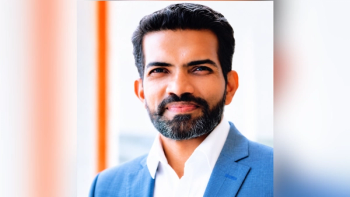
In this Q&A, E.K. Koh, chief product officer at Suvoda, discusses what separates a trustworthy AI assistant from one that adds risk, why curated clinical knowledge matters more than general-purpose flexibility, and what safeguards must be in place when assistants move from answering questions to taking actions in clinical trial systems.
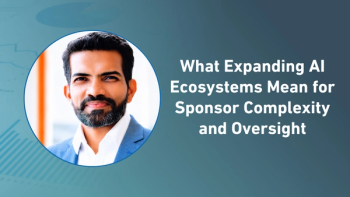
What Expanding AI Ecosystems Mean for Sponsor Complexity and Oversight
In this video interview, Rajneesh Patil, global head of AI, digital, and innovation in clinical development at Syneos Health, argues that CROs must act as orchestrators rather than aggregators—and that the real test of any AI ecosystem is whether it reduces sponsor coordination burden or just hands it back to them.
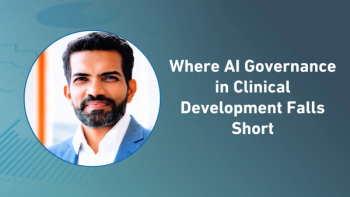
Where AI Governance in Clinical Development Falls Short
In this video interview, Rajneesh Patil, global head of AI, digital, and innovation in clinical development at Syneos Health, identifies three recurring failure modes in AI governance frameworks—and explains why responsible AI must be an ongoing operating discipline, not a one-time approval gate.