
"This transaction allows us to focus our investments and support on our rapidly growing late-stage business across the oncology, neuroscience, internal medicine, and rare disease therapeutic areas."
News|Articles|September 2, 2026
Fortrea to Acquire Worldwide Clinical Trials' Early Phase Services Division in $45 Million Deal
Author(s)Andy Studna, Senior Editor
Listen
0:00 / 0:00
Key Takeaways
- Fortrea’s purchase adds integrated large- and small-molecule bioanalysis plus expanded early-phase bed capacity, enabling larger cohorts, broader volunteer access, and reduced operational friction across study execution.
- Assets include GLP bioanalytics, a 200-bed GCP CPU, and biospecimen storage in Texas, consolidating early development capabilities within Fortrea’s Clinical Pharmacology Services unit.
The all-cash transaction adds a good laboratory practice-compliant bioanalytical laboratory, a 200-bed clinical pharmacology unit, and a biospecimen storage facility to Fortrea's early-phase development network.
Advertisement
Fortrea and Worldwide Clinical Trials have signed a definitive agreement under which Fortrea will acquire Worldwide's Early Phase Services division, consisting of its Clinical Pharmacology Unit (CPU) and bioanalytical laboratory operations, in an all-cash transaction valued at approximately $45 million. The deal is expected to close pending regulatory and licensing approvals.1
The assets being acquired include a Good Laboratory Practice (GLP)-compliant bioanalytical laboratory in Austin, Texas; a 200-bed Good Clinical Practice (GCP)-compliant clinical pharmacology unit in San Antonio, Texas; and a biospecimen storage facility in Pflugerville, Texas.
Once the transaction closes, the Early Phase Services division will become part of Fortrea's Clinical Pharmacology Services business unit.
The acquisition adds in-house large and small molecule bioanalytical capabilities to Fortrea's existing early-phase offerings, which the company says will reduce operational handoffs between clinical and bioanalytical functions and improve turnaround times for both simple and complex studies.
The combined platform is also intended to offer sponsors greater flexibility for larger participant studies, broader access to distinct volunteer populations, and expanded bed capacity across Fortrea's early development network.
"By bringing together complementary bioanalytical and clinical research offerings, we will enable a more seamless development experience for customers, broaden our scientific and operational capabilities and support studies of greater scale, complexity and scientific sophistication across a wider range of therapeutic needs," said Anshul Thakral, chief executive officer of Fortrea, in a press release.
For Worldwide, the transaction supports a strategic shift toward its late-stage business. The company will continue to provide healthy volunteer study capabilities globally through its external site network, while directing investment toward growth in oncology, neuroscience, internal medicine, and rare disease.
"This transaction allows us to focus our investments and support on our rapidly growing late-stage business across the oncology, neuroscience, internal medicine, and rare disease therapeutic areas," added Alistair Macdonald, chief executive officer of Worldwide, in the release. "We are grateful for all that the Early Phase organization has accomplished and confident this creates new opportunities for our employees while enhancing our ability to invest in our long-term growth strategy."
Both companies intend to enter into a series of agreements to maintain project momentum, preserve capabilities, and provide continuity for customers, employees, and ongoing programs during the transition.
Worldwide's rare disease focus
The deal comes as Worldwide has been investing in its therapeutic expertise across rare disease, an area it has highlighted as a core growth priority. In a video interview with Applied Clinical Trials last year, Derek Ansel, vice president of business development at Worldwide Clinical Trials, discussed the distinct challenges the field presents and where he sees technology playing a growing role.2
Ansel described rare disease research as inherently difficult given small, dispersed patient populations, diagnostic delays, and the challenge of defining endpoints when symptoms vary widely across individuals.
On the technology front, he expressed cautious optimism, noting that rare disease communities have historically been early adopters out of necessity.
"Rare disease, I feel, really leads the technology and innovation front in rare disease research, so I'm really excited to see how they are going to be using artificial intelligence (AI), whether that's helping diagnose patients faster by looking at pictures of children with dysmorphic features to help get a diagnosis earlier in life, or by using AI, there are various companies out there that are linking the various approved drugs out there,” Ansel said in the interview. “Could they be used to support and treat and increase quality of life in patients who otherwise wouldn't have access to those drugs, and that's really being leveraged by AI, instead of having humans mine through those various datasets themselves in a very manual way, can leverage those technologies to connect to researchers and connect patients to drugs faster."
References
- Fortrea to Acquire Clinical Pharmacology Unit and Bioanalytical Laboratory Operations from Worldwide Clinical Trials. News release. Fortrea. September 2, 2026. Accessed September 2, 2026.
https://ir.fortrea.com/news-releases/news-release-details/fortrea-acquire-clinical-pharmacology-unit-and-bioanalytical - Leading the Technology and Innovation Front Through Rare Disease Research. Applied Clinical Trials. April 18, 2025. Accessed September 2, 2026.
https://www.appliedclinicaltrialsonline.com/view/leading-technology-innovation-rare-disease-research
Advertisement
Related to this article

How a phased CRO partnership built on ICH E6(R2) and E6(R3) principles supported a multi-indication biotech portfolio.

The second of a two-part perspective examining why clinical trial enrollment and representation outcomes are shaped long before the first patient is screened.
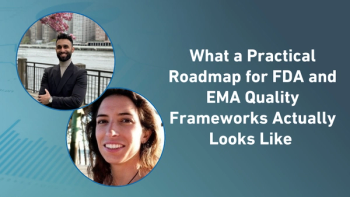
In this video interview, Saamir Pasha and Carole Berini, PhD, of Ontada, describe what operationalizing regulatory-grade quality frameworks requires—and why fit-for-purpose evidence generation is a transparency and documentation discipline, not just a data cleanliness exercise.

AI can turn complex protocols into first-pass budget inputs, letting sponsors start budgeting sooner while budget builders shift from data entry to review.
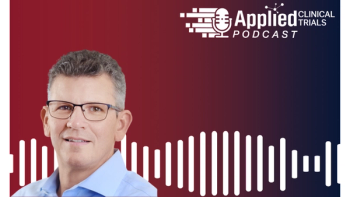
Trialbee CEO Matt Walz explores the current impact of AI in delivering practical gains in clinical development and reflects on its future potential, where enrollment predictability may be the biggest prize of all.
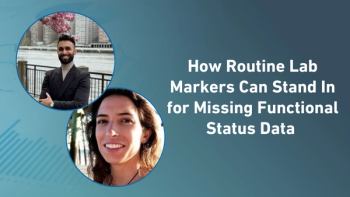
In this video interview, Carole Berini, PhD, of Ontada, explains how validated proxies for variables like ECOG performance status can recover not just sample size but the representativeness of hard-to-reach patient populations in real-world oncology studies.

A biomarker test now decides who enters a precision medicine trial, yet results often go unused and assays are not ready when screening opens.
In today's ACT Brief, we examine proportionate analysis frequency in RBQM, how to build trust into real-world evidence foundations for cancer trials, and how rare disease developers monetize regulatory success.
Advertisement
Advertisement
Trending on Applied Clinical Trials Online
1
AI and Patient Recruitment: Can Predictive Promise Drive True Transformation?
2
Beyond Outreach: Structural Drivers of Representation in Clinical Trials
3
Flexible Clinical Operations and Site Management Across a Diversified Biotech Portfolio: An Application of Quality by Design and Risk-Based Oversight
4
Start Study Budgets Sooner With AI-Enabled Protocol Translation
5