Feature|Articles|November 2, 2026

From Signal to Action: Why Faster Trial Data Isn’t Producing Faster Decisions

Data capture is no longer the bottleneck, and whether the lag between a signal and a decision shrinks depends on signal design, AI governance, and vendor orchestration.

Clinical trials have never captured data as quickly as they do now. In a recent contributed article on Applied Clinical Trials, Amir Malka and Philip McCrea, chief executives of Bioforum The Data Masters and Viedoc, pointed to electronic data capture (EDC), electronic clinical outcome assessments, wearables, central laboratories, imaging, and decentralized sources, along with other data streams that barely existed a decade ago. Analytics are speeding up too, they noted, as artificial intelligence (AI) and automation make it possible to interrogate data while a study is still running.1


Related to this article

© photon_photo - © photon_photo - stock.adobe.com
Standardized measurement across five oncology centers found that clinical research coordinators rated eSource-enabled workflows positively (Overall Mean Satisfaction 5.79 of 7), with reduced manual entry and electronic data transfer earning strong marks, while perceived reduction in sponsor and monitor queries lagged as the one domain below threshold.
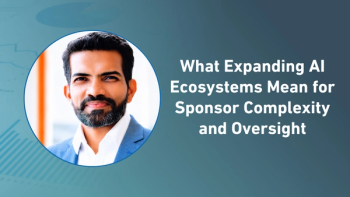
What Expanding AI Ecosystems Mean for Sponsor Complexity and Oversight
In this video interview, Rajneesh Patil, global head of AI, digital, and innovation in clinical development at Syneos Health, argues that CROs must act as orchestrators rather than aggregators—and that the real test of any AI ecosystem is whether it reduces sponsor coordination burden or just hands it back to them.