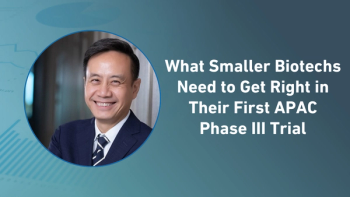
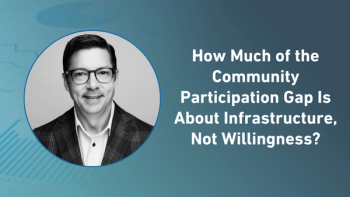
In this video interview, Kent Thoelke, CEO of Paradigm Health, explains why patient cost barriers and site infrastructure challenges must be solved together to close the participation gap in community and rural clinical trials.
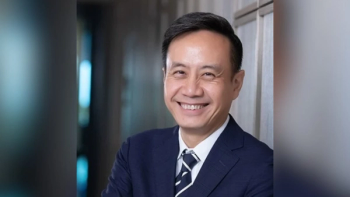
In this video interview, Shaalan Beg, MD, MBA, FASCO, chief medical officer at ConcertAI, explains why trial availability, shaped heavily by zip code, is the biggest barrier to enrollment and how access patterns mirror broader healthcare disparities.
In a recent video interview with Applied Clinical Trials, Shaalan Beg, MD, MBA, FASCO, chief medical officer at ConcertAI, discussed why so many patients from underrepresented groups are never asked to join a clinical trial, and how AI-enabled tools can make screening and access more consistent in oncology. He opened by arguing that the biggest barrier is the availability of trials themselves: a patient’s zip code, or their oncologist’s, is the strongest predictor of whether a trial is offered, because most studies are concentrated in urban centers serving insured, educated populations. Community and safety net hospitals often focus on backbone clinical care rather than research, and even large academic centers tend to concentrate trials at a single site.
Beg emphasized that the problem is not patient willingness. Inconsistent screening, driven by physician awareness, timing, and site-level access, determines who gets flagged, but once a trial is offered, acceptance rates in oncology do not differ by racial or ethnic background, a finding behind ASCO’s campaign to simply ask patients.
On AI, he explained that modern tools can characterize where a patient is in their treatment journey by extracting information from both structured data and unstructured physician notes, then match it against digitized protocols. Identification alone is not the bottleneck, he noted, given a clinical research workforce under strain as trial complexity grows. Tools that cut screening time from hours to minutes let coordinators screen more patients each day.
He was clear about the limits of AI, stating that conversations about randomization, control arms, and treatment sequencing must remain human and oncologist-led, while AI can help patients prepare beforehand and navigate questions afterward. He closed by describing ConcertAI’s CancerLinQ approach, which synthesizes data across systems and prioritizes patients by match probability and risk of progression, so that clinicians receive timely nudges rather than relying on memory between patients.