
New amendment explicitly states that in vitro diagnostic products are devices under the Federal Food, Drug, and Cosmetic Act.
New amendment explicitly states that in vitro diagnostic products are devices under the Federal Food, Drug, and Cosmetic Act.

Under new multi-year strategic partnership, Parexel will utilize Palantir’s artificial intelligence platform.

In the fourth and final part of this video interview with ACT editor Andy Studna, Melissa Mooney, director, eCOA sales engineering, IQVIA discusses how the regulatory stance on electronic clinical outcome assessments has changed over the years and what it could look like in the future.

Analysis of randomized clinical trial for migraine sought to determine whether there were differences between outcomes from patients assigned to roles and those as healthy controls.
In part 3 of this video interview with ACT editor Andy Studna, Melissa Mooney, director, eCOA sales engineering, IQVIA sheds light on the unique challenges of dermatology trials and how clinical outcome assessments can be implemented in them.
Cross-sectional comparative study of over 36,000 patients with diabetes found differences in the two groups, suggesting a need for broader patient criteria in trials.
Felix addresses a variety of topics around artificial intelligence including challenges, streamlining data management, and human intervention.
In part 2 of this video interview with ACT editor Andy Studna, Melissa Mooney, director, eCOA sales engineering, IQVIA discusses best practices for understanding specific therapeutic areas and deploying an effective eCOA strategy.
In part 1 of this video interview with ACT editor Andy Studna, Melissa Mooney, director, eCOA sales engineering, IQVIA touches on how the use of clinical outcome assessments differs across therapeutic areas.

Survey study of eight biopharma companies aimed to identify how often technology is being used in cancer trials.

GSK’s gepotidacin achieved a 92.6% microbiological success rate in its third positive pivotal trial.

Reviva Pharmaceuticals and the FDA have reached alignment on the 4-week global registrational study.

Cross-sectional study observed responses to cancer care questions generated by artificial intelligence.

NCI-designated research and treatment center, City of Hope, in Duarte, CA will participate in UMN’s ongoing Phase I study.

Following a webinar on what the clinical trials space will look like for the remainder of 2024, ACT caught up with Getz and Murphy to discuss their biggest takeaways.

In the fifth and final part of this video interview with ACT editor Andy Studna, Stephen Pyke, chief clinical data and digital officer, Parexel, highlights the importance of human oversight when using artificial intelligence to aid in decision making.
In part 4 of this video interview with ACT editor Andy Studna, Stephen Pyke, chief clinical data and digital officer, Parexel, spotlights the importance of considering the experience of patients when integrating artificial intelligence as well as some of the benefits they will see from it.
In part 3 of this video interview with ACT editor Andy Studna, Stephen Pyke, chief clinical data and digital officer, Parexel, discusses the importance of collaboration and data sharing in advancing the use of technology.
Following a webinar on the use of a medical device in a migraine clinical trial, Mowlem caught up with ACT to discuss her biggest takeaways and what she is currently seeing in the digital trials space.
In part 2 of this video interview with ACT editor Andy Studna, Stephen Pyke, chief clinical data and digital officer, Parexel, discusses how AI can be used in clinical trials to streamline operational processes.
Systematic review of research articles sought to identify and characterize different technologies being used in clinical studies.
In part 1 of this video interview with ACT editor Andy Studna, Stephen Pyke, chief clinical data and digital officer, Parexel, gives a broad overview of the use of artificial intelligence in clinical development and how regulatory bodies are viewing it.

NBI-1070770 is a novel, selective, and orally active, negative allosteric modulator.

Multiple sites will be added to the trial through collaboration with network of community-based oncology practices.

A study conducted by the Tufts CSDD in collaboration with CluePoints and PwC revealed that slightly more than half of sponsors and contract research organizations have adopted risk-based quality management approaches.
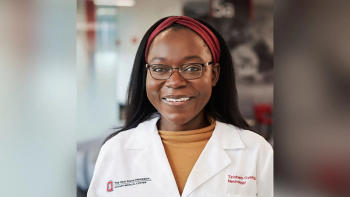
In part 2 of this video interview with ACT editor Andy Studna, Tirisham Gyang, MD, assistant professor of neurology at The Ohio State University discusses how industry can effectively enroll patients from underrepresented populations into their trials.
Open label, dose-escalation trial is testing the efficacy of LyGenesis’ first-in-class allogenic regenerative cell therapy.
In part 1 of this video interview with ACT editor Andy Studna, Tirisham Gyang, MD, assistant professor of neurology at The Ohio State University discusses how new research is changing the way industry recognizes multiple sclerosis in non-white populations.
Systematic review of available literature aimed to identify the most prominent barriers affecting enrollment in oncology drug trials.

While there is still potential left to be unlocked, current uses of artificial intelligence in clinical research include drug discovery, determining patient disposition, and dosing.