


In this video interview, Pomerantseva, director of product management, RBQM, eClinical Solutions, discusses the new guidance and its level of detail on the different types of protocol deviations.
In this video interview, Pomerantseva, director of product management, RBQM, eClinical Solutions, discusses the new guidance and its level of detail on the different types of protocol deviations.

In an interview with Applied Clinical Trials Associate Editor Don Tracy, Shakthi Kumar, chief strategy & business officer, Edetek, provides examples of how Agentic AI can accelerate clinical development.

In this video interview, Dipanwita Das, CEO & co-founder, Sorcero; Sujay Jadhav, CEO, Verana Health; and Kimberly Tableman, founder & CEO, ESPERO, highlight areas around clinical data that could have a large impact on the industry in 2025.
In this video interview, Dominique Demolle, CEO of Cognivia, discusses how understanding the patient journey from the very beginning of a study can help mitigate risk and improve patient centricity.
In an interview with Applied Clinical Trials Associate Editor Don Tracy, Graham Clark, CEO, Phastar, discusses key objectives for attending SCOPE, the rise of real-world evidence, and partnerships critical to improving the success of clinical trial outcomes.
In an interview with Applied Clinical Trials Associate Editor Don Tracy, Sebastien Coppe, CEO, One2Treat, talks challenges faced by startups in advancing clinical trial innovation.
In this video interview, Dominique Demolle, CEO of Cognivia, talks artificial intelligence/machine learning and its potential in gathering patient data.
In this video interview, Dominique Demolle, CEO of Cognivia, highlights how patient non-adherence can increase trial timelines and incur additional costs.
In an interview with Applied Clinical Trials Associate Editor Don Tracy, Samuel Salvaggio Senior Trial Design Lead, One2Treat, discusses partnerships that remain vital for guaranteeing success in clinical trial efficiency.
In this video interview, Dominique Demolle, CEO of Cognivia, discusses challenges that sponsors are currently facing with adherence and some strategies that can help address them.
In an interview with Applied Clinical Trials Associate Editor Don Tracy, Samuel Salvaggio, Senior Trial Design Lead, One2Treat, discusses the company's main goals for attending the SCOPE Summit, including patient centric trial design.
In an interview with ACT senior editor Andy Studna at SCOPE Summit, Rajneesh Patil, vice president, digital innovation, IQVIA, highlights the impact of artificial intelligence/machine learning in improving outcomes and maintaining safety with its implementation.
In an interview with ACT senior editor Andy Studna at SCOPE Summit, Drew Garty, chief technology officer, clinical data, Veeva Systems, discusses clinical data trends for 2025 and simplifying management processes.

In an interview with ACT senior editor Andy Studna at SCOPE Summit, Pamela Tenaerts, chief scientific officer, Medable, discusses the need for more data around the implementation of clinical technology.
In an interview with Applied Clinical Trials Associate Editor Don Tracy, Shakthi Kumar, chief strategy & business officer, Edetek, discusses how Edetek's R&D cloud system addresses challenges in clinical data management.
In an interview with ACT senior editor Andy Studna at SCOPE Summit, Ashley Davidson, vice president, product lead - sponsor tech strategy, Advarra, highlights the need for more site-centric approaches in study startup.
In an interview with ACT senior editor Andy Studna at SCOPE Summit, Jonathan Norman, director, localization services, YPrime, discusses the importance of communicating with patients in their native languages.
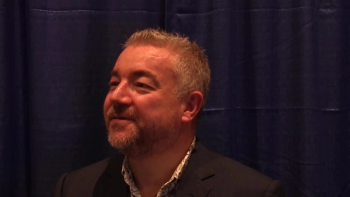
In an interview with Applied Clinical Trials Associate Editor Don Tracy, Richard Young, chief strategy officer, CluePoints, discusses goals of the SCOPE Summit and CluePoints' evolving approach to risk detection.
In an interview with ACT senior editor Andy Studna at SCOPE Summit, Patil, vice president, digital innovation, IQVIA, discusses how artificial intelligence/machine learning can help in areas such as feasibility, site selection, and patient recruitment.
In an interview with ACT senior editor Andy Studna at SCOPE Summit, Garty, chief technology officer, clinical data, provided his key takeaways from a panel he participated in on the growing interest around pragmatic studies.
In an interview with ACT senior editor Andy Studna at SCOPE Summit, Tenaerts, chief scientific officer, Medable, highlights the recent findings and how decentralized elements can improve access to underrepresented populations.
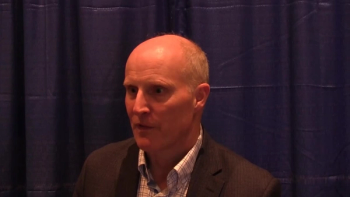
In an interview with ACT Associate Editor Don Tracy, Peter Ronco, CEO, Emmes, discusses the "Choosing the Right Allies: Ensuring Clinical Trial Success for Small Biopharma" session.
In an interview with ACT senior editor Andy Studna at SCOPE Summit, Davidson, vice president, product lead - sponsor tech strategy, Advarra, discussed ongoing challenges in study startup processes, including contract and budget issues, and feasibility concerns, which have persisted for over a decade.
In an interview with ACT senior editor Andy Studna at SCOPE Summit, Norman, director, localization services, YPrime discussed how localization is becoming increasingly important as clinical trials become more global.
In this video interview, Michael Andreini, president and CEO of the Multiple Myeloma Research Foundation, highlights how the MMRF accelerates trial timelines for biopharmas by integrating an adaptive platform model.
In this video interview, Michael Andreini, president and CEO of the Multiple Myeloma Research Foundation, discusses how MMRF goes beyond safety and efficacy data to help biopharmas research appropriate dosing for multiple myeloma therapies.
In this video interview, Michael Andreini, president and CEO of the Multiple Myeloma Research Foundation, talks unmet need in the multiple myeloma space and how the Horizon trial is addressing complexity in treatment regimens.
In this video interview, Michael Andreini, president and CEO of the Multiple Myeloma Research Foundation, highlights the design of Horizon, an adaptative platform trial for the treatment of multiple myeloma.
In this video interview, Michael Andreini, president and CEO of the Multiple Myeloma Research Foundation (MMRF), discusses the greatest challenges with clinical trials in multiple myeloma and how MMRF is aiming to address them.
In this video interview, Dipanwita Das, CEO & co-founder at Sorcero, highlights trial startup timelines and workforce development as key areas of focus for clinical operations professionals in 2025.