




Data Management
Latest News
Advertisement
Latest Videos


Advertisement
More News
Advertisement

As the FDA formally recognizes real-world evidence as eligible confirmatory evidence for drug approval, sponsors face a growing imperative to build the data infrastructure, organizational alignment, and analytical capabilities needed to use RWE effectively across the development lifecycle.
Real-world evidence is shifting from a post-market footnote to a concurrent validation layer running alongside trial data, requiring organizations to build unified data environments that integrate EHRs, claims, and patient-reported outcomes on an ongoing basis rather than retrospectively.

Despite clear data quality and regulatory advantages, paper-based clinical outcome assessments persist due to cost asymmetry, trial complexity, startup timelines, and provider capability gaps, though hidden paper costs and loss of institutional knowledge often outweigh upfront electronic implementation expenses.

Clinical Trials Day is an international celebration of everyone who makes medical discoveries possible. It is also an opportunity to shine a light on the innovations helping to keep research rising.
In this video interview, Sam Hinsley, statistics manager at Phastar, explains how statisticians can ensure patient data is used responsibly and innovatively across every phase of development, from rare disease to personalized medicine to AI.

Webcasts
Webinar Date/Time: Thursday, June 11th, 2026 at 10am EDT | 7am PDT | 3pm BST | 4pm CEST
Clinical development productivity improved in 2025, but gains remain fragile as end-to-end timelines lengthened again, signaling that future success depends less on individual trial execution and more on program-level orchestration, site engagement, and adaptive operating models.

Webcasts
Webinar Date/Time: Thursday, June 4th, 2026 at 11am EDT|8am PDT|4pm BST|5pm CEST

Pediatric trial participation shapes children's and caregivers' long-term psychological outcomes, yet protocol design often overlooks experience as a variable affecting recruitment, retention, and data integrity—a gap increasingly recognized by regulators and quality standards

As imaging-heavy clinical trials grow more complex and globally distributed, sponsors are increasingly re-evaluating traditional infrastructure models, with cloud-native platforms showing potential to reduce operational burden, accelerate site activation, improve imaging quality oversight, and lower total trial costs.
Advertisement

From payment delays and feasibility misalignment to technology burden and AI adoption, clinical research sites are navigating a convergence of pressures that increasingly determine who sponsors work with and how well trials perform.
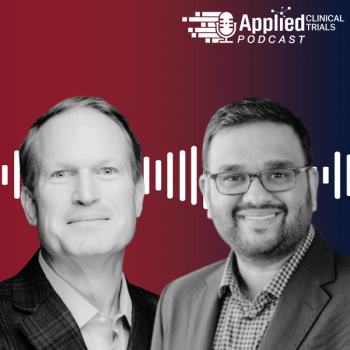
In this episode of the Applied Clinical Trials Podcast, Jonathan Andrus, co-CEO, CRIO, and Samir Jain, vice president of product management, healthcare data interoperability and EHR solutions, Medidata, discuss how their new partnership is enabling seamless data flow between eSource and enterprise platforms to reduce site burden and improve data quality across global clinical trials.

Early integration of clinical, operational, and patient-level insights during trial development can help close the gap between evidence generation and commercial performance, improving alignment between product value and real-world adoption.

When using electronic clinical outcome assessments (eCOA), ensuring clear stakeholder alignment throughout the lifecycle of a study regarding data management activities is critical to success.

Integrating technology and collaboration to close the evidence gap.

The execution translation gap—the failure to convert identified problems into coordinated, timely action—costs millions per trial through delayed amendments, persistent deviations, and slow site activation, yet remains addressable through aligned accountability and proactive execution management.
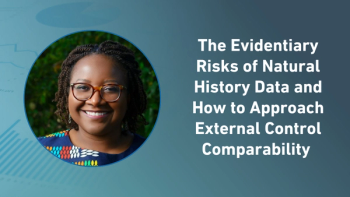
In this video interview, Mwango Kashoki, MD, MPH, senior vice president and global head of regulatory strategy at Parexel, discusses how heterogeneity in disease course and patient characteristics creates confounding risk when using natural history data as an external control, and what sponsors need to do to achieve meaningful patient matching.

Webcasts
Webinar Date/Time: Tue, May 12, 2026 11:00 AM EDT

In this Q&A, Jenna DiRito, PhD, COO and co-founder of Revalia Bio, discusses how earlier, human-relevant data is reshaping go/no-go decision-making in drug development and what a truly front-loaded workflow looks like in practice.
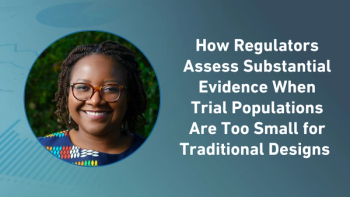
In this video interview, Mwango Kashoki, MD, MPH, senior vice president and global head of regulatory strategy at Parexel, breaks down how the FDA evaluates substantial evidence of effectiveness for individualized therapies in ultra-rare conditions, and why that determination depends on the totality of mechanistic, biomarker, and clinical outcome data rather than trial numbers alone.

A collaborative study by the Tufts Center for the Study of Drug Development and CRIO identifies protocol interpretation and source document preparation as an understudied yet significant bottleneck in study start-up timelines that may hold key opportunities for efficiency gains.

Pharma modernization initiatives stall not from lack of ambition but from expanding governance layers that distance leadership from execution, slowing decision velocity and delaying the systems integration that drives competitive advantage.
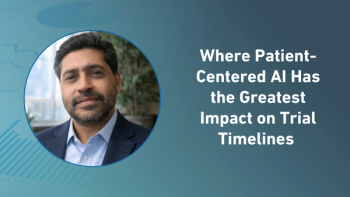
In this video interview, Krishna Cheriath, vice president and head of clinical research digital data and AI at Thermo Fisher Scientific, maps the highest-impact opportunities for AI across the trial lifecycle—from smarter protocol design and enrollment matching to data collection, cycle time compression, and the emerging potential of synthetic data in rare disease.

Webcasts
Webinar Date/Time: Thu, May 7, 2026 1:00 PM EDT

Webcasts
Webinar Date/Time: Thursday, April 30th, 2026 at 11am EDT | 8am PDT | 4pm BST | 5pm CEST
Advertisement
Advertisement
Trending on Applied Clinical Trials Online
1
Real-Time Clinical Trials Depend on a Scalable EHR-to-EDC Connection
2
FDA Launches Rare Disease Framework Initiative to Reimagine Drug Development for Small Patient Populations
3
The Human Side of Clinical Trials: Why Fuzzy Mental Models Undermine Clinical Trial Execution
4
ACT Brief: EHR-to-EDC Connectivity, FDA’s Rare Disease Framework, and Barriers to Oncology RWE
5