





Data Management
Latest News
Advertisement
Latest Videos

Advertisement
More News
Advertisement

A collaborative study by the Tufts Center for the Study of Drug Development and CRIO identifies protocol interpretation and source document preparation as an understudied yet significant bottleneck in study start-up timelines that may hold key opportunities for efficiency gains.

Pharma modernization initiatives stall not from lack of ambition but from expanding governance layers that distance leadership from execution, slowing decision velocity and delaying the systems integration that drives competitive advantage.

Webcasts
Webinar Date/Time: Thu, May 7, 2026 1:00 PM EDT

Webcasts
Webinar Date/Time: Thursday, April 30th, 2026 at 11am EDT | 8am PDT | 4pm BST | 5pm CEST

Real-world data is increasingly used to optimize trial design, reduce recruitment burden, and support regulatory decisions, but adoption remains uneven due to challenges around data quality, integration, and internal alignment across functional areas.
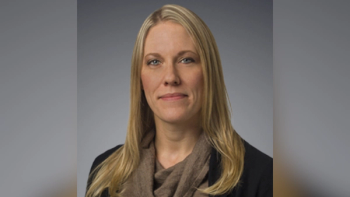
In this Q&A, Cheryl Kole, vice president of solution strategy and commercialization at Almac Clinical Technologies, examines what it takes to build and sustain a clinical trial technology infrastructure that can keep pace with increasingly complex study designs.
Vaccine developers can reduce participant burden and extend follow-up timelines by strategically combining traditional site visits with real-world data collection, but the choice depends on follow-up duration, data requirements, and the patient population being studied.

As clinical trials grow more complex, the technology infrastructure supporting them is under renewed scrutiny. Across data validation, AI adoption, and site-based systems, 2026 is shaping up as a year of implementation rather than experimentation.

Sample integrity and traceability often fail not because of science but because clinical trials rely on manual processes and fragmented systems that obscure problems until samples are already compromised.
Moving beyond vendor evaluation to incentive design in Phase II/III rare and genetic disease trials.
Advertisement

In the first months of 2026, the FDA has moved on multiple fronts to modernize how drugs are developed, evaluated, and approved, signaling a broader regulatory shift toward flexibility, mechanism-based evidence, and human-centric science.

Why rigorous testing and validation matter more than ever.
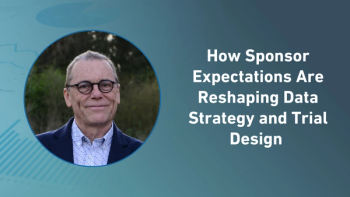
In this video interview, Marc Buyse, ScD, founder and CEO of IDDI, reflects on the gap between sponsor expectations and statistical reality, drawing on lessons from the COVID era to argue for more pragmatic, cost-efficient trial execution and greater patient access to clinical research.

Most protocol deviations start as human problems, not operational ones, but risk-based monitoring typically relies on lagging indicators that arrive too late to prevent these problems instead of measuring readiness during training, when intervention still matters.
In this video interview, Marc Buyse, ScD, founder and CEO of IDDI, examines the most common threats to trial data reliability, including opaque methodologies, synthetic controls, and the limits of AI-driven analysis, while making the case for explainable, transparent trial design.

In this video interview, Marc Buyse, ScD, founder and CEO of IDDI, discusses how increasing trial complexity is making data interpretation less straightforward and why transparency and reproducibility are now essential.
Closing the gender gap in data science and tech requires tackling barriers at every stage, from early education through career advancement, while actively challenging the unconscious biases that continue to hold women back.
In this video interview, David Morton, PhD, director of biostatistics at Certara, explores the practical challenges of implementing Bayesian designs, including the need for simulation, cross-functional alignment, and clear communication with regulators.
In this video interview, David Morton, PhD, director of biostatistics at Certara, outlines how increasing FDA support is helping drive adoption of Bayesian methods, particularly in rare disease and small population studies where efficiency is critical.
In this video interview, David Morton, PhD, director of biostatistics at Certara, discusses how growing FDA support is accelerating the adoption of Bayesian approaches, enabling more flexible, data-driven trial designs through external data borrowing, adaptive decision-making, and simulation-based planning.

In this episode of the Applied Clinical Trials Podcast, C.K. Wang, MD, chief medical officer at COTA; and Sujay Jadhav, CEO of Verana Health, discuss how their organizations’ merger is advancing the use of real-world data to inform trial design, patient recruitment, and regulatory decision-making.

As rare disease trials face persistent feasibility challenges, Bayesian designs are gaining momentum by enabling more flexible, data-driven approaches that integrate prior knowledge, reduce sample size demands, and align with evolving FDA guidance to accelerate evidence generation.
Jonathan Andrus, co-CEO of CRIO, discusses how governance across the data lifecycle, site-focused technology adoption, and scalable AI-enabled workflows will define operational readiness in 2026.
Jonathan Andrus, co-CEO of CRIO, highlights the need for earlier cross-functional collaboration and greater site involvement to ensure data quality, workflow alignment, and operational success.
Jonathan Andrus, co-CEO of CRIO, outlines how disconnected systems and inconsistent data collection across sites create risk, while centralized eSource approaches present a major opportunity.
Advertisement
Advertisement
Trending on Applied Clinical Trials Online
1
Where the Industry Is Headed as Clinical, Operational, and Real-World Data Connect
2
Where AI Governance in Clinical Development Falls Short
3
Building Standardized Evidence for eSource-Enabled Clinical Trials: Multi-Site Validation of a Clinical Research Coordinator Satisfaction Methodology
4
Syneos Health, Optum Partner on Adaptive Clinical Development Model
5