




Data Management
Latest News
Advertisement
Latest Videos




Advertisement
More News
Advertisement

Insights from SCOPE 2026 highlight the industry’s shift toward connected, data-centric clinical trial ecosystems, where digital protocols, shared data, and renewed scientific rigor are driving more efficient, interoperable, and patient-focused research.
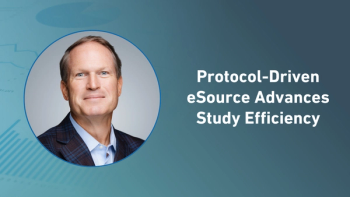
Jonathan Andrus, co-CEO of CRIO, explains how protocol-driven eSource templates and standardized data capture are improving consistency, oversight, and efficiency across clinical trial sites.
Jonathan Andrus, co-CEO of CRIO, discusses how increased reliance on site-based technologies and eSource is strengthening data quality, compliance, and trust at the point of patient encounter.

Rising development costs, low success rates, and increasing trial complexity are reshaping the clinical trial project manager role, demanding stronger digital fluency, adaptive leadership, and expanded stakeholder coordination to deliver studies efficiently.

Angela Zubel, chief development officer, Debiopharm, emphasizes that organizations willing to standardize data and adopt practical AI tools are already gaining efficiency, cost savings, and stronger real-time oversight across development programs.
Angela Zubel, chief development officer, Debiopharm, outlines how predictive models are improving compound selection from early clinical phases, while noting the ongoing challenges of forecasting success from preclinical development to patient outcomes.
Angela Zubel, chief development officer, Debiopharm, explains how AI-enabled site selection, patient allocation, and real-time data monitoring can reduce costs, shorten timelines, and limit inefficiencies caused by non-performing sites.

As eSource adoption expands, industry leaders are confronting new questions around AI oversight, unstructured data activation, institutional readiness, and regulatory trust. Here’s how experts say the next phase will unfold.

Webcasts
Webinar Date/Time: Tue, Mar 17, 2026 11:00 AM EDT

Sylviane de Viron, data and knowledge manager at CluePoints, shares new data highlighting regional variations in clinical trial risks—and how proactive risk planning based on up-to-date data is needed to overcome them.
Advertisement
Mike Wenger, chief innovation officer at CRIO, explains how AI can responsibly support data quality and monitoring with proper oversight, and why advancing eSource and EHR systems remains critical to strengthening data integrity and remote trial operations.

Individual-level attribution modeling reveals that real-world semaglutide effectiveness is not a fixed property of the molecule, but an interaction between pharmacological exposure and modifiable care and support conditions, carrying implications for real-world evidence interpretation and clinical development.
Mike Wenger, chief innovation officer at CRIO, discusses how different site types—from academic medical centers to independent research sites—require distinct eSource approaches, and why aligning technology with site workflows is critical to study execution.
See how real-world evidence is enabling smaller, smarter, and more efficient trial designs through hybrid models, external comparators, and continuous patient monitoring—while preserving the role of traditional clinical trials.

As ESG expectations rise across clinical development, sponsors are finding that sustainability efforts gain traction only when embedded into existing vendor oversight and quality management processes rather than treated as a standalone reporting exercise.

Assess the data quality, linkage, transparency, and auditability challenges that sponsors must overcome to make de-identified real-world evidence fit for regulatory submissions.
Understand where real-world evidence most effectively complements or substitutes traditional trial data, from post-market surveillance and label expansion to challenging areas such as rare disease research.
Explore how large-scale, de-identified real-world datasets enable more representative trial design, improve site selection, and support patient identification beyond the limits of traditional clinical study populations.
Examine how the FDA’s acceptance of de-identified real-world evidence shifts clinical operations workflows and why understanding the difference between pseudonymized and anonymized data is now critical for privacy, compliance, and evidence generation.

Global clinical development has evolved into a technology-enabled, highly regulated, and geographically diversified enterprise, as sponsors adapt trial design, partnerships, and operations to meet rising demands for scale, speed, and patient-centricity.

Analysis of more than 880 clinical trials shows that while statistical data monitoring and key risk indicator signals close on similar timelines, durability—not speed—is the defining differentiator in effective, risk-based quality management.

As Parkinson’s disease cases surge worldwide, growing evidence gaps around women’s biology, care access, and outcomes are driving new data-driven and digital strategies to advance sex-specific research and precision medicine.

As AI-driven search becomes the primary way patients discover research opportunities, the quality and structure of clinical trial registry data will determine whether transparency translates into real, equitable access.

The clinical trial ecosystem is entering a phase of consolidation and reinvention driven by the collapse of boundaries between functions, data, and even companies themselves.

Persistent delays and inefficiencies in COA licensing and translation stem from limited pre-license access and fragmented processes, making a strong case for providing outcome assessment measures earlier to reduce risk and accelerate trial start-up.
Advertisement
Advertisement
Trending on Applied Clinical Trials Online
1
Building AI Assistants Clinical Trial Teams Can Trust: Q&A with E.K. Koh, Suvoda
2
What Needs to Happen Beyond the Clinical Trial Modernization Act
3
Walmart and Care Access Plan Three More Clinical Trial Centers in Michigan, Nevada, and Texas
4
From Signal to Action: Why Faster Trial Data Isn’t Producing Faster Decisions
5