






Regulatory
Latest News
Advertisement
Latest Videos

Advertisement
More News
Advertisement
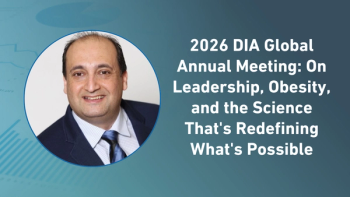
In this video interview, Marwan Fathallah, president and CEO of DIA Global, makes the case for ecosystem-wide leadership in a time of regulatory uncertainty and highlights the breakthroughs in obesity, healthcare AI, and cell and gene therapy that have most excited him in 2026.

A coordinated department-wide initiative combines FDA regulatory reforms, NIH investments, and new agency programs to reduce development timelines and reverse a growing shift of clinical research overseas.
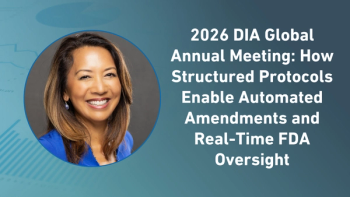
In this video interview from the 2026 DIA Global Annual Meeting, Angie Maurer, VP of AI-enabled clinical development at Medable, describes how digitizing protocols transforms manual amendment workflows into automated, AI-orchestrated processes—and why structured data from the start is the foundation the FDA's continuous review model depends on.
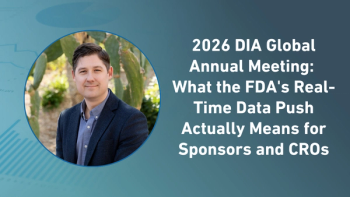
In this video interview from the 2026 DIA Global Annual Meeting, Kevin Bugin, head of global regulatory policy and intelligence at Amgen and executive sponsor of TransCelerate's Embedded Pragmatic Trials initiative, reframes the FDA's continuous review expectations around real-time evidence generation and explains why quality by design—not data cleanup—is what regulators are now demanding.

One Strategy, Two Jurisdictions: Unlocking Efficiency Across EU CTR and UK Regulatory Reform
ByEva Font
How sponsors can leverage both the EU Clinical Trials Regulation and UK’s reformed framework to achieve cost efficiencies, faster timelines, and stronger regulatory positioning.
In this video interview, Raj Indupuri, CEO and co-founder of eClinical Solutions, explains why organizations that build infrastructure capable of harmonizing clinical and real-world data in real time will be best positioned for the continuous, data-driven regulatory environment now emerging.

A Tufts CSDD study quantifies risk-based quality management's net financial value at $13.8 million per Phase III oncology trial, with ROI multiples up to 22.7x driven primarily by cycle time reductions rather than monitoring cost savings.
In this video interview, Raj Indupuri, CEO and co-founder of eClinical Solutions, describes how giving sponsors the ability to inject their own SOPs, protocols, and governance frameworks into AI systems is the key to building the trust needed for real-world adoption.

In this Q&A, Robert Hummel, chief operating officer at Suvoda, discusses how agentic AI is compressing RTSM build and deployment timelines, what safeguards are needed to maintain compliance and oversight at speed, and how intelligent automation will reshape the broader clinical trial technology stack over the next decade.

In this video interview, Raj Indupuri, CEO and co-founder of eClinical Solutions, makes the case that governance and quality must be built into every stage of the trial life cycle—not enforced at database lock or submission—and what that requires from teams and technology.
Advertisement
In this video interview, Raj Indupuri, CEO and co-founder of eClinical Solutions, explains why the FDA's push toward continuous data review exposes the fragmentation at the heart of current clinical trial infrastructure and what unified data pipelines need to look like to make it possible.

From rising costs and regulatory uncertainty to persistent vaccine hesitancy, sponsors face mounting pressure to standardize operations, build community trust, and develop the behavioral capabilities needed to run vaccine trials effectively in a rapidly shifting environment.
Real-world evidence is shifting from a post-market footnote to a concurrent validation layer running alongside trial data, requiring organizations to build unified data environments that integrate EHRs, claims, and patient-reported outcomes on an ongoing basis rather than retrospectively.

Despite clear data quality and regulatory advantages, paper-based clinical outcome assessments persist due to cost asymmetry, trial complexity, startup timelines, and provider capability gaps, though hidden paper costs and loss of institutional knowledge often outweigh upfront electronic implementation expenses.

In this Q&A, Adrelia Allen, executive director of clinical trial patient diversity at Merck, discusses how the company is embedding diversity into clinical trial execution—from protocol design and site selection to long-term community engagement that extends well beyond individual trial timelines.

The CNPV program has compressed drug review timelines to as little as one to two months for qualifying sponsors, but succeeding under that pressure requires a fundamental rethink of how development teams plan, communicate, and execute.
Clinical Trials Day is an international celebration of everyone who makes medical discoveries possible. It is also an opportunity to shine a light on the innovations helping to keep research rising.

Webcasts
Webinar Date/Time: Thursday, June 4th, 2026 at 11am EDT|8am PDT|4pm BST|5pm CEST

Pediatric trial participation shapes children's and caregivers' long-term psychological outcomes, yet protocol design often overlooks experience as a variable affecting recruitment, retention, and data integrity—a gap increasingly recognized by regulators and quality standards

FDA Commissioner Marty Makary’s departure caps a turbulent tenure marked by leadership instability, industry pushback, and a series of regulatory controversies that complicated drug development for sponsors and CROs.

As imaging-heavy clinical trials grow more complex and globally distributed, sponsors are increasingly re-evaluating traditional infrastructure models, with cloud-native platforms showing potential to reduce operational burden, accelerate site activation, improve imaging quality oversight, and lower total trial costs.

Zentails announced the first dosage of Azenosertib administered in its phase III Aspenova trial to test azenosertib vs chemotherapy in Cyclin E1-positive platinum-resistant ovarian cancer.

FDA clears Cellenkos’ IND for CK0802, enabling a mid-stage trial in steroid-refractory GVHD.

FDA gives granted accelerated approval to lunsotogene parvec (Otarmeni) for OTOF-related sensorineural hearing loss based on early CHORD trial results in children.
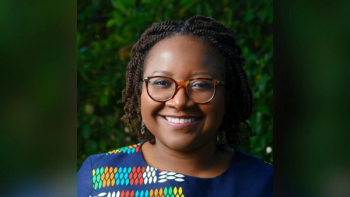
In this Q&A, Mwango Kashoki, MD, MPH, SVP and global head of regulatory strategy at Parexel, breaks down the FDA's plausible mechanism framework and what it means for sponsors developing individualized therapies in ultra-rare disease settings.
Advertisement
Advertisement
Trending on Applied Clinical Trials Online
1
Building Standardized Evidence for eSource-Enabled Clinical Trials: Multi-Site Validation of a Clinical Research Coordinator Satisfaction Methodology
2
Bipartisan Bill Would Build Reusable Clinical Trial Networks, With a Focus on Rare Disease
3
Where the Industry Is Headed as Clinical, Operational, and Real-World Data Connect
4
Where AI Governance in Clinical Development Falls Short
5