




Regulatory
Latest News
Advertisement
Latest Videos

Shorts
0:45
A Blueprint to De-risk Your Regulatory Program
a month ago
by
Rob DiCicco(+1 more)
0:28
DIA 2026: FDA's New Stance, Quality by Design in Clinical Trials
4 months ago
by
Kevin Bugin(+1 more)

0:51
Bringing Together Modern Infrastructure to Meet New FDA Standards
4 months ago
by
Raj Indupuri(+1 more)
1:15
ACT Ops Take: Understanding the FDA's CNPV Program and Review Timelines
4 months ago
by
Andy Studna, Senior Editor
0:51
A Major Shift in FDA Approval for Rare Disease Therapies
6 months ago
by
Mwango Kashoki, MD, MPH(+1 more)
0:59
ACT Ops Take: FDA Actions Reshaping Drug Development in 2026
7 months ago
by
Andy Studna, Senior Editor
0:48
The Shift from Frequentist to Bayesian Mindsets
7 months ago
by
David Morton, PhD(+1 more)
1:30
ACT Ops Take: How Bayesian Methods Revolutionize Rare Disease Trials
7 months ago
by
Andy Studna, Senior Editor

0:51
How New Clinical Trial Guidelines Impact Sponsors & CROs
9 months ago
by
Heidi Chen(+1 more)
0:46
How FDA Uncertainty is Changing Regulatory Strategy
9 months ago
by
Charlie Paterson(+1 more)
Advertisement
More News
Advertisement

A new FDA Voices post from the agency's acting chief of staff details completed milestones and upcoming priorities across complete response letter disclosure, application lifecycle transparency, new approach methodologies, labeling, and inspectional records.

Mixed FSP and FSO models are gaining ground as sponsors seek agility and resource flexibility, but the oversight infrastructure, audit trails, and accountability structures needed to run them well and survive regulatory inspection are consistently lagging behind the model itself.
A new request for information asks for comments on dose selection, safety monitoring, eligibility criteria, and oversight approaches to support the responsible development of ibogaine drug products.
The new effort combines adaptive platform trial design, AI-enabled site activation, nationwide data infrastructure, and patient data contribution tools to reduce timelines, costs, and patient burden across clinical development.

AI agents in clinical operations acquire broader autonomous capability through expanded permissions, tools, memory, and delegated authority, requiring governance focused on whether effective capability has shifted outside approved boundaries rather than whether software has changed.

RWE is finding a role earlier in drug development than ever before, but the data quality, integration, and organizational alignment required to make it regulatory-grade are still catching up to the ambition.

Sponsor oversight of outsourced CRO work is often robust in practice but fails inspection because oversight decisions are fragmented across systems and lack an audit trail, requiring sponsors to document oversight as a connected operating system with clear decision records, escalation pathways, and issue resolution from start to finish.

In rare disease drug development where no registry or natural history dataset exists, real-world evidence quality depends on treating evidence engineering as a design-stage decision, defining intended regulatory use and standardizing endpoints, harmonization, and data provenance upfront rather than reconciling gaps after collection.

Cell and gene therapy access expands into community care settings only when operational coordination, site readiness, and supply chain standardization become first-order priorities equivalent to manufacturing capacity, requiring standardized processes, digital integration, and distributed logistics networks.

Most AI pilots in drug development fail not from poor technology but from lack of strategic prioritization, organizational readiness, integrated data infrastructure, and disciplined governance, making success dependent on business discipline rather than technical capability.
Advertisement
FDA Opens Applications for Expedited IND Pilot Designed to Accelerate First-in-Human Trial Timelines
The pilot pairs drug sponsors with qualified research institutions to compress the path from drug identification to first-in-human study through rolling submission review and earlier coordination of institutional review board and site activation activities.

Patient-centricity remains largely consultative in most clinical research, yet rare disease communities demonstrate that genuine partnership from protocol inception improves feasibility, reduces unnecessary burden, and identifies outcomes that matter to patients themselves.
Senior FDA leaders outline concrete steps to strengthen inspection coverage and data integrity review as the globalization of clinical research strains the agency's oversight capacity.

As sponsors push for faster, more representative studies, AI-enabled matching and EHR integration are emerging as operational levers, but bias, explainability, and governance will determine whether the technology scales.

Static budgeting models and one-size-fits-all fair market value approaches create visibility gaps around inflation and true site costs, but regional frameworks, standardized costing toolkits, and accountability metrics can rebuild trust and replace defensive negotiations with transparency.

Biomarker-informed trial enrollment appears straightforward for identifying responders and optimizing efficiency, but failures to account for demographic variation in cut-off selection, causality versus correlation, and composite biomarker complexity risk excluding viable patients and exacerbating disparities.
In this episode of Beyond Compliance, Otis Johnson, PhD, MPA, founder and principal consultant at Vantix Operations, speaks with Joel Stanley, CEO of AJNA BioSciences, about why botanical therapies need pharmaceutical-grade standardization and clinical evidence to earn physician trust and insurance coverage.

Inspection readiness reflects how a program was actually run throughout its lifecycle, not what can be assembled at the end, making pre-submission remediation itself a signal of absent oversight rather than proof of it.

In this Q&A, Stella K. Vnook, PhD, CEO and executive chair of Kaida BioPharma and founder and CEO of Aviva Ventures, discusses how a trifecta of funding pressures is reshaping early-stage clinical development, why commercialization readiness can no longer wait until late-stage, and what a truly strategic lean development model looks like in practice.
Faster, more efficient clinical trials depend on structural alignment in how sponsors, CROs, and research sites plan and execute studies together.
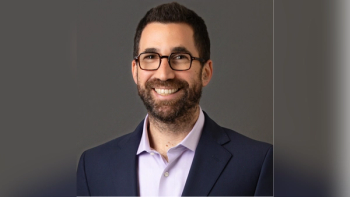
In this Q&A, Raviv Pryluk, PhD, CEO and co-founder of PhaseV, discusses the data standardization bottleneck that sits between raw trial data and real-time analysis, what the FDA's continuous monitoring pilot will require to scale beyond large pharma, and why an ecosystem approach is the only path to making real-time trial oversight a practical reality.

A new survey of 37 US biotechnology executives finds broad preference for conducting first-in-human trials domestically, with regulatory unpredictability and clinical holds cited as the primary drivers of overseas migration.

Clinical research associates are evolving from compliance-focused manual monitors to data-enabled strategic site partners, but organizations need analytics training, clear operating models, and active change management to make the shift stick.

From point-of-care sample collection to real-world data curation, wearable device integration, and continuous review infrastructure, data quality is not a single problem in clinical trials—it is a layered challenge that manifests differently at every stage of development and demands a different set of solutions at each one.
In this episode of Beyond Compliance, Otis Johnson, PhD, MPA, founder and principal consultant at Vantix Operations, speaks with Joseph Kim, Chief Strategy Officer at ProofPilot, and Lauren Briggs, Chief Customer Officer at ProofPilot, about why completing training is not the same as being prepared to execute a protocol.
Advertisement
Advertisement
Trending on Applied Clinical Trials Online
1
2026 SCRS Global Site Solutions Summit: What's the Biggest Mistake Sites or Sponsors Make When Implementing Advanced Al?
2
2026 SCRS Global Site Solutions Summit: What Should Sponsors and CROs Change About How They Contract with a Network?
3
How Compressing Time From Data Capture to Insight Changes Trial Risk Management
4
ACT Brief: AI Operating Models, Oncology Evidence Trust, and Thyroid Eye Disease Approval
5