





Regulatory
Latest News
Advertisement
Latest Videos





Advertisement
More News
Advertisement

Vaccine developers can reduce participant burden and extend follow-up timelines by strategically combining traditional site visits with real-world data collection, but the choice depends on follow-up duration, data requirements, and the patient population being studied.

Moving beyond vendor evaluation to incentive design in Phase II/III rare and genetic disease trials.

In the first months of 2026, the FDA has moved on multiple fronts to modernize how drugs are developed, evaluated, and approved, signaling a broader regulatory shift toward flexibility, mechanism-based evidence, and human-centric science.
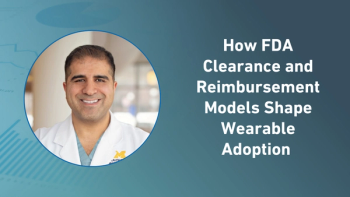
In this video interview, Mohammed Saeed, MD, PhD, chief medical officer of Solera Health, discusses how regulatory trust-building and reimbursement reform are essential to making wearable devices a sustainable and widely adopted part of clinical care delivery.

New framework establishes scientific standards for alternative methodologies, signaling a regulatory shift toward human-centric data in preclinical drug development.
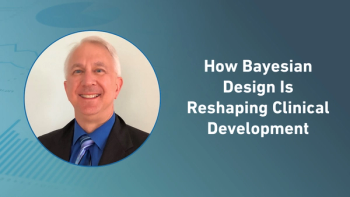
In this video interview, David Morton, PhD, director of biostatistics at Certara, reflects on the growing role of Bayesian approaches in modern drug development, emphasizing their potential to improve decision-making, efficiency, and overall trial success.
In this video interview, David Morton, PhD, director of biostatistics at Certara, explores the practical challenges of implementing Bayesian designs, including the need for simulation, cross-functional alignment, and clear communication with regulators.

Public-private collaboration and structured evidence consolidation are emerging as critical enablers of regulatory-ready digital end points, helping standardize terminology, reduce duplication, and accelerate the integration of digital health technologies into clinical research and decision-making.
In this video interview, David Morton, PhD, director of biostatistics at Certara, explains how regulatory momentum is encouraging sponsors to move beyond traditional methods, leveraging Bayesian frameworks to improve efficiency, particularly in rare disease and small population studies.
Draft guidance outlines a “plausible mechanism” pathway to support approval of highly targeted therapies when traditional trials are not feasible.
Advertisement

In this episode of the Applied Clinical Trials Podcast, C.K. Wang, MD, chief medical officer at COTA; and Sujay Jadhav, CEO of Verana Health, discuss how their organizations’ merger is advancing the use of real-world data to inform trial design, patient recruitment, and regulatory decision-making.

As rare disease trials face persistent feasibility challenges, Bayesian designs are gaining momentum by enabling more flexible, data-driven approaches that integrate prior knowledge, reduce sample size demands, and align with evolving FDA guidance to accelerate evidence generation.

Rising development costs, low success rates, and increasing trial complexity are reshaping the clinical trial project manager role, demanding stronger digital fluency, adaptive leadership, and expanded stakeholder coordination to deliver studies efficiently.

Following a Type A meeting with the FDA’s Center for Biologics Evaluation and Research, Moderna’s flu vaccine candidate mRNA-1010 has been accepted for formal review after the company revised its regulatory strategy.
FDA is shifting its default standard for drug approvals, announcing that one adequate and well-controlled clinical trial will generally be sufficient for approvals.

Sylviane de Viron, data and knowledge manager at CluePoints, shares new data highlighting regional variations in clinical trial risks—and how proactive risk planning based on up-to-date data is needed to overcome them.

Webcasts
Webinar Date/Time: Thursday, March 12th, 2026 at 11am EDT | 8am PDT | 3pm GMT | 4pm CET
The FDA and EMA have aligned on ten guiding principles for the responsible use of artificial intelligence across the drug development lifecycle, establishing a shared framework to support innovation, regulatory consistency, and patient safety.

As ESG expectations rise across clinical development, sponsors are finding that sustainability efforts gain traction only when embedded into existing vendor oversight and quality management processes rather than treated as a standalone reporting exercise.
A look at how efficiency, access, platformization, AI, non-traditional players, and regulatory recovery are expected to reshape clinical operations in 2026.

A bipartisan spending package would modestly increase 2026 funding for HHS, including targeted gains for NIH and CDC programs, as lawmakers move to avert a government shutdown after a year of proposed cuts and operational disruption.

Global clinical development has evolved into a technology-enabled, highly regulated, and geographically diversified enterprise, as sponsors adapt trial design, partnerships, and operations to meet rising demands for scale, speed, and patient-centricity.
The FDA’s new draft guidance on Bayesian methodology signals a shift toward more flexible, data-driven clinical trial designs, enabling sponsors to use prior data and adaptive approaches to improve efficiency, reduce timelines, and support regulatory decision-making.

The clinical trial ecosystem is entering a phase of consolidation and reinvention driven by the collapse of boundaries between functions, data, and even companies themselves.
Comparator drug sourcing in the EU is shaped by a defined set of availability, regulatory, competitive, and logistical pressures, alongside practical strategies to reduce risk and protect trial timelines.
Advertisement
Advertisement
Trending on Applied Clinical Trials Online
1
HHS Launches SURPASS Program and Three Complementary Initiatives to Transform Clinical Trial Design and Infrastructure
2
Hierarchical Endpoints in Cardiology: How Much Treatment Benefit, and From Where
3
ACT Brief: AI Adoption Starting Points, Hierarchical Endpoints and Patient Priorities, and Early-Stage Program Termination
4
FDA Seeks Public Input on Early-Phase Clinical Trial Design for Ibogaine
5