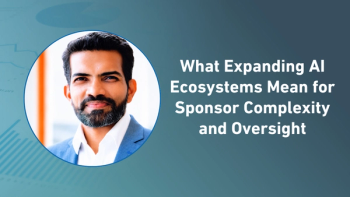
Beyond Compliance: YPrime's Paulo Limgenco on Moving ESG From Reporting to Real Business Value
In this pilot episode of Beyond Compliance, Otis Johnson, PhD, MPA, founder and principal consultant at Vantix Operations, speaks with Paulo Limgenco, VP of business operations and ESG strategy lead at YPrime, about how sustainability is shifting from a compliance checkbox to a factor that shapes vendor selection, client trust, and long-term business value.
In the debut episode of Beyond Compliance, host Otis Johnson, PhD, MPA, founder and principal consultant at Vantix Operations, talks with Paulo Limgenco, VP of business operations and ESG strategy lead at YPrime, about how sustainability is moving from a reporting exercise into a driver of commercial decision-making across pharma and clinical research.
Limgenco explains that YPrime's ESG program grew out of a desire to lead rather than simply comply, noting that sustainability-related questions have appeared in more than half of the company's RFIs over the past two to three years. He argues that a strong ESG position rarely wins business outright, but it can disqualify a vendor or open doors that would otherwise stay closed, making it an increasingly important factor alongside product quality in procurement decisions.
The conversation also addresses why ROI on ESG investment is hard to quantify, with Limgenco pointing to win rates, retained opportunities, and margin protection as meaningful, if indirect, measures of value. He closes with practical guidance for suppliers just starting out: acknowledge what your organization doesn't yet know, bring in outside expertise where needed, and secure buy-in across every level of the company, not just leadership.
Key takeaways
- ESG-related questions now appear in more than 50% of YPrime's RFIs, marking the sharpest increase in inquiry volume the company has seen.
- A mature ESG strategy rarely wins business on its own, but it can disqualify a vendor from consideration or strengthen trust and access with clients.
- ROI on ESG is difficult to measure as a clean line item, but shows up through win rates, retained opportunities, and margin protection.
- Organizations starting their ESG journey should first assess internal knowledge gaps, bring in outside expertise where needed, and build buy-in across every level of the company.